
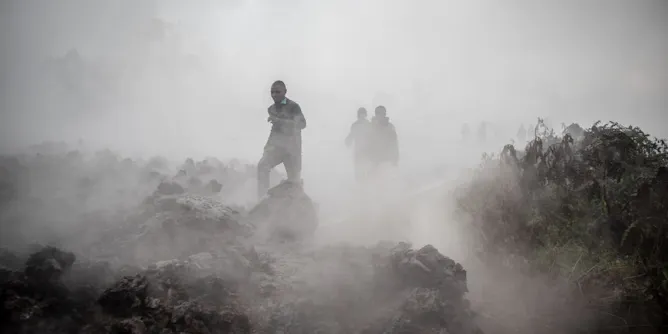
Nyiragongo is one of the most dangerous volcanoes in the world because of its fast-moving lava. It can flow at a speed of about 100km per hour.
Articles on Cholera
Displaying 41 - 60 of 94 articles

Insights editors choose their top reads of the year.

Although memorials to past pandemics are not as prolific as war memorials, they do exist. A scholar of visual culture provides a brief history of monuments around the world.
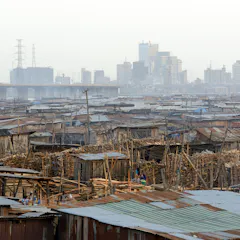
If we learn from COVID-19, there are three key areas to tackle to make cities safer from outbreaks of future infectious diseases.
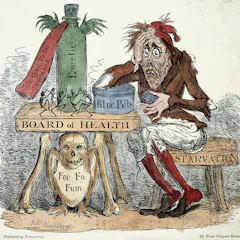
Pandemic histories are useful for understanding COVID-19, but how they connect with race, public health, revolution, labour and colonialism are needed to explain the present and predict the future.
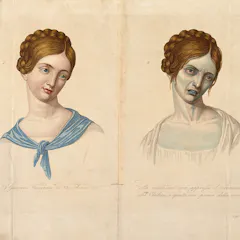
There is a sad precedent of pandemic disease threatening the residents of care institutions – and of authorities not heeding the dangers.
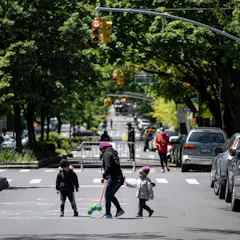
For centuries, disease outbreaks have forced cities to transform physically and operationally in ways that ultimately benefited all residents going forward.
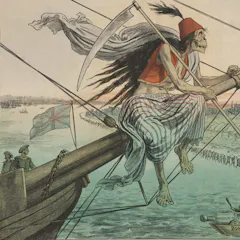
Some 1,500 years ago, the Plague of Justinian spread via ships from North Africa to Europe and Asia, killing up to 50 million people.

What would happen if plague destroyed all of humanity? Mary Shelley’s 1826 book suggests Earth would be better off.

Emphasizing foreign origins of a disease can have racist connotations and implications for how people understand their own risk of disease.

Historically, pandemics have brought about profound societal improvements. Will that happen this time?
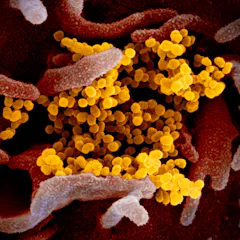
While identifying a new disease by its place of origin seems intuitive, history shows that doing so can have serious consequences for the people that live there.
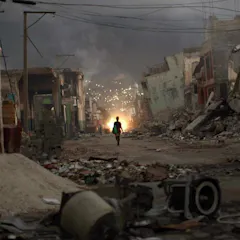
Ten years after a devastating earthquake struck Haiti, the country is still struggling to recover and remains vulnerable to natural disasters.
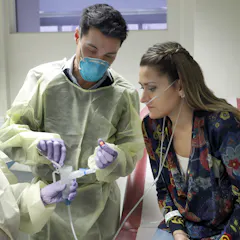
The CDC just released a list of bacteria and fungi that pose, or have the potential to pose, a serious health threat. Here are four strategies for curbing the rise of these superbugs.
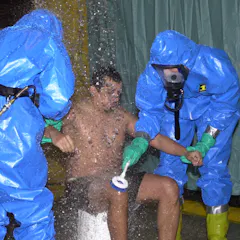
Talk of bioterrorism might provoke fears of smallpox and anthrax, but mundane threats like salmonella may pose greater danger. And experts say that the U.S. is not prepared for an attack.
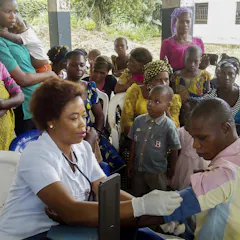
Climate change is anticipated to cause a rise in the incidence of several diseases in sub-Saharan Africa.
Timing is everything when it comes to making a decision about declaring a disease outbreak a public health emergency of international concern.
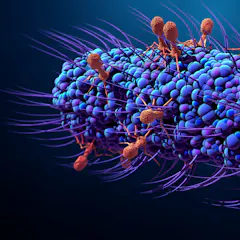
Cholera kills fast, and outbreaks are common in war-torn regions and after natural disasters where clean water is scarce. A new strategy to prevent cholera infections is a ‘cocktail’ of live virus.
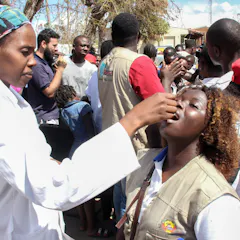
The flood waters caused by Cyclone Idai have receded. But in some ways, the problems for many of the countries affected, are just beginning.
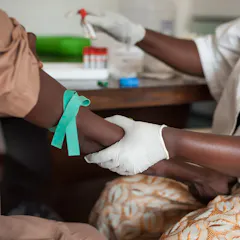
Gene sequences can be manipulated to prevent certain diseases and improve public health.
Top contributors
-

Professor of Law, Conflict and Global Development, University of Reading
-
Director DNDi Eastern Africa and Senior Principal Research Scientist, KEMRI, Kenya Medical Research Institute
-
Senior Lecturer, International Development Department, University of Birmingham
-
Associate Professor and Water Management Expert, University of South Africa
-
Professor/Senior Research Fellow, Centre for Advancement of Scholarship, University of Pretoria
-
Director of the Centre for Epidemic Response and Innovation (CERI) at Stellenbosch University and the KwaZulu-Natal Research Innovation and Sequencing Plaform (KRISP)., Stellenbosch University
-
Head Scientific Research Support, Stellenbosch University
-
Research Officer / EIDM Specialist, University of Cape Town
-
Recognised Researcher, Imperial College London
-
Principal Visiting Fellow & Former Deputy Director, International Institute for Global Health (UNU-IIGH), United Nations University
-
Chief Research Officer, Kenya Medical Research Institute
-
Professor of Global Biosecurity, NHMRC L3 Research Fellow, Head, Biosecurity Program, Kirby Institute, UNSW
-
Assistant Professor of History, University of Pittsburgh
-
Assistant Professor of Epidemiology and Biostatistics, University of Illinois Chicago
-
Associate professor, University of South Africa