
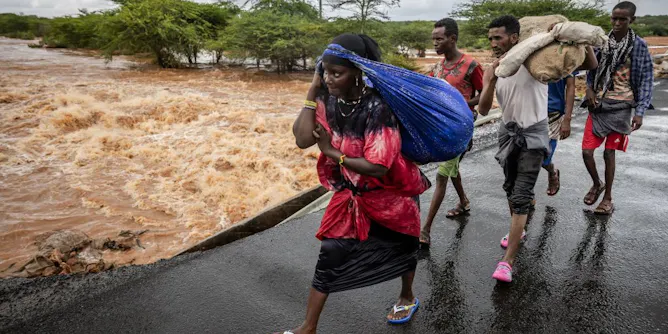
Without comprehensive public and global support for care provision and the integration of care in the climate agenda, unmet care needs will only grow and inequalities will widen.
Articles on Children
Displaying 161 - 180 of 1256 articles

Treating all adversity as inherently negative does a disservice to children and their ability to develop adaptive coping mechanisms that can protect them in future cases of adversity.
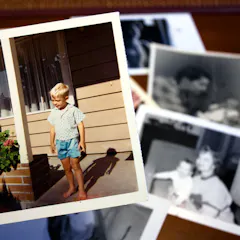
The advantages of being a part of a family are so obvious that losing that affiliation, intentionally or not, is tragic.
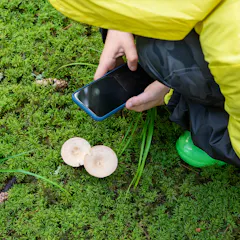
Some parents worry children are getting too much screen time. But we can actually use digital tech to connect kids with the great outdoors.

‘Old Enough’ exemplifies many important insights for parents about nurturing relationships with their children that support their emerging independence.

The impact of wars on children is vast and multifaceted. The trauma inflicted is enduring and will shape the rest of their lives — and by extension, the societies in which they and we live.

Being bullied because of some aspect of who a person is — known as identity-based or bias-based bullying — is extremely harmful to kids’ sense of belonging at school.
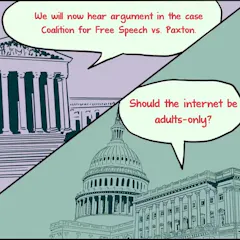
Kids face risks online, but whether and how the law can protect them is a thorny issue.

Sensory modulation disorder (SMD) can cause a “traffic jam” of information in children’s brains, and make them act out.

Belonging to a group can make you feel safe and supported. But there can be downsides, too.
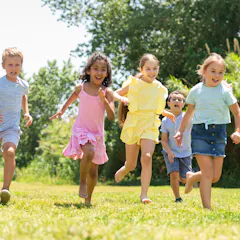
Physical activity, screen time and sleep levels for preschoolers in Canada and globally don’t meet recommendations, risking global health challenges. It’s time to get little ones a little more active.

Under current laws in most states and territories, the life of an unborn child is legally indistinguishable from that of the mother.
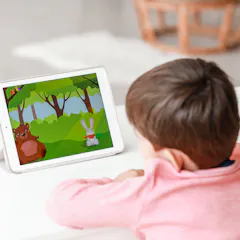
Using screen media as a calming tool to help manage young children’s emotional outbursts may be an effective short-term solution, but is likely to backfire in the long run.

A panic attack is a sudden, intense feeling of fear or discomfort. Here’s what it looks like in children – and how to respond.
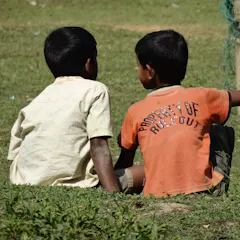
Sharif was forced to live on the streets at 14 and became affiliated with criminal gangs as a means to survive. He and I discussed his childhood and how he overcame adversity, war and conflict.

Parents are dealing with the traditional stresses of raising children, as well as new challenges like technology use. Governments, workplaces, friends and family can all help parents cope with stress.

Several children have died after attempting these social media crazes.

Experts know simply banning kids from social media isn’t going to protect them from harm – but there’s lots of evidence on what we can do instead.
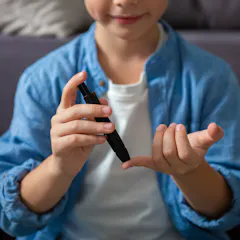
Childhood diabetes has almost doubled in the last two decades, with massive increases in Finland, Sweden and Norway.
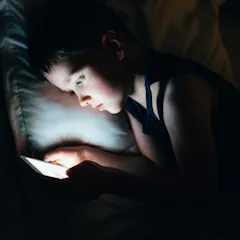
There’s ever-evolving ways for children and young people to be harmed online. Here’s what kids think about the harms they experience and how to prevent them.
Top contributors
-

Researcher, Digital Wellbeing, Western Sydney University
-
Professor, Canada Research Chair in Determinants of Child Development, Owerko Centre at the Alberta Children’s Hospital Research Institute, University of Calgary
-
Associate Professor in Language, Literacy and TESL, University of Canberra
-
Tier 1 Canada Research Chair in School-Based Mental Health and Violence Prevention, L’Université d’Ottawa/University of Ottawa
-
Associate Professor of Pediatrics, University of Virginia
-
Associate Professor in Child Psychology and Education, University of Staffordshire
-
Extraordinary Research Fellow: South African Research Chair in Cities, Law and Environmental Sustainability, Faculty of Law, North-West University
-
Policy Fellow, Mitchell Institute, Victoria University
-
Assistant Professor, Department of Psychology, Université de Montréal
-
Elizabeth Handsley is a Friend of The Conversation.
Adjunct Professor of Law, Western Sydney University
-
Professor of Social Psychology, London School of Economics and Political Science
-
Postdoctoral Research Fellow, Department of Psychology, University of Calgary
-
Senior Lecturer in Philosophy and Education; Curriculum Director, UQ Critical Thinking Project, The University of Queensland
-
Fellow in Early Childhood Policy, Atkinson Centre, Ontario Institute for Studies in Education, University of Toronto
-
Senior Lecturer in Education, Queensland University of Technology