
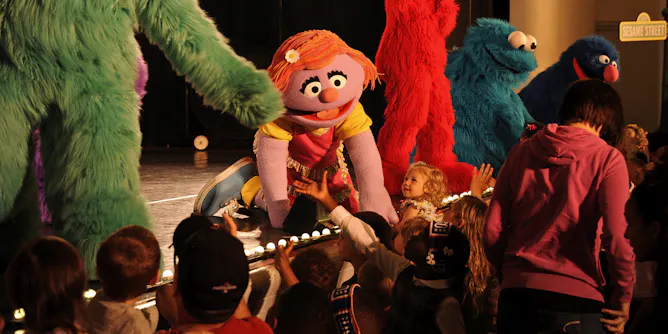
Many children’s educational shows undergo pre-screening to make sure each episode delivers its intended message. Adult viewers watching alongside kids can help ensure the lessons are well received.
Articles on Children
Displaying 241 - 260 of 1256 articles

Marriage on its own won’t do away with child poverty, and in fact it can create even more instability for low-income families.

Engaging in purposeful, meaningful and strategic conversations with children can directly support children’s language comprehension, an important component of reading.

Additional research and attention is needed — particularly in Canada — to provide schools with evidence-based, trauma-informed and culturally attuned approaches to school discipline.

You can donate to environmental charities and even purchase carbon offsets, but not having an additional child typically has a much greater impact.

We found no discernable difference in how people rated family scenarios with one, two or three children.
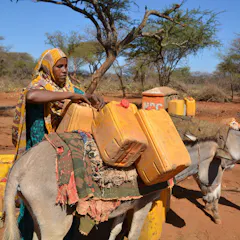
Donkeys provide vital support to women but their lives are often cut short.

People often think about how it’s good for children to have a pet dog around. But what about the dog?
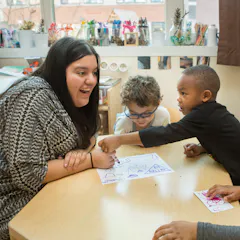
We need to ensure the best scientific research in play-based learning and early reading is leveraged, and teachers receive supports to meet children’s developmental and academic needs.

New research shows that women’s earnings are negatively impacted by having children, while men’s aren’t. The effects can be long-lasting and contribute to the gender pay gap.

It has been one year since Turkey’s deadly earthquakes – the road ahead remains daunting.

A clinical psychologist who treats young people with eating disorders gives her verdict on changes to the Australian curriculum designed to prevent these mental health conditions developing.

The dangers of high-impact sport aren’t contentious. Medical professionals agree that sport-induced brain trauma leads to degenerative brain disease – so why are we still allowing children to play?

The success of students, the education system and the future of our communities depend on the learning that children receive in schools today.

Parents in a study about the accessibility of French immersion programs discussed inadequate support for learning to read and feeling pressured to pay for expensive tutors.
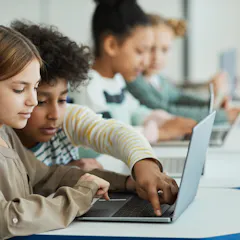
Canada needs to take action immediately to protect children online from exposure to age-inappropriate material. More stringent age verification measures need to be in place.

It’s time we stop treating young people’s experiences in digital and physical spaces as distinct and mutually exclusive.

Scoliosis is a treatable condition, but only if detected early. Greater awareness of the condition and its dynamics will greatly aid in patient care moving forward.
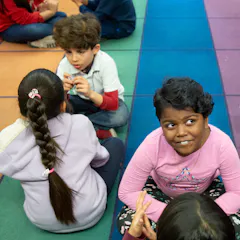
A key way to support mental health and well-being is to support strong reading instruction especially early in children’s education.
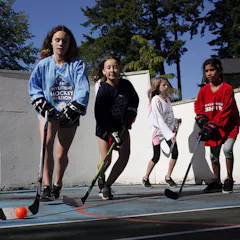
Researchers with expertise in parent-child relationships and child development offer 5 tips about how parents or caregivers can find a balance between children’s structured and unstructured time.
Top contributors
-

Researcher, Digital Wellbeing, Western Sydney University
-
Professor, Canada Research Chair in Determinants of Child Development, Owerko Centre at the Alberta Children’s Hospital Research Institute, University of Calgary
-
Associate Professor in Language, Literacy and TESL, University of Canberra
-
Tier 1 Canada Research Chair in School-Based Mental Health and Violence Prevention, L’Université d’Ottawa/University of Ottawa
-
Associate Professor of Pediatrics, University of Virginia
-
Associate Professor in Child Psychology and Education, University of Staffordshire
-
Extraordinary Research Fellow: South African Research Chair in Cities, Law and Environmental Sustainability, Faculty of Law, North-West University
-
Policy Fellow, Mitchell Institute, Victoria University
-
Assistant Professor, Department of Psychology, Université de Montréal
-
Elizabeth Handsley is a Friend of The Conversation.
Adjunct Professor of Law, Western Sydney University
-
Professor of Social Psychology, London School of Economics and Political Science
-
Postdoctoral Research Fellow, Department of Psychology, University of Calgary
-
Senior Lecturer in Philosophy and Education; Curriculum Director, UQ Critical Thinking Project, The University of Queensland
-
Fellow in Early Childhood Policy, Atkinson Centre, Ontario Institute for Studies in Education, University of Toronto
-
Senior Lecturer in Education, Queensland University of Technology