

Research has started to identify the key factors in creating communities that promote good early childhood development.
Articles on Child development
Displaying 221 - 240 of 390 articles

Hiding feelings can cause distress in children too.

Learning to form friendships is a key part of growing up.

If you’re a parent, there’s one less thing to worry about – your child is probably healthy even if they’re fussy about what they eat.

A developmental psychologist explains how she uses Harry Potter books to make child development more relatable to first-year college students, many of whom grew up on the wildly popular books.

From dyslexia, to dementia to schizophrenia, there is evidence that playing games can help, while boosting family connections and emotional wellbeing.

Culture plays a role in forming a child’s identity, conversational style and memory. This has many implications for how to deal with children, from school to the judicial system.
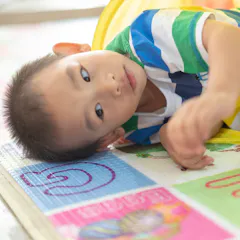
Parents of autistic children are often encouraged to stick with one language at home - even if they speak several. But should they?

Children lying is rarely cause for concern and actually means your child is developmentally normal.
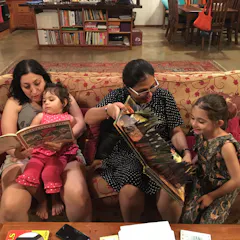
Early shared reading is linked to a number of benefits for children, including better performance in NAPLAN, reading, writing, spelling, grammar and mathematics.

If your child has a problem with defiant behaviours, there are a number of things you can do to avoid standoffs and reduce the chance of meltdowns. Here’s how.

Children develop a sense of morality as they grow, similar to how literacy and numeracy skills develop over time and with practice.
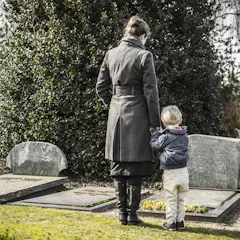
When it comes to death, children’s imagination can sometimes be scarier than reality.
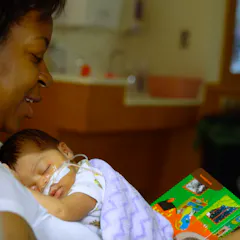
A new program has been show to help parents of preemies use their voice to foster their premature baby’s language development. The findings are hopeful, the researchers behind the program say.

The flat screened babysitter is part of growing up.

Human beings seem to be born wearing rose-colored glasses. Psychologists are interested in how this bias toward the positive works in the very young – and how it fades over time.
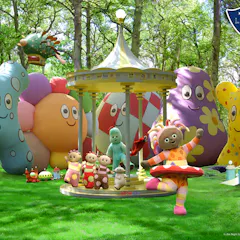
Upsy Daisy and the Tombliboos are finely tuned in to the developing minds of toddlers.

Children are able to pick up negative racial stereotypes by the age of six. Luckily, parents can help reverse them.

Practice and experience is vital for acquiring a motor skill like handwriting.

Instead of nagging younger kids “not to forget”, and trusting the power of the child’s developing memory alone, try to help them “offload” as much of the work as possible.
Top contributors
-

Professor, Canada Research Chair in Determinants of Child Development, Owerko Centre at the Alberta Children’s Hospital Research Institute, University of Calgary
-
Deputy Director, The Kids Research Institute Australia, Professor of Autism Research, The University of Western Australia
-
Associate Professor in Psychology, Deakin University
-
Professor of Clinical Neuropsychology, University of Cambridge
-
Postdoctoral Research Associate, Cognitive Neuroscience, University of Cambridge
-
Associate Professor of Developmental Psychology & Psychopathology, University of Leeds
-
Professor of Educational Psychology, University of Wollongong
-
Associate Professor, School of Psychology, Scientist, Children's Hospital of Eastern Ontario Research Institute, L’Université d’Ottawa/University of Ottawa
-
Professor of Science and Technology for Brain-Inspired Intelligence/ Computer Science, Fudan University
-
Director, Center for Community Child Health Royal Children's Hospital; Professor, Department of Paediatrics, University of Melbourne; Theme Director Population Health, Murdoch Children's Research Institute
-
Associate Professor, Department of Psychology, University of Essex
-
Assistant Professor in Psychology, Bond University
-
Senior Industry Fellow, School of Education, RMIT University
-
Associate professor, Monash University
-
Inaugural Roberta Holmes Professor, La Trobe University