
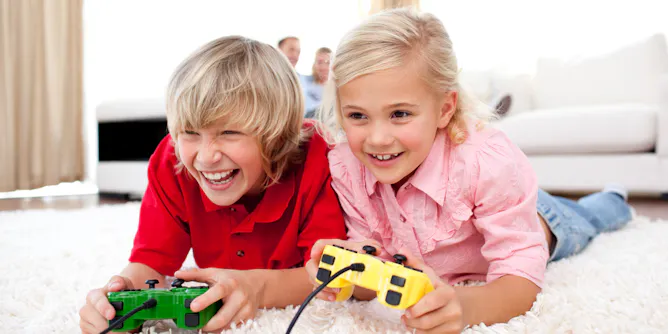
Low-to-moderate use of electronic games may have a positive effect on children’s later academic achievement, but overuse can be detrimental.
Articles on Child development
Displaying 261 - 280 of 390 articles

Animals can bring a sense of trust and stability.

We still don’t know what’s behind four out of every five birth defects. But that can change.

Childhood trauma from abuse, neglect and even divorce increases the risk for physical, mental and developmental problems. To prevent the poisonous consequences, safety and stability are essential.
Shape-shifting bodies. Cracking voices. Hairs sprouting in new places. Why do some children enter puberty early?

The record donation by Twiggy Forrest highlights the rise of more strategic philanthropy, which tries to tackle the root causes of complex problems through collaboration, research and advocacy.

We are not hard-wired to read. It has taken thousands of years of practice to forge connections in our brains to help us do this.

It turns out that children as young as three can actually understand some forms of irony.

Gossiping may well be toxic and harmful in certain situations but there are ways to engage in “good gossip” that can reap rewards in social groups.
A revolution in the tools and techniques developmental psychologists use to investigate kids’ knowledge and capabilities is rewriting what we know about how and when children understand their world.

Glencore has admitted responsibility for air pollution in Mount Isa, but its latest report puts the onus on residents to minimise their exposure to lead contamination in their homes.
For young children, how we speak is often more important than what we say. Even ‘positive’ generalizations can lead children to adopt negative stereotypes.
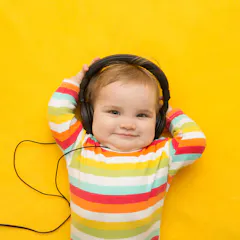
Researchers teamed up with artist Imogen Heap to discover what music makes babies laugh.
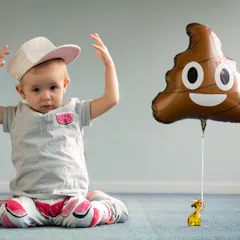
The serious science of toilet humour.

It may be messy, but it’s worth it.

Kids as young as seven have a good enough sense of logic to work out the truth and why it can be better to lie.

Little kids cover their own eyes and feel hidden, even if they’re still fully visible. New research suggests this doesn’t mean children can’t understand others’ perspectives, as had been assumed.
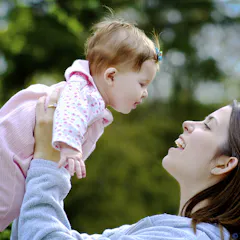
Babies first learn to recognize the rhythm and intonation of language. The process begins in the womb, where the intonation patterns are transmitted to the baby through the fluids.

An increasing number of parents are choosing to toilet train their children from birth, without using nappies. But how effective is this?

The lead author of a new American Academy of Pediatrics statement summarizes important guidelines for children’s use of electronic devices.
Top contributors
-

Professor, Canada Research Chair in Determinants of Child Development, Owerko Centre at the Alberta Children’s Hospital Research Institute, University of Calgary
-
Deputy Director, The Kids Research Institute Australia, Professor of Autism Research, The University of Western Australia
-
Associate Professor in Psychology, Deakin University
-
Professor of Clinical Neuropsychology, University of Cambridge
-
Postdoctoral Research Associate, Cognitive Neuroscience, University of Cambridge
-
Associate Professor of Developmental Psychology & Psychopathology, University of Leeds
-
Professor of Educational Psychology, University of Wollongong
-
Associate Professor, School of Psychology, Scientist, Children's Hospital of Eastern Ontario Research Institute, L’Université d’Ottawa/University of Ottawa
-
Professor of Science and Technology for Brain-Inspired Intelligence/ Computer Science, Fudan University
-
Director, Center for Community Child Health Royal Children's Hospital; Professor, Department of Paediatrics, University of Melbourne; Theme Director Population Health, Murdoch Children's Research Institute
-
Associate Professor, Department of Psychology, University of Essex
-
Assistant Professor in Psychology, Bond University
-
Senior Industry Fellow, School of Education, RMIT University
-
Associate professor, Monash University
-
Inaugural Roberta Holmes Professor, La Trobe University