

While the current version of Gemini isn’t mind blowing, later iterations are likely to be much more powerful.
Articles on ChatGPT
Displaying 201 - 220 of 347 articles
Learning about the world from live events is the next step for AI.

ChatGPT can explain key concepts and information that can help people make the most of their time locating, accessing and interpreting archives. But ChatGPT can also give false information.

Artists have embraced AI despite the risks to them, educators could learn from their example.

Federal and state governments have just released a national framework for generative AI in schools. This paves the way for generative AI to be used routinely in classrooms around the country.

The OpenAI sacking affair highlights ongoing debates over the safety and misuse of AI.

The board is supposed to stop OpenAI from veering from its mission of building technology that benefits humanity.
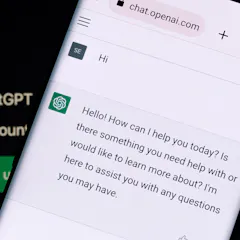
The public release of the chatbot has led to a global conversation about the risks and benefits of AI – a conversation few people were having just a few years ago.

Since ChatGPT was released a year ago, we have been asking Australian university students and academics about their use of generative AI.
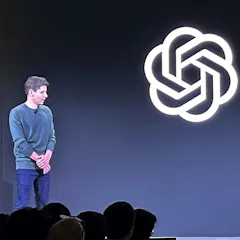
ChatGPT’s interface fueled the technology’s phenomenal rise to prominence. By being good at talking with us, it spoke to us.
A survey about college writing instructors’ fears and anxieties about AI demonstrates that student cheating isn’t their only concern. And in fact, many have embraced it as a teaching tool.

Innovations in AI seem to be spurring interest in what is or isn’t real, accurate and human.

We tested how ChatGPT stacks up against professional advice columnists – with some intriguing results.

Learning about Generative AI should include supporting collaborative interdisciplinary research and writing ethical prompts to help discover what it can do.

At the heart of Silicon Valley lies a powerful admiration for its ‘genius founders’ – but this comes at the cost of accountability.

It is almost a year since ChatGPT burst onto the scene. Generative artificial intelligence has become incredibly assessable to everyone, including young people.

Students often use generative AI tools for engaged learning. They have a critical and nuanced understanding of these tools.

There are clear potential time saving benefits. But how these tools might affect the teaching profession more broadly needs to be considered.
Chatbots are proving to be productive and useful but they can be unreliable and make mistakes.

The language and speech technology has been developed to provide linguistic accuracy and is grounded in teaching principles.
Top contributors
-

Director of Sydney Executive Plus, Business School, University of Sydney
-
Professor of Information Technology and Organisation, University of Sydney
-
Lecturer in Business Analytics, University of Sydney
-
Associate Professor of Visual Communication & Digital Media, RMIT University
-
Professor and Associate Director of the Centre for Change and Complexity in Learning (C3L), Education Futures, Adelaide University
-
Professor of Information Systems, Michigan State University
-
Senior Lecturer in Business Information Systems, University of Sydney
-
Senior Lecturer in Computing and Information Systems, Cardiff Metropolitan University
-
Professor of Community Information, University of Michigan
-
Professor of Philosophy and Director of Applied Ethics Center, UMass Boston
-
Associate Professor of Linguistics and Director of Language Lab, The University of Western Australia
-
Senior Research Fellow, Human-AI Decision Making, The University of Queensland
-
Research Assistant Professor of Industrial & Systems Engineering, University of Southern California
-
Senior Lecturer, School of Engineering, Australian National University
-
Assistant Professor, Oregon State University