
A beginner’s guide to why this Chinese AI firm matters.
Articles on ChatGPT
Displaying 121 - 140 of 347 articles

When asked to suggest solutions for environmental challenges, chatbots reflected biases. This could have harmful effects on how we understand and communicate climate change.
DeepSeek’s launch raises questions over the effectiveness of US attempts to stifle Chinese advances in AI. Here’s what we can learn from its apparent success.

Students learn skills to help them distinguish fact from fiction in the world of AI.
AI’s potential needs to be explored through experimentation. But this works best if managed under controlled environments.
Artificial intelligence is so hungry for information, soon there will be no real data left. If done right, synthetic data can fill the gap and improve AI models.
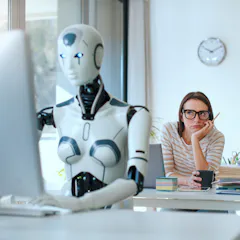
As workplaces are transformed by AI, workers who can use the technology well will remain attractive to employers.

2025 may be the year of AI agents that can carry out tasks on our behalf – but the technology has a couple of big hurdles to get past before it will really be useful.
Tighter regulation and a lack of high-quality, authentic training data are just some of the problems AI developers will need to grapple with next year.

Language models are likely to have an important impact on how we live and work in future, but they’ve also been around longer than many realise.
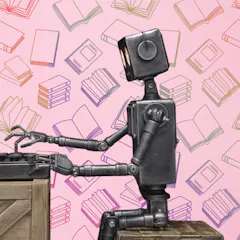
New, tech-driven developments, including new imprints by Microsoft and BookTok’s ByteDance, promise to make book publishing faster and more efficient. But what’s lost in the process?

AI systems can appear to be black boxes – often, even experts don’t know how systems reach their conclusions. The nascent field of “explainable AI” aims to address this problem.

A group of Canadian news media companies are suing OpenAI for using their content, claiming that it is not covered under copyright exemptions.
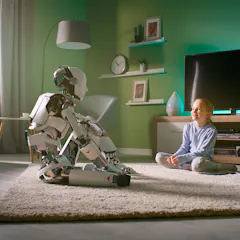
Chatbots want you to think you’re talking to a human, but AI-generated emotion is essentially a linguistic sleight of hand.

When we interact with a chatbot, deeply ingrained habits make us behave as if it’s a person.

Borges imagined an endless library that contained every possible permutation of letters. The truth is out there, but it’s embedded among hordes of lies and gibberish.

It’s one way that AI could have a major impact on society.
As more people turn to ChatGPT instead of Google, research shows AI can be a better tool for creative problem-solving – though it still has its limits.

The tech giant previously prohibited people from using its AI software for military purposes. The shift poses challenges not just for the public – but militaries as well.

How ChatGPT compares to a lightbulb.
Top contributors
-

Director of Sydney Executive Plus, Business School, University of Sydney
-
Professor of Information Technology and Organisation, University of Sydney
-
Lecturer in Business Analytics, University of Sydney
-
Associate Professor of Visual Communication & Digital Media, RMIT University
-
Professor and Associate Director of the Centre for Change and Complexity in Learning (C3L), Education Futures, Adelaide University
-
Professor of Information Systems, Michigan State University
-
Senior Lecturer in Business Information Systems, University of Sydney
-
Senior Lecturer in Computing and Information Systems, Cardiff Metropolitan University
-
Professor of Community Information, University of Michigan
-
Professor of Philosophy and Director of Applied Ethics Center, UMass Boston
-
Associate Professor of Linguistics and Director of Language Lab, The University of Western Australia
-
Senior Research Fellow, Human-AI Decision Making, The University of Queensland
-
Research Assistant Professor of Industrial & Systems Engineering, University of Southern California
-
Senior Lecturer, School of Engineering, Australian National University
-
Assistant Professor, Oregon State University