

Creating bias-free AI systems is easier said than done. A computer scientist explains how controlling bias could lead to fairer AI.
Articles on ChatGPT
Displaying 241 - 260 of 347 articles

In a preprint study, researchers estimate training the model behind ChatGPT would have required somewhere between 210,000 and 700,000 litres of water.
The Federal Trade Commission’s investigation of ChatGPT maker OpenAI shows that the US government is beginning to get serious about regulating AI.

A lot of the current discussion about AI in Australian schools is based on speculation. A new trial will provide the first real world data to answer these questions.

New forms of AI are waiting in the wings, but society may decide there are ethical problems using them.

Artificial intelligence could be used to generate content intended to manipulate people. Addressing this problem means understanding how communication works to influence people.
Unlike a human editor, AI cannot explain their decisions or reasoning in a meaningful way. This can be a problem in a field where accountability and transparency are important.

There has been a huge amount of speculation about what ChatGPT means for university study. But has actually been happening? A new survey looks at the first semester with this new technology.

AI can quietly work in the background as a sophisticated technological tool that delivers better results and performance for people.
Large language models have been shown to ‘hallucinate’ entirely false information, but aren’t humans guilty of the same thing? So what’s the difference between both?
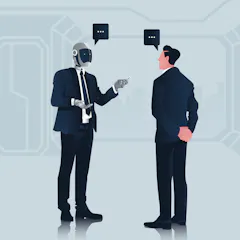
We humans like to think that our language is original, but we absorb large amounts of it from others and liberally repeat and remix what we hear – just as language AIs do.
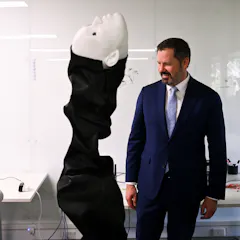
Science minister Ed Husic says about AI: 'If we get it right, there is a potential for huge benefit''

Handwriting is not just about forming letters. It also develops fine motor skills, helps with memory and even wellbeing.

Schools are blocking access to ChatGPT on their computers to try to prevent students from cheating. Two experts on academic cheating offer a very different strategy.

If anyone ever read this stuff, they wouldn’t have time to do anything else.

Artificial intelligence looks like a political campaign manager’s dream because it could tune its persuasion efforts to millions of people individually – but it could be a nightmare for democracy.
I study artificial general intelligence, and I believe the ongoing fearmongering is at least partially attributable to large AI developers’ financial interests.

AI is starting to make us doubt whether humans have a monopoly on creativity. Two scholars argue AI’s use scenarios may be endless but that they require another form of creativity: curation.

The latest warning by AI experts is bound to create alarm, so its authors should be more specific and clarify their concerns.

Figuring out how to regulate AI is a difficult challenge, and that’s even before tackling the problem of the small number of big companies that control the technology.
Top contributors
-

Director of Sydney Executive Plus, Business School, University of Sydney
-
Professor of Information Technology and Organisation, University of Sydney
-
Lecturer in Business Analytics, University of Sydney
-
Associate Professor of Visual Communication & Digital Media, RMIT University
-
Professor and Associate Director of the Centre for Change and Complexity in Learning (C3L), Education Futures, Adelaide University
-
Professor of Information Systems, Michigan State University
-
Senior Lecturer in Business Information Systems, University of Sydney
-
Senior Lecturer in Computing and Information Systems, Cardiff Metropolitan University
-
Professor of Community Information, University of Michigan
-
Professor of Philosophy and Director of Applied Ethics Center, UMass Boston
-
Associate Professor of Linguistics and Director of Language Lab, The University of Western Australia
-
Senior Research Fellow, Human-AI Decision Making, The University of Queensland
-
Research Assistant Professor of Industrial & Systems Engineering, University of Southern California
-
Senior Lecturer, School of Engineering, Australian National University
-
Assistant Professor, Oregon State University