

A survey of 1,000 UK doctors found one in five used ChatGPT or Gemini in clinical practice.
Articles on ChatGPT
Displaying 141 - 160 of 347 articles

The first project to examine Australian Wikipedia entries finds topics such as Australian history and use of First Nations place names are sparking ‘edit wars’, with some serious omissions.

As AI ‘companions’ permeate our most intimate spheres, we risk diminishing our own human essence by falsely attributing human qualities to them.

How worried should you be?
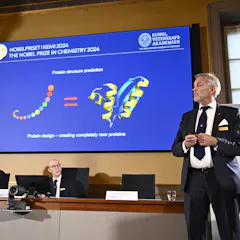
AI will feature in future Nobel prizes as scientists exploit the power of this technology for research.

Data labellers are the lifeblood of the AI industry. Yet they are often paid very low wages, work in unsafe environments and lack basic workplace protections.

AI impacts many things beyond the flashy chatbots – often in ways that quietly improve everyday processes.
Apple’s share price took a large hit following its launch of the iPhone 16 with AI features.

I decided to put the AI to the test with some standard face-recognition trials.

We have been evaluating a trial of AI in South Australian schools. Teachers acknowledge the risks but say it can reduce time pressures and help students learn.
If you’re using generative AI tools yourself, here are some tips to keep your writing fresh and creative.

A UN report proposes seven recommendations for addressing gaps in current AI governance. It’s a small step forward, but it needs refining.
As generative language models continue to shape our digital world, the risks of misinformation and misidentification grow ever more pressing.

Most of the potential uses of AI are already covered by existing rules and regulations. It’s better to make them work than set up new regulations alongside them.

A new experiment shows AI chatbots aren’t only good for spreading disinformation – but it comes with plenty of caveats.

Even OpenAI is worried about people developing intimate relationships with the new human-like version of its language model-cum-chatbot. But it should have known the risks.

The federal government is encouraging more people to use artificial intelligence. But this blind hype dismisses the harms caused by the new technology.

We can celebrate the vision and ambition of the Dartmouth Conference. But we must also learn from its mistakes.
Early expectations for generative AI are deflating – but realistic applications are beginning to emerge.
There are hopes AI may be the silver bullet we need to save the environment – but it comes with downsides.
Top contributors
-

Director of Sydney Executive Plus, Business School, University of Sydney
-
Professor of Information Technology and Organisation, University of Sydney
-
Lecturer in Business Analytics, University of Sydney
-
Associate Professor of Visual Communication & Digital Media, RMIT University
-
Professor and Associate Director of the Centre for Change and Complexity in Learning (C3L), Education Futures, Adelaide University
-
Professor of Information Systems, Michigan State University
-
Senior Lecturer in Business Information Systems, University of Sydney
-
Senior Lecturer in Computing and Information Systems, Cardiff Metropolitan University
-
Professor of Community Information, University of Michigan
-
Professor of Philosophy and Director of Applied Ethics Center, UMass Boston
-
Associate Professor of Linguistics and Director of Language Lab, The University of Western Australia
-
Senior Research Fellow, Human-AI Decision Making, The University of Queensland
-
Research Assistant Professor of Industrial & Systems Engineering, University of Southern California
-
Senior Lecturer, School of Engineering, Australian National University
-
Assistant Professor, Oregon State University