
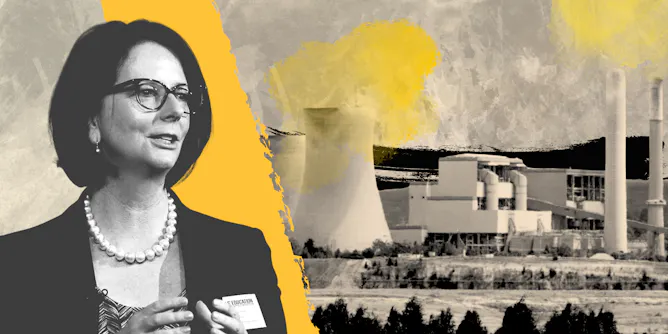
The affair is a cautionary tale of what happens when negative campaigning, misinformation and clumsy politicking collide to kill policy – and political careers.
Articles on Carbon tax
Displaying 1 - 20 of 342 articles

Polluting companies in South Africa have had to pay a tax on their carbon emissions since 2019. This gives them a good incentive to reduce emissions.

The EU’s new carbon tax is reshaping global trade – and starting to influence what people buy and how much they pay for it.
Key climate finance terms explained by experts.

The axing of the consumer carbon tax marks a major turning point in Canadian climate policy. It fell victim to misinformation and populist attacks.

As Canada grapples with intensifying climate-related challenges, the next government will need to be able to effectively communicate its vision to voters.

Despite the Canada Carbon Rebate’s effectiveness, Canada’s major political parties are willing to scrap it because it’s not politically rewarding.

The carbon tax, once seen as a policy achievement for the Liberals, may be a liability in this year’s election. Here is how the Liberals can counter the “axe the tax” narrative.

Canada’s current carbon tax system is unpopular and not as effective as it should be. A progressive carbon tax system would help.
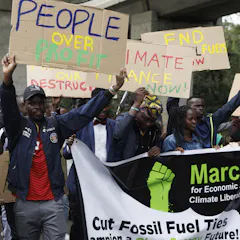
COP29 should end subsidies to fossil fuel companies, compel large-scale emitters to compensate affected regions and ensure that carbon taxes reflect the true cost of cleaning up pollution.
The system operating in Australia from 2012 to 2014 was economically and environmentally efficient.

More than 70 years ago, right-wing W.A.C. Bennett became a B.C. political powerhouse after a failed Liberal-NDP coalition. There are parallels to today’s rise of the B.C. Conservatives.

Whereas oil producers like Saudi and the UAE are spending heavily to diversify away from carbon, the same can’t be said of many other Opec members.
Emotions help shape opinion on energy sources. Understanding this can allow us to design better zero-carbon policies.
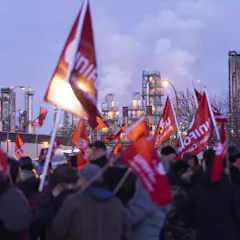
While governments are often blamed for a perceived ‘unjust transition,’ it is actually the industry itself which poses the biggest threat to the future of oil and gas workers.

Mainstream economics has been complicit in the climate change crisis as it falsely treats climate change as a mere side-effect of production or a minor aberration.

Why the public resistance to carbon tax policies? New research suggests a few key factors that may play a role in influencing popular support for carbon tax efforts in Canada.

Never mind the carbon tax. Tax breaks and public spending for fossil fuel companies cost taxpayers billions every year and hurt the environment.

Governments that publicly commit to carbon pricing are compelled to get their own house in order.
As other nations race to restructure their economies in line with a low-carbon future, Australia risks being left behind. An economy-shaping tax on fossil fuels is a conversation we must have.
Top contributors
-

Senior Fellow in Energy and Climate Change, Grattan Institute
-
Former Visiting Fellow, SPRU, University of Sussex Business School, University of Sussex
-
Professorial Fellow, University of Canberra
-
Professor, Crawford School of Public Policy and Director, Centre for Climate and Energy Policy, Australian National University
-
Associate Professor in Politics and International Relations, School of Social Sciences, Monash University
-
Senior Industry Fellow, Environment and Planning, RMIT University
-
Senior Research Fellow and Associate Professor, Melbourne Climate Futures initiative, The University of Melbourne
-
Climateworks Centre CEO, Monash University
-
Professor and Director, Centre for Environmental Economics and Policy, The University of Western Australia
-
Senior Research Associate, Renewable Energy & Energy Systems Analyst, UNSW
-
Professor of Economics, Monash University
-
Professor of Climate and Environmental Law, University of Sydney
-
Research Fellow, Curtin University
-
Professor and Director of Research, ANU Law School, Australian National University
-
Senior Visiting Fellow in Energy Systems, UNSW