

There are lessons from the EU’s highly financialised cap-and-trade market.
Articles on Emissions trading
Displaying 1 - 20 of 65 articles
The time has come to develop Canada’s participation in international carbon markets.

Governments that publicly commit to carbon pricing are compelled to get their own house in order.
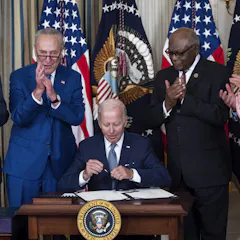
The Biden Administration’s signature climate legislation is unleashing a wave of clean energy investment, along with some opportunities and risks for countries like Australia.
Both sides have reason to find common ground, says a group of energy and climate policy analysts.
The dust has settled on COP26 and one of the summit’s few achievements looks decidedly less impressive.

COP26 saw progress and announcements, but the commitments made by states — in addition to having to pass the test of implementation —fall far short of what the science requires.
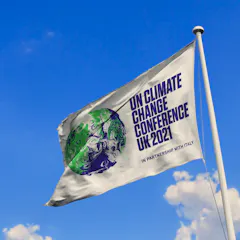
Uncertainty about carbon market rules will be problematic for New Zealand, given its reliance on overseas carbon trading to meet its new climate pledge.
An emissions trading scheme is New Zealand’s main policy to tackle climate change. But to bring down emissions quickly enough, other policies will need to transform transport and agriculture.
History shows how the states and territories can step into a policy breach when the federal government fails. It’s time they band together on electric vehicles.
Australia is on track to meet its 2030 Paris climate targets without resorting to carryover credits, with the aid of the recently-announced technology roadmap, according to projections to be released on Thursday.
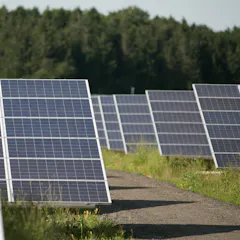
Slashing carbon emissions by 68% by 2030 will depend on using the UK’s infrastructure strategy effectively.
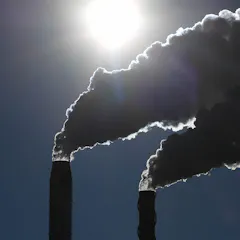
Making the solutions cheaper – rather than the problems more expensive – could reduce emissions more fairly.

Carbon offsetting is better regulated than it once was, but it’s no solution to the climate crisis.
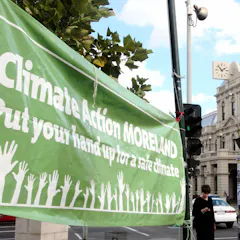
Carbon accounting isn’t always simple, so it’s important to make it easier to measure and reduce emissions at the local level. And that’s ultimately the starting point for global climate action.
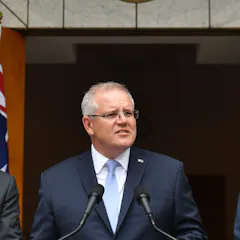
There is an obvious point upon which the LNP, Labor and Greens might agree to move policy forward: the national ‘cap and trade’ emissions trading system proposed by John Howard in 2007.

Activists wanted nations to make bigger climate commitments at the Madrid COP-25 meeting, but the meeting’s real goal was agreeing on rules for pricing carbon pollution.

The United Nations is calling on world governments to step up action against climate change. Can China, the world’s biggest carbon emitter, fulfill its pledges?
George H.W. Bush, who pledged to be ‘the environmental president,’ took a market-based approach to pollution control that helped clear the air. Now some experts think it could work on climate change.
With consultation underway to improve the New Zealand emissions trading scheme, experts argue that a reserve price on emissions units could help rebuild confidence in low-emission investment.
Top contributors
-

Senior Fellow in Energy and Climate Change, Grattan Institute
-
Professor, Crawford School of Public Policy and Director, Centre for Climate and Energy Policy, Australian National University
-
Professorial Fellow, University of Canberra
-
Senior Industry Fellow, Environment and Planning, RMIT University
-
Professor, Climate | Policy | Sustainability, York St John University
-
Senior Research Fellow and Associate Professor, Melbourne Climate Futures initiative, The University of Melbourne
-
Former Visiting Fellow, SPRU, University of Sussex Business School, University of Sussex
-
Climateworks Centre CEO, Monash University
-
Professor of Public Ethics, Charles Sturt University
-
Director of the Climate Change Institute, Australian National University
-
Co-Director, Wellbeing Program, London School of Economics and Political Science
-
Honorary Professorial Fellow in Telecommunications, The University of Melbourne
-
Academic position - Research Associate at the Centre for Resources, Energy and Environmental Law, The University of Melbourne
-
Professorial Research Fellow in Economics, The University of Melbourne
-
Deputy Vice-Chancellor, Academic, University of Canberra