

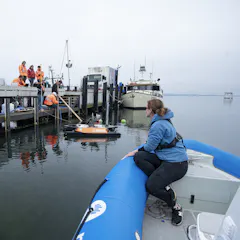
Scientists are taking to the seas with new equipment to measure how much carbon the oceans are storing.
Articles on Carbon dioxide removal
Displaying 1 - 20 of 40 articles

Some methods being tried to counter climate change shift the ocean’s biology or chemistry. Others would deflect solar radiation. All have consequences for marine life.
Efforts to reduce emissions and decarbonise industry must be combined with new technology that removes carbon dioxide from the atmosphere. Australia can build an industry around this service.

A technique known as “enhanced rock weathering” promises to remove billions of tonnes of carbon dioxide (CO₂) from the atmosphere. But it’s crucial to be able to measure how much CO₂ is captured.

Taking more carbon dioxide out of the atmosphere by stashing it in the ocean seems like a good idea, but it could backfire if tiny marine animals called zooplankton get extra hungry.
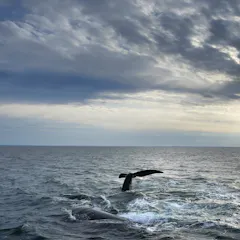
Global warming is making the oceans more acidic. Our work aims to design realistic systems to reduce this acidity, and remove carbon from the atmosphere in the process.
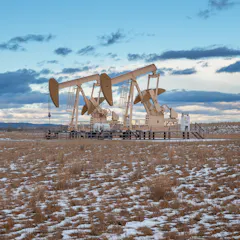
The distinction between ‘abated’ and ‘unabated’ fossil fuels is crucial, yet remains ambiguous.
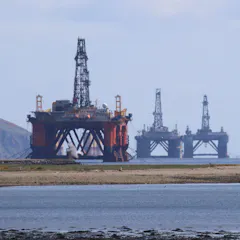
This could be one reason to leave these rigs in the sea.

Global efforts to cut emissions fall well short of what’s needed to avoid dangerous warming. It’s becoming essential to develop carbon-removal strategies to get to net zero.

Most technologies for CO₂ removal are expensive. But New Zealand could be doing this cheaper than other countries, taking advantage of existing geothermal and forestry industries.
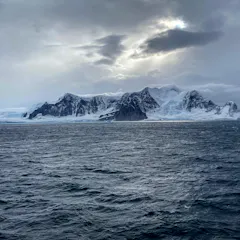
Working with underwater robots, scientists show how deep sea mountains and fast currents between Antarctica and South America play a crucial role in stabilizing the climate.
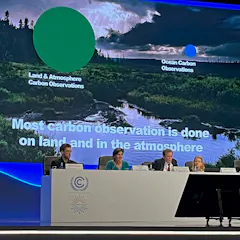
COP27’s agreement on observing the oceans sets a strong foundation for policymakers to invest in internationally linked observation that will help countries better monitor these carbon sinks.

From planting mangroves to dumping minerals in the ocean, there are lots of ideas for ocean carbon dioxide removal – and even more questions.
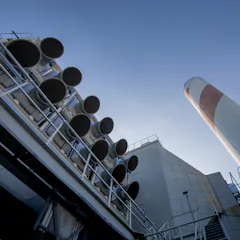
The cost of deploying a direct air capture unit must fall while the cost of emitting CO₂ rises.
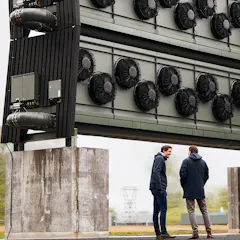
One estimate suggests at least a sixth of all emissions cuts expected from the Inflation Reduction Act would come from carbon capture.
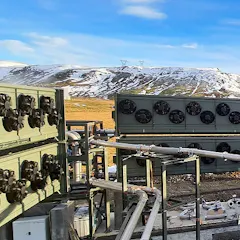
A climate scientist looks at what works and some popular ideas that aren’t as cheap or effective as people hope.

While carbon dioxide removal from the air is not a replacement for emissions reductions, it can supplement these efforts. Experts are continually researching the best ways to do this.

Plan to cut emissions quickly, use offsets sparingly and set broader goals for improving society.
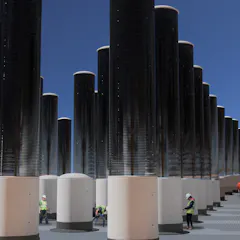
Klaus Lackner is finding new ways to cut the technology’s high costs and energy demand, and he’s about to launch the first ‘mechanical tree’.

Removing carbon from the atmosphere raises political questions that should be addressed by democratic institutions.
Top contributors
-

ARC DECRA Fellow/Senior Lecturer, IMAS, University of Tasmania
-
CO2Chem Network Manager, University of Sheffield
-
Professor of Environmental Economics, University of Oxford
-
Professor of Chemical Engineering and Chemistry, University of Sheffield
-
Professor of Research in Environmental Policy, American University School of International Service
-
Adjunct Professor of Energy, Murdoch University
-
Postdoctoral research assistant, University of Sheffield
-
Ph.D. Candidate, Environmental Science, Policy, and Management, University of California, Berkeley
-
Professor of Ocean and Climate Change, Australian National University
-
Conjoint Academic in Sustainability, University of Newcastle
-
Associate Professor, Energy Systems and Data Group, Birmingham Energy Institute, University of Birmingham
-
Professorial Research Fellow in Earth System Science, University of Southampton
-
Lecturer, Monash University
-
Adjunct Research Fellow in Energy and Climate Policy, Columbia University
-
James Martin Fellow, Oxford Martin School, Environmental Change Institute and Institute for Science Innovation and Society, University of Oxford