
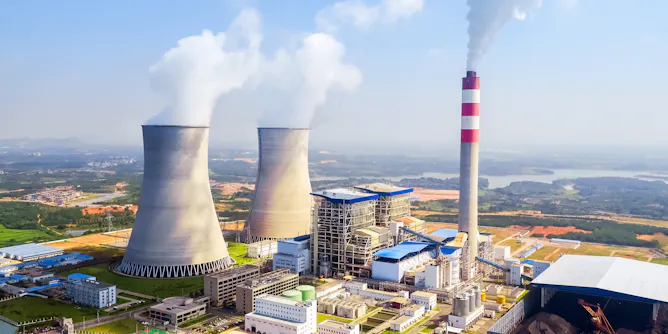
Carbon dioxide removal is different to carbon capture, utilisation and storage. It’s easy to confuse the two processes but they tackle different problems.
Articles on Carbon capture
Displaying 1 - 20 of 72 articles
These ancient wetlands are wildlife hotspots and crucial carbon stores.

Chemists have been working on new approaches to reducing waste and finding new functions for existing materials.

Just a gram of these tiny crystals can have an internal surface area as big as a soccer field. A materials expert explains the almost magical chemistry of MOFs.

Farming seaweed, changing ocean chemistry, breeding corals and restoring mangroves could help fight climate change – if assessed and managed responsibly.
Carbon capture and removal can produce ‘negative’ carbon emissions.
‘Carbon farming’ has huge potential in the region, but diverse soils and land uses present a challenge.

Tulip trees were long renowned for their carbon storage. Their unique wood may be responsible.
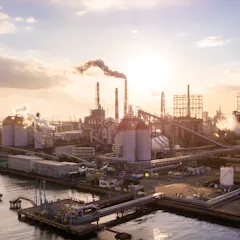
Repurposing fossil fuel infrastructures to supply clean fuels might make more immediate economic and environmental sense than mass electrification of transport and industry.
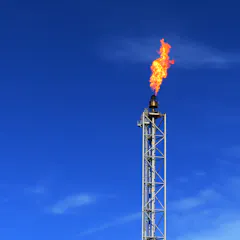
Japan is splashing cash for Australian gas to keep fossil fuels flowing under its net zero plan for South East Asia . But this undercuts Australia’s green export vision

Organisms that produce synthetic fuel and suck carbon out of the air are just some of the possibilities of ‘engineering biology’ – if policymakers can shepherd the industry towards success.
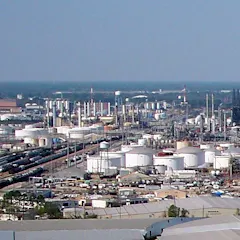
Carbon capture is turning the oil and gas industry into a critical player for mitigating climate change – while its products continue to heat up the planet.

President Biden has called for protecting large, old trees from logging, but many of them could be cut while the regulatory process grinds forward.
The combination of the source of the CO₂ and its end use determines its environmental and economic benefits or consequences.
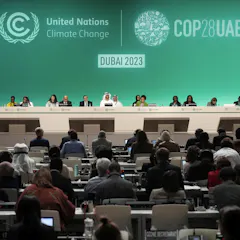
Does the science support the need for a fossil fuel phase out to reach 1.5 C? The answer depends on whether we believe that carbon capture and removal technologies can be deployed safely at scale.
Carbon capture and sequestration can play a role in limiting warming but the nuances of its application are far more complicated than just planting trees. Getting it wrong could make warming worse.

Some geoengineering techniques are better understood than others. The US is investing in capturing carbon dioxide from the air, but ideas to block the Sun’s rays are raising big concerns.

With tourists flocking in droves to ‘experience’ heat waves, perhaps it’s time for everyone to take a good hard look at their individual contribution to global warming.
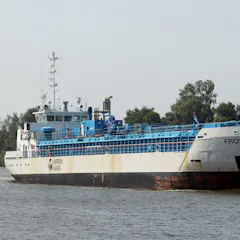
Australia wants to allow export of CO₂ for the purpose of “sequestration”, or storage under the sea. Fossil fuel companies, or research organisations, would need to first apply for an export permit.

A longer growing season for trees, due to global warming, does not necessarily lead to an increase in wood production.
Top contributors
-

Professorial Fellow, University of Canberra
-
Director of Research and Innovation, School of International Studies, Macquarie University
-
CO2Chem Network Manager, University of Sheffield
-
Professor of Advanced Energy Research, Director of the Global CO2 Initiative, University of Michigan
-
Professor, School of Economics, The University of Queensland
-
Professor of Engineering and Director of the Center for Negative Carbon Emissions, Arizona State University
-
Senior Lecturer, Grantham Institute - Climate Change and Environment, Imperial College London
-
Professor of Chemical Engineering and Chemistry, University of Sheffield
-
Senior Lecturer in Geography, University College Dublin
-
PhD researcher, School of Geographical and Earth Sciences, University of Glasgow
-
Professor of Energy Engineering, University of Glasgow
-
Assistant Professor of Biology, University of Texas at Arlington
-
Assistant Director of the Global Systems Institute, University of Exeter
-
Senior Research Engineer, Massachusetts Institute of Technology (MIT)
-
Emeritus Professor of Sociology, Australian National University