
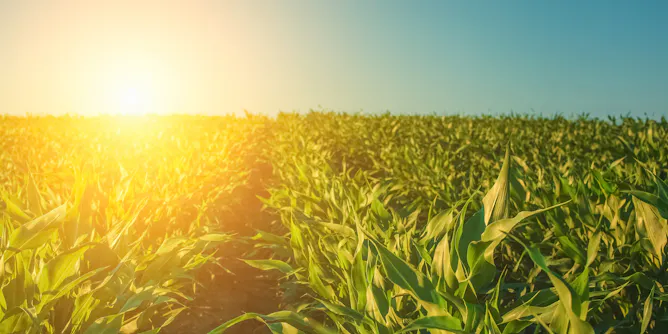
New research finds more CO₂ can actually make most plants smaller in the long-term - but the story for crops isn’t so simple.
Articles on Carbon dioxide (CO2)
Displaying 241 - 260 of 374 articles
Until now, the international shipping industry has been excluded from the Paris Agreement and the Kyoto Protocol, despite its major contribution to global emissions.
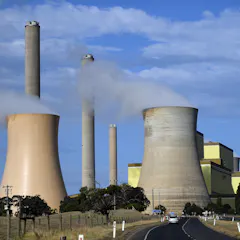
AGL has announced plans to use coal to make hydrogen fuel at its Loy Yang A station in Victoria’s Latrobe Valley. Wait, isn’t coal made of carbon, not hydrogen? Yes, but here’s how the process works.
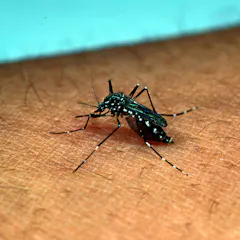
In the future, traps for mosquito that spread the dengue and chikungunya virus could be made from the carbon dioxide in human breathe as well as body odour.
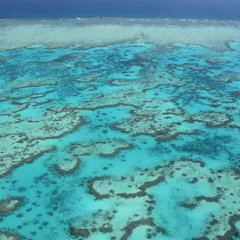
Ocean acidification poses an increasing threat to the sediments that form the framework of coral reefs - within around 30 years, these carbonate sands may no longer be able to form.
It may be just as well the UK government scrapped its previous carbon capture competition.
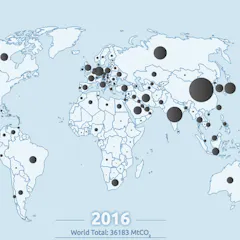
Consistent carbon pricing is a key element in the fight against climate change.
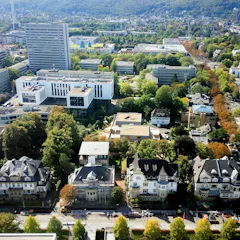
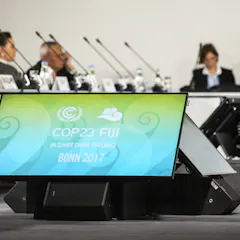
It’s not all bad news at Bonn – with low carbon precincts, living infrastructure and urban networks, cities are leading the charge against climate change.
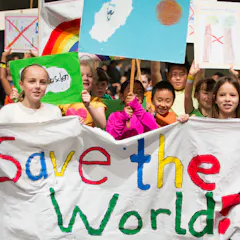
As delegates meet in Bonn for the latest rounds of climate talks, civil society, NGOs, cities, regional governments and businesses, are stepping up to work together toward climate goals.
The CO2 we produce when we put up buildings is large and virtually unregulated.

Canada ratified the Paris agreement on climate change, but it hasn’t yet filled the leadership void left by the United States. Time is running out.
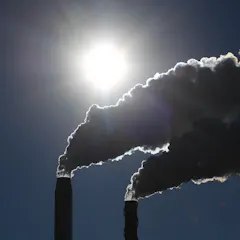
Global greenhouse gas levels have hit their highest point in at least 3 million years, according to new figures from the World Meteorological Organisation.
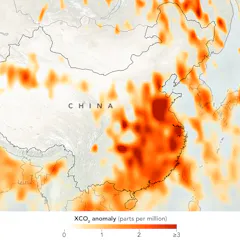
New data from a NASA satellite show in unprecedented detail the flow of carbon dioxide into the atmosphere. Future satellites should even be able to detect the signatures of individual power stations.
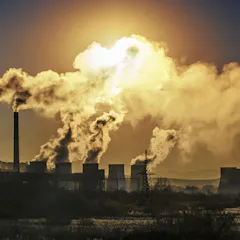
It’s still possible to hit the more ambitious of the two Paris global warming goals, according to a new estimate of the global carbon budget. But it sure won’t be easy, and we need to start now.
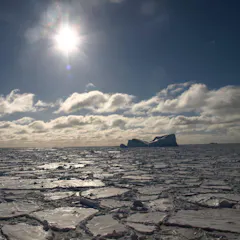
The last ice age locked atmospheric carbon dioxide into oceans, which has major implications for how the oceans and carbon dioxide may be linked in the future.
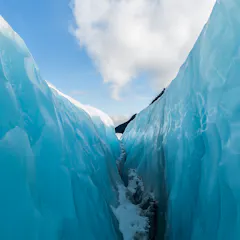
Earth’s thermostat can fail spectacularly at times. Around 700 million years ago, huge volcanic eruptions triggered “Snowball Earth”.
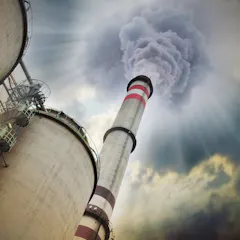
Set aside the politics. If by some miracle we turned off carbon emissions immediately, how would the climate respond?
Solar radiation management might be able to reduce some of the risks of global warming while countries get their emissions under control.
Pollution has increased carbon in our soils - which is good for climate change. But this carbon may not stay there for long.
While the gases most responsible for global warming - carbon dioxide, methane and nitrous oxide - continue to climb, other industrial greenhouse gases are being brought gradually under control.
Top contributors
-

Chief Research Scientist, CSIRO Environment; Executive Director, Global Carbon Project, CSIRO
-
Research Group Leader, CSIRO
-
Royal Society Research Professor of Climate Change Science, University of East Anglia
-
Honorary Fellow, CSIRO
-
Senior Researcher, Center for International Climate and Environment Research - Oslo
-
Senior Researcher, Center for International Climate and Environment Research - Oslo
-
Professor, Department of Earth System Science, and Chair of the Global Carbon Project, Stanford University
-
Chair, Mathematical Modelling of Climate, University of Exeter
-
Professor and Climate Scientist, Department of Geography, Planning and Environment, Concordia University
-
Professor of Chemical Engineering and Chemistry, University of Sheffield
-
Professor of Atmospheric Sciences, Climate Change Research Centre, UNSW
-
CO2Chem Network Manager, University of Sheffield
-
Senior Research Scientist, CSIRO
-
Head of Atmospheric, Oceanic and Planetary Physics, University of Oxford
-
Géochimiste, chargé de recherche CNRS au Centre de recherches pétrographiques et géochimiques de Nancy, Université de Lorraine