
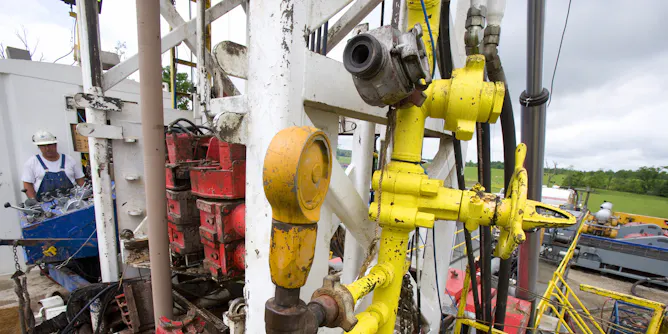
Carbon capture and storage gets a bad rap from its associations with ‘clean coal’. But the technology could prove vital in cutting emissions from other industries like steel, cement and chemicals.
Articles on Carbon dioxide (CO2)
Displaying 261 - 280 of 374 articles
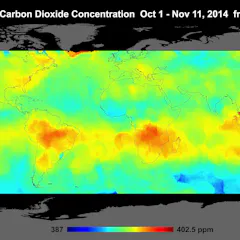
Why use satellites to study Earth’s climate? Researchers leading a new mission explain how images from space will help them analyze which parts of the Americas soak up the most carbon.

Rising carbon dioxide may be a boon for crop yields, but at the expense of nutritional content and quality.

Methane concentrations in the atmosphere are growing at a faster rate than any time in the past 20 years.

Extreme wet years are getting wetter and more common. This means Australia’s terrestrial ecosystems will play a larger role in the global carbon cycle.

Phasing out greenhouse gas emissions entirely by mid-century is possible, and promising trends are emerging. But the next five to ten years will be the real test of whether we can make that happen.
Without understanding why the ‘fingerprint’ has failed to appear our predictions about global warming - as carbon dioxide concentrations increase - are uncertain.
Air pollution from burning firewood and charcoal is the fourth-biggest killer in many countries.

Carbon standards for cars are the cheapest way to cut emissions, and will save drivers money.

The fourth episode of our podcast takes on fuel – from Olympic diets to conflict over oil in the Niger Delta.
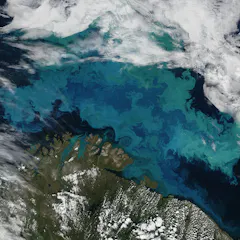
Tiny organisms change ocean acidity to benefit themselves.
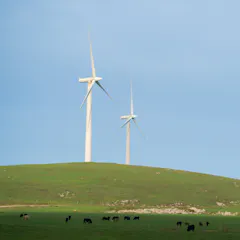
Victoria has announced a renewable energy target of 40% by 2025.
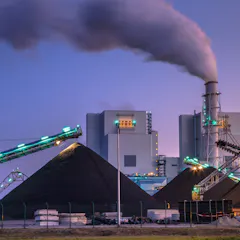
Despite advances in technology, carbon capture and storage could be unsettled by renewable upstarts.

An Icelandic trial shows carbon dioxide can be pumped underground and stored as rock.

The level of carbon dioxide in the atmosphere is rising faster than at any point in the past 55 million years.
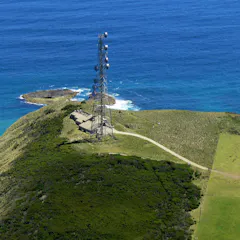
Atmospheric carbon dioxide measurements at Tasmania’s Cape Grim and Antarctica’s Casy Station have now officially passed 400 parts per million and are likely to stay above that for decades to come.
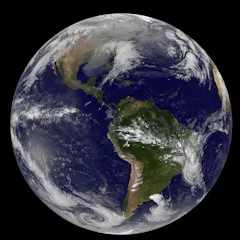
Half of the world’s vegetated land has got greener in the past 30 years, mostly driven by rising CO2.
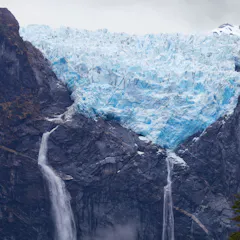
Global average sea level has risen by about 17 cm between 1900 and 2005, but we didn’t know how much of that was due to us, until now.
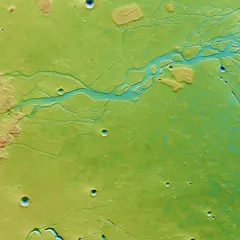
Working out how Mars’s carbon dioxide was turned into rock could help with carbon capture efforts on our own planet.
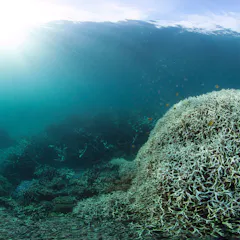
Carbon dioxide is rising faster than any time in the past 66 million years. Rapid rises in the past have been linked to mass extinctions.
Top contributors
-

Chief Research Scientist, CSIRO Environment; Executive Director, Global Carbon Project, CSIRO
-
Research Group Leader, CSIRO
-
Royal Society Research Professor of Climate Change Science, University of East Anglia
-
Honorary Fellow, CSIRO
-
Senior Researcher, Center for International Climate and Environment Research - Oslo
-
Senior Researcher, Center for International Climate and Environment Research - Oslo
-
Professor, Department of Earth System Science, and Chair of the Global Carbon Project, Stanford University
-
Chair, Mathematical Modelling of Climate, University of Exeter
-
Professor and Climate Scientist, Department of Geography, Planning and Environment, Concordia University
-
Professor of Chemical Engineering and Chemistry, University of Sheffield
-
Professor of Atmospheric Sciences, Climate Change Research Centre, UNSW
-
CO2Chem Network Manager, University of Sheffield
-
Senior Research Scientist, CSIRO
-
Head of Atmospheric, Oceanic and Planetary Physics, University of Oxford
-
Géochimiste, chargé de recherche CNRS au Centre de recherches pétrographiques et géochimiques de Nancy, Université de Lorraine