

Warmer temperatures cannot increase the amount of carbon deciduous trees absorb in each growing season, a new study suggests.
Articles on Carbon dioxide (CO2)
Displaying 181 - 200 of 374 articles

Extreme shrinkage of summer sea ice is just the latest evidence of rapid Arctic warming – and what happens in the Arctic doesn’t stay there.
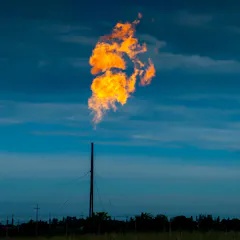
Methane is a live-fast, die-young greenhouse gas but its impact on the climate can last for hundreds or even thousands of years
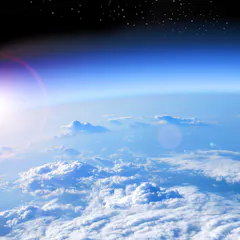
Despite this year’s coronavirus lockdowns, more CO2 has accumulated in the atmosphere than during the same period in 2017 or 2018.
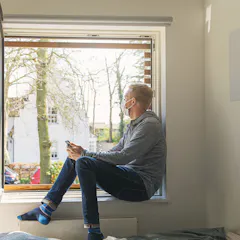
Good ventilation can reduce the risk of catching coronavirus. An environmental engineer explains how to know if enough outside air is getting into a room and what to do if ventilation is bad.
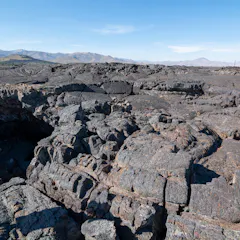
To avoid global warming on a catastrophic scale, nations need to reduce emissions and find ways to pull carbon from the air. One promising solution: spreading rock dust on farm fields.
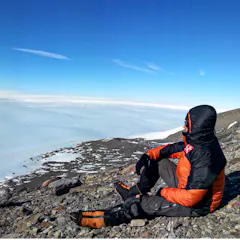
As the world warmed from the last ice age, a rise in carbon dioxide levels stalled for nearly 2,000 years. That’s always puzzled scientists, but now they think they know what happened.
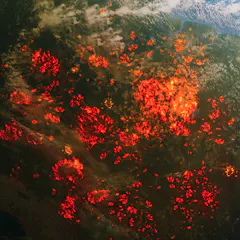
If we had not altered the composition of the atmosphere at all through emitting greenhouse gases, particulate matter and ozone-destroying chemicals, the average temperature would have remained stable.
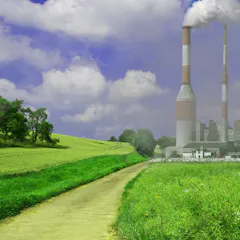
Despite clear air as a result of the pandemic reducing human activities, our emissions still soar.
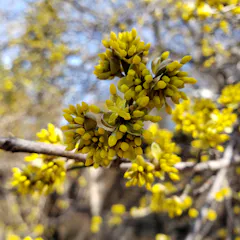
Global warming has increased plant growth and helped offset increases in carbon dioxide emissions.
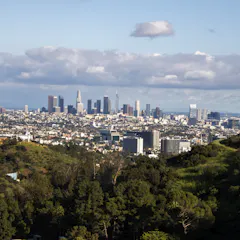
From Nairobi to Los Angeles, pandemic lockdowns have cleared pollution from the skies. But those blue vistas may be temporary, and shutdowns aren’t slowing climate change.

Bubbly waters are becoming increasingly popular. While these carbonated, sometimes flavored beverages might cause slight harm to teeth, they are far better than soda. They might even be good for you.

Researchers are turning microbes into microscopic construction crews by altering their DNA to make them produce building materials. The work could lead to more sustainable buildings.

Insect populations are falling as what they eat becomes more like iceberg lettuce and less like kale.
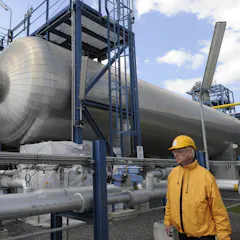
Carbon capture and storage has failed to put a dent in global emissions, and the world is running out of time.
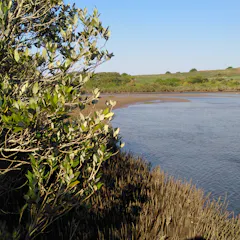
Scientists are building up a picture of how much carbon can be taken out of the atmosphere and stored in coastal ecosystems.

All modes of high-speed travel come with a cost to the environment.
The global warming potential of different greenhouse gases is often poorly understood, distorting which are the biggest concern.
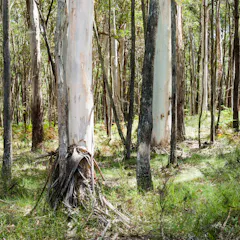
Forests are remarkable at drawing carbon from the atmosphere, and they’re getting better at it. New research highlights how important it is to protect forests so they can help us fight climate change.

Taxes designed to encourage a green transition can instead penalise smaller businesses and ensure they’re left behind.
Top contributors
-

Chief Research Scientist, CSIRO Environment; Executive Director, Global Carbon Project, CSIRO
-
Research Group Leader, CSIRO
-
Royal Society Research Professor of Climate Change Science, University of East Anglia
-
Honorary Fellow, CSIRO
-
Senior Researcher, Center for International Climate and Environment Research - Oslo
-
Senior Researcher, Center for International Climate and Environment Research - Oslo
-
Professor, Department of Earth System Science, and Chair of the Global Carbon Project, Stanford University
-
Chair, Mathematical Modelling of Climate, University of Exeter
-
Professor and Climate Scientist, Department of Geography, Planning and Environment, Concordia University
-
Professor of Chemical Engineering and Chemistry, University of Sheffield
-
Professor of Atmospheric Sciences, Climate Change Research Centre, UNSW
-
CO2Chem Network Manager, University of Sheffield
-
Senior Research Scientist, CSIRO
-
Head of Atmospheric, Oceanic and Planetary Physics, University of Oxford
-
Géochimiste, chargé de recherche CNRS au Centre de recherches pétrographiques et géochimiques de Nancy, Université de Lorraine