

Budgets are often framed as give and take. But in the case of the environment, the government is taking large amounts of money in cuts, while giving little back beyond funding the Direct Action climate…
Articles on Carbon capture and storage
Displaying 121 - 140 of 145 articles

The world may have to rely on “emissions-negative” energy technologies in the latter half of this century, according to the Intergovernmental Panel on Climate Change’s new report on reducing the impacts…

Despite the evidence that shows greenhouse gases from burning fossil fuels are leading to changes in the planet’s climate, the development of large scale technologies to slow or stop these effects has…

To stop global warming, most governments are advocating reducing the amount of carbon dioxide (CO₂), a greenhouse gas, put into the atmosphere. But some argue that such action won’t be enough – we will…
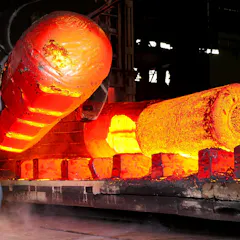
Iron and steel are components of an almost limitless number of infrastructure and consumer goods. From forks to tanks, syringes to satellites, cars to computers, from buildings to the power stations that…
A greater amount of carbon could be captured and stored if more diverse tree species are planted along with key species…
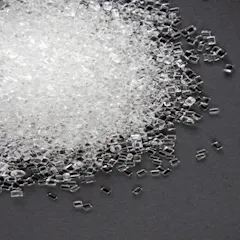
Carbon and carbon dioxide are found all around us. All living things contain carbon - it’s one of the essential building blocks of life and is fundamental to many chemical processes. Carbon dioxide (CO2…
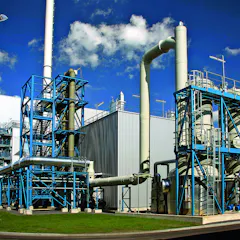
The term “carbon capture and storage” seems only to appear when shortly followed by “not commercially proven” or “in development”. But construction has now begun on what will be the world’s first commercial…
Economic growth can continue while CO2 emissions are reduced says a new study conducted by the Energy Futures Lab and Grantham…
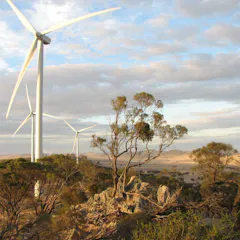
Coal-fired electricity may have little or no economic future in Australia, a new analysis has found. While the new government seems determined to turn its back on renewable energy, our study shows that…
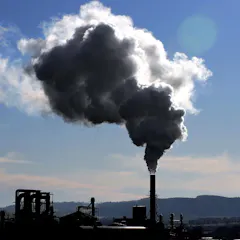
The Energy Technologies Institute recently reported that without carbon capture and storage (CCS), the cost of reaching the UK’s climate change targets will double from around £30 billion per year in 2050…

Much of Australia’s large scale electricity generation comes from coal-fired power plants. Given the cost of building alternative electricity infrastructure and Australia’s large reserves of coal, this…
A study conducted by researchers at the Yale School of Forestry and Environmental Studies has shown the effect that the relationship…
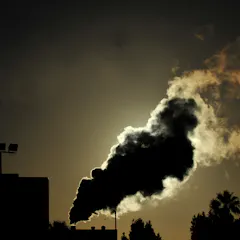
Chemical looping, a low carbon technology for the fossil fuel industry, is increasingly been viewed as a competitive technology in carbon capture and storage, with the successful completion of pilot plant…
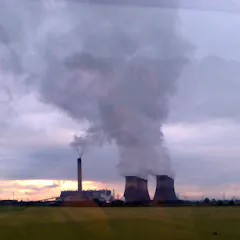
Carbon capture, for those who don’t know already, is the term given to various different technologies that can “capture” the carbon dioxide in streams of gases that would normally be emitted to the atmosphere…

With the world closely watching the climate meetings underway in Doha there is renewed interest in the only proven technology that can substantially remove carbon dioxide from the use of fossil fuels…
You may not immediately think of world records when you consider chemistry, but that’s exactly what some chemists are thinking about during their research. Many, working on something called metal-organic…
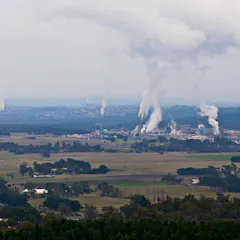
Coal remains an important energy resource for Australia providing around 75% of our electricity and some 20% of export income. However it is also responsible for approximately 40% of greenhouse gas emissions…
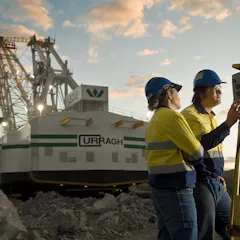
From time to time, new technologies are proposed to help us use even more of Australia’s abundant coal. Many of these technologies are designed to reduce emissions, either by drying the coal or capturing…
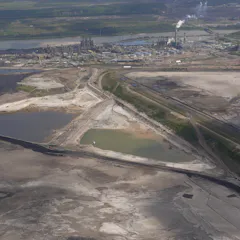
In his recent Quarterly Essay, Man-made world: choosing between progress and planet, economist Andrew Charlton presents technological innovation as the solution to climate change and the route to unbounded…
Top contributors
-

Head of Atmospheric, Oceanic and Planetary Physics, University of Oxford
-
Former Visiting Fellow, SPRU, University of Sussex Business School, University of Sussex, University of Staffordshire
-
Associate Principal (Global Sustainability) and Director Research Centre for Carbon Solutions (RCCS), Heriot-Watt University
-
Professor, Crawford School of Public Policy and Director, Centre for Climate and Energy Policy, Australian National University
-
Professor, School of Economics, The University of Queensland
-
Assistant Director of the Global Systems Institute, University of Exeter
-
Chief Research Scientist, CSIRO Environment; Executive Director, Global Carbon Project, CSIRO
-
Professor of Environmental Economics, University of Oxford
-
CEO, Cooperative Research Centre for Greenhouse Gas Technologies
-
Lamont Research Professor, Columbia University
-
Honorary Associate Professor, UNSW
-
Senior Research Engineer, Massachusetts Institute of Technology (MIT)
-
Chair of ARC Centre of Excellence for Quantum Biotechnology, The University of Queensland
-
Deputy Director, Centre for Advanced Nanomaterials; Associate Professor; ARC Future Fellow, Adelaide University
-
Honorary Senior Lecturer in Chemical Engineering, University of Aberdeen