

Even if they can’t save us from climate change, society still depends on forests.
Articles on Carbon capture
Displaying 41 - 60 of 72 articles

There was palpable relief as Biden brought the US back to the table on global climate action, warning “we have to get this done”. Depressingly, Morrison showed little sign of hearing the message.
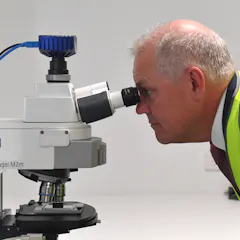
Scott Morrison says he hopes to focus the conversation at this week’s Biden climate summit on the question of how to achieve net-zero emissions.
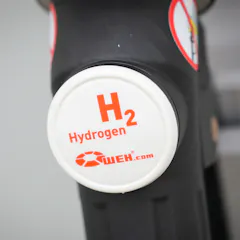
Prime Minister Scott Morrison has announced next month’s budget will include a further $539.2 million government investment in new clean hydrogen and carbon capture, use and storage projects.

Energy Minister Angus Taylor is this week expected to release the government’s first Low Emissions Technology Statement. It’s likely to include ways to remove CO₂ from the air – but do they work?
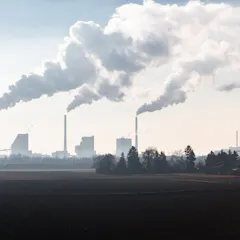
An innovative method of carbon capture and storage could substantially reduce the emission of small industries while using geothermal energy to heat homes and thus replacing fossil-fuel energies.

A key tool for capturing and storing carbon may have been hiding in plain sight all along.
Carbon Engineering’s clever harnessing of high-school chemistry is just a small step on the path to negative emissions.
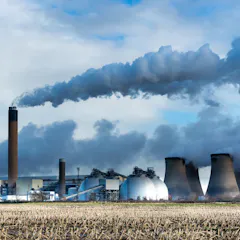
The Drax biomass plant in Yorkshire is the first in the world to pioneer carbon capture and some specialists see it as it has a bright future. But hold the rosy headlines.
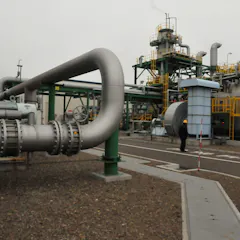
These technologies could turn into a powerful tool for fighting global warming, and they have the potential to address historical climate injustices.

Delays on climate action to reduce emissions means that we may have to consider technologies that strip carbon dioxide from the atmosphere. But that will come at a cost.
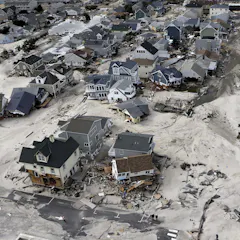
The UN’s panel on climate change said that technologies to remove CO2 will be necessary to limit global temperature rise to only 1.5 degrees Celsius. But these techniques are largely unproven.
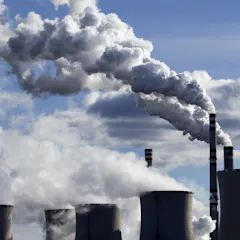
Technology exists to capture carbon dioxide from the atmosphere but it has a big cost.

It may be just as well the UK government scrapped its previous carbon capture competition.
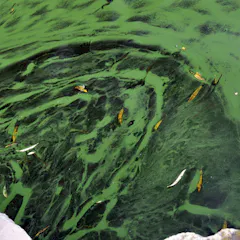
The right kind of algae can be converted to biofuel, and there are potential side benefits for carbon capture.

New research calculates the huge cost of ‘negative emissions’ technologies that will be required to avoid dangerous climate change.
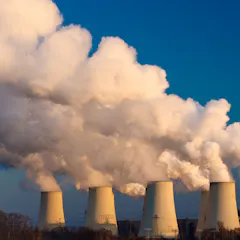
Nobody in business wants to touch new “clean” coal plants, which means taxpayers would be left to foot the billion-dollar bills.

Carbon capture is fundamentally flawed. Here’s plan B.

The Norwegian capital shows other cities how it’s done, by setting out a tailor-made plan to reduce emissions to zero by 2030.
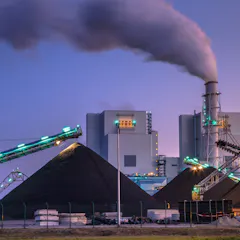
Despite advances in technology, carbon capture and storage could be unsettled by renewable upstarts.
Top contributors
-

Professorial Fellow, University of Canberra
-
Director of Research and Innovation, School of International Studies, Macquarie University
-
CO2Chem Network Manager, University of Sheffield
-
Professor of Advanced Energy Research, Director of the Global CO2 Initiative, University of Michigan
-
Professor, School of Economics, The University of Queensland
-
Professor of Engineering and Director of the Center for Negative Carbon Emissions, Arizona State University
-
Senior Lecturer, Grantham Institute - Climate Change and Environment, Imperial College London
-
Professor of Chemical Engineering and Chemistry, University of Sheffield
-
Senior Lecturer in Geography, University College Dublin
-
PhD researcher, School of Geographical and Earth Sciences, University of Glasgow
-
Professor of Energy Engineering, University of Glasgow
-
Assistant Professor of Biology, University of Texas at Arlington
-
Assistant Director of the Global Systems Institute, University of Exeter
-
Senior Research Engineer, Massachusetts Institute of Technology (MIT)
-
Emeritus Professor of Sociology, Australian National University