
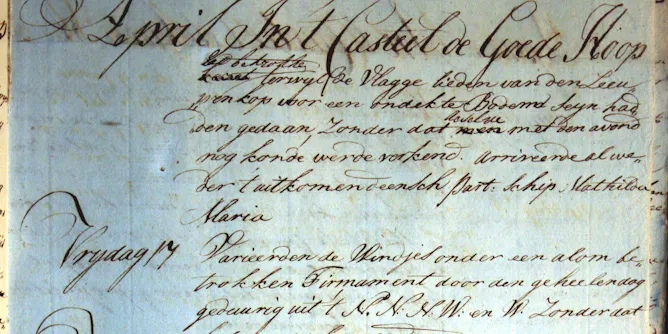
A project to transcribe Dutch colonial records of the weather in Cape Town can benefit modelling of future climate scenarios and assist in forecasting weather now.
Articles on Cape Town
Displaying 41 - 60 of 147 articles
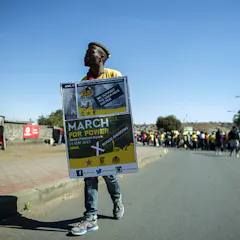
The wealthy should not be allowed to opt out from their share of the costs of electricity production and Eskom’s debt.

Caracals that hunt closer to urban areas where human population density is higher, have higher levels of chemicals in their systems.

The study highlights the flimsy boundaries between different forms of violence: torture and extrajudicial punishment, lawful arrest, and an unlawful kidnapping.

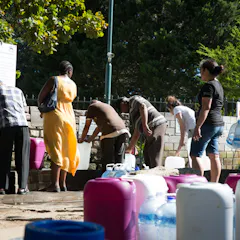
Clearing alien trees from mountain catchments is a more cost-effective approach to providing water than building and maintaining desalination plants.

Clearing alien trees before the drought hit could have reduced the impact of climate change on water supply during the ‘Day Zero’ drought.

Dating on apps is the new reality, but do they really make dating easier? A Cape Town study finds Tinder complicates it further.

The study aimed to understand if and how wild chacma baboon collective behaviour changes in urban space, and what this means for their management.
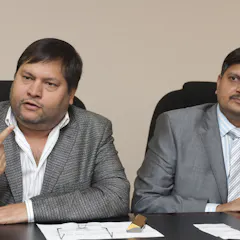
A judicial commission has found that the Guptas orchestrated massive corruption and the capture of the South African state, with the help of their friend, former president Jacob Zuma.

Winner of the Olive Schreiner Prize, What Happens was inspired by the discovery of a slave burial site.
CC BY-NC-ND21.5 MB (download)
Academic research can have a direct impact on people's lives. It's crucial to come together to deal with problems like climate change. If we don't, the poor and vulnerable will suffer the most.
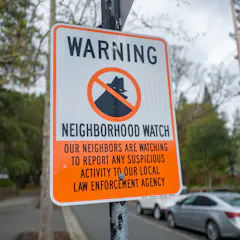
The study showed couch patrolling was more common than foot patrols - with social media influencing fears and suspicions.
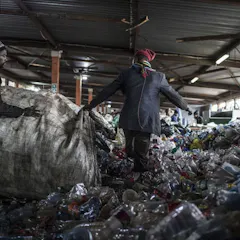
In South Africa, the work of ensuring plastic bottles are recycled lies with consumers and volunteers instead of the large industry polluters.
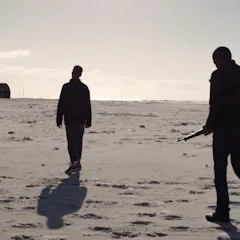
Woven throughout the backstories of these characters is the loss of loved ones, lack of resources and the desperation to get out of economic hardship.
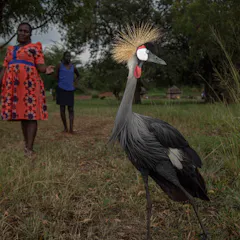
The reduction of foreign tourism is an opportunity for Africans to experience many of the continent’s premier parks at a discount.
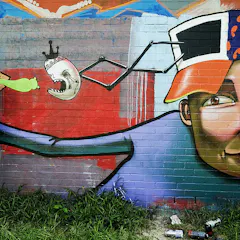
It’s been in existence since the 1500s but the Kaaps language, synonymous with Cape Town, has never had a dictionary until now.
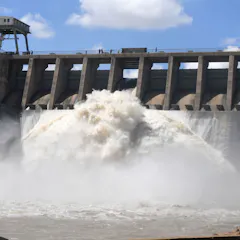
Gauteng citizens need to know the uncomfortable truth: for the next six years, their water supplies will increasingly have to be restricted.
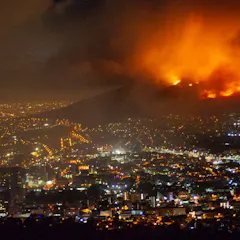
The fynbos vegetation that historically clothed the slopes of Table Mountain is highly inflammable. This has been worsened by the spread of alien trees that burn more intensely than the fynbos.
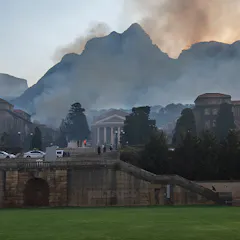
Fire hazards are influenced by three factors: weather, an ignition source and fuel loads. The first two are unpredictable. But fuel loads can be managed.
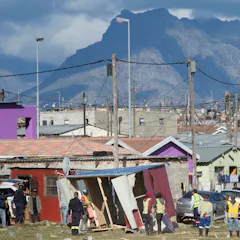
Despite millions of free homes built since 1994, spatial inequality in South Africa remains high. A study evaluating a programme to boost rentals in well-located areas found mixed results, however.
Top contributors
-

Postdoctoral Research Fellow, Global Change Institute, University of the Witwatersrand
-
Senior Researcher, Agricultural Research Council
-
Distinguished Professor of Conservation Ecology, Stellenbosch University
-
Honorary research affiliate, Centre of Criminology, University of Cape Town
-
Post-Doctoral Fellow, University of Cape Town
-
Visiting Adjunct Professor, School of Governance, University of the Witwatersrand
-
Senior Scholar in Environmental & Geographical Science, University of Cape Town
-
Senior Lecturer in Conservation Ecology & Genetics, University of Cape Town
-
Doctor of Philosophy, University of British Columbia
-
Honorary Research Fellow of The Ethics Lab, University of Cape Town
-
Research Chair, African Climate and Development Initiative, University of Cape Town
-
PhD Student, University of Cape Town
-
Professor of Antarctic Studies, School of Humanities, University of Tasmania
-
Marine Biologist, South African National Parks (SANParks); Honorary Research Associate, South African Institute for Aquatic Biodiversity (SAIAB), South African Institute for Aquatic Biodiversity
-
Research Fellow, Bristol Zoological Society and University of Exeter; Extraordinary Professor: Department of Biodiversity and Conservation Biology, University of the Western Cape, University of Exeter