
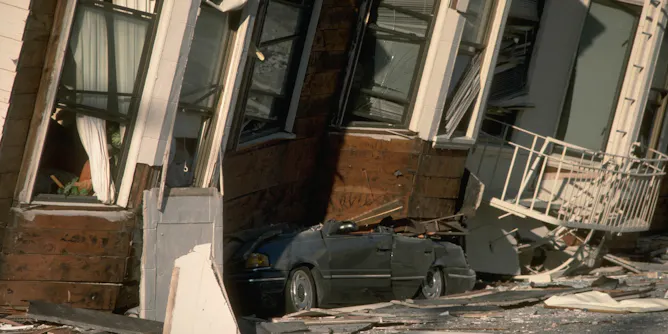
The US experiences violent earthquakes, but the damage and death toll is much lower than in many countries because of the work of federal seismologists and engineers.
Articles on California
Displaying 61 - 80 of 379 articles

Direct-to-consumer genetic testing services carry considerable privacy risks, as the bankruptcy filing of Cailfornia-based 23andMe has revealed.
San Francisco argued that Clean Water Act permits should function like recipes that restrict specific ingredients in a dish, rather than telling cooks not to make the dish too salty.

It starts with better building policies that recognize future risks, but there are many other important steps.

A quick scan with a smartphone or an online search can identify foods with lower levels of these toxic substances.
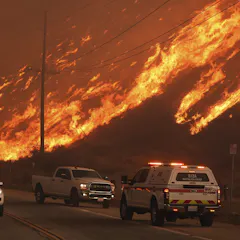
Fire spotters used to watch with binoculars from forest towers. Now, technology can help forecast fire behavior, but human experience is still essential.
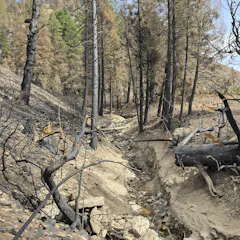
Debris flows can move with the speed of a freight train, picking up and demolishing anything in their path.

Humans have become a geologic force by cooking the planet – using fire on a scale that is altering land, water, air and ecosystems.
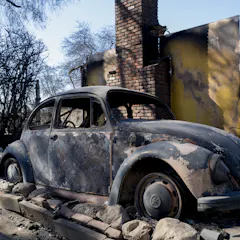
Central bankers agree that climate change poses a threat to the financial system. An insurance crisis is exactly the kind of problem that could spread.
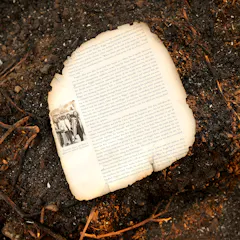
Reading and maintaining a human connection have a vital role to play as extreme events that have long served as the stuff of dystopian fiction simply become a part of everyday life.
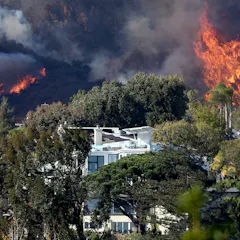
In many parts of the US, Americans must learn to live with fire. That means careful decisions on where homes are built and what’s around them, and allowing more low-risk fires to burn.
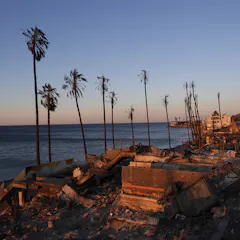
For insurers, it’s simply becoming too expensive to do business in California. That will have ripple effects on the cost of insurance around the globe.
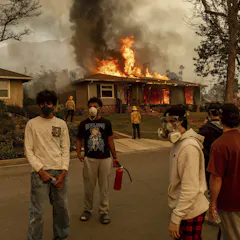
Human bodies aren’t prepared for the toxic chemicals in smoke, and the effects can be harmful in the short term and long term.

The Los Angeles fires may be the most costly natural disaster in US history. An expert on safety, risk reduction and complex systems calls for a blue-ribbon commission to analyze their causes.
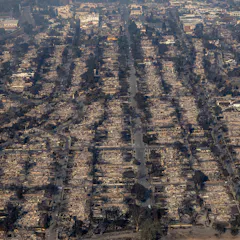
What are the goals of the insurance? Who is being insured? And how are policyholders and their risks classified?
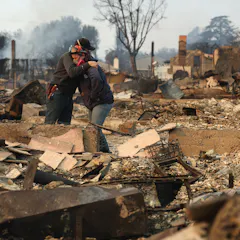
A scholar who researches how rents increase after disasters is fearful for his own community as he watches it burn and braces for the aftermath.
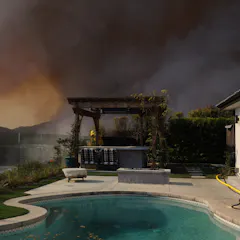
Mike Davis traces natural disaster and climate change in Los Angeles over centuries, painting a vivid picture of a city on the perpetual brink of catastrophe.
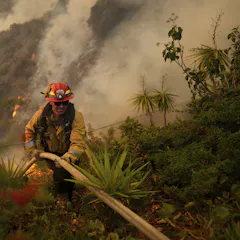
It’s vital to understand how climate drivers played out before and during the LA wildfire emergency – because many Australian cities face the same climate risks.
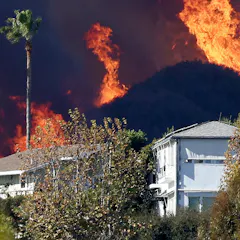
The state is seeing a sharp water divide this year, with lots of rain in the north while the south has stayed dry. A hydrologist explains what’s happening.
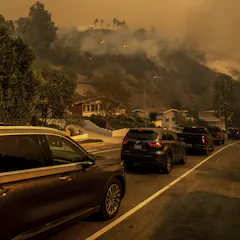
The chemicals emitted when buildings and vehicles burn can find their way into nearby homes. Studies show the health risks can stick around.
Top contributors
-

Regents Professor Emeritus and Morris K. Udall Professor of Law & Public Policy Emeritus, University of Arizona
-
Scientist and Director of Research Communication for the Arizona Water Innovation Initiative, Arizona State University
-
Professor of Geology and Environmental Geosciences, University of Dayton
-
Wildfire Specialist, University of California Cooperative Extension; Adjunct Professor at the Bren School, University of California at Santa Barbara, University of California, Santa Barbara
-
Associate Professor of Environmental and Occupation Health, University of California, Irvine; University of Southern California
-
Director, Ocean and Coastal Policy Center, Marine Science Institute, University of California, Santa Barbara
-
Distinguished Professor of Sociology and American Studies & Ethnicity, USC Dornsife College of Letters, Arts and Sciences
-
Professor, Environmental Studies Program at UC Santa Barbara
-
Distinguished Blue Planet Prize Professor of Civil and Environmental Engineering and Founding Director, Institute of Transportation Studies, University of California, Davis
-
Associate Professor of Civil Engineering, Boise State University; United Nations University
-
Distinguished Professor of Law, Wayne State University
-
Provost Professor of Economics and Spatial Sciences, USC Dornsife College of Letters, Arts and Sciences; Institute for Humane Studies
-
Adjunct Assistant Professor and a founder of the Laboratory for Environmental Narrative Strategies in the Institute of the Environment and Sustainability, University of California, Los Angeles
-
Graduate Research Fellow of Sustainable Design and Construction, Stanford University
-
Director Emeritus, California Institute for Water Resources, University of California, Division of Agriculture and Natural Resources