
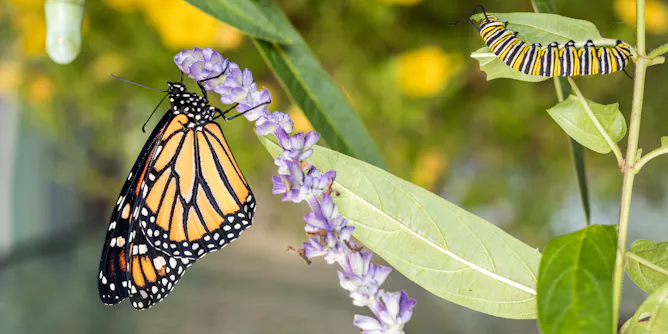
Isotope mapping reveals information about a monarch butterfly’s point of origin. Using strontium isotopes helps pinpoint more precise locations.
Articles on Butterflies
Displaying 41 - 60 of 76 articles
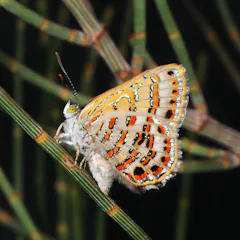
There’s still a very good chance of recovery for most of these species, but only with new targeted conservation effort.

The stench was once thought to originate from plants, but scientists have now pin-pointed its true origin.
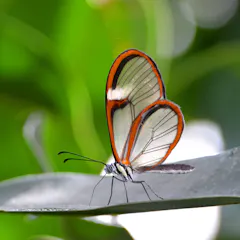
Transparency is an evolved characteristic of some species to help them survive, even when predators are staring directly at them.
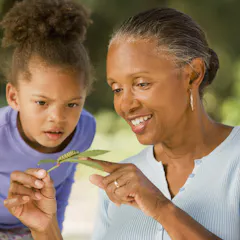
Insects are plentiful and inexpensive. Even when children aren’t attending school in person, they can learn from the encounters they have with insects outside.
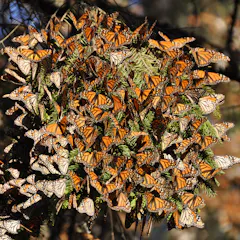
Can a plan that brings together government and private landowners create enough habitat for monarch butterflies?
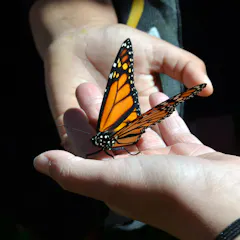
Citizen scientists across North America have contributed over 1 million observations to this online platform, generating data useful for researchers.
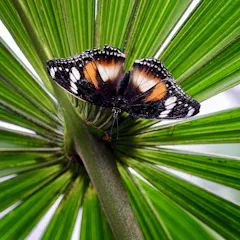
Insects are vital to sustaining life on Earth – and their numbers are falling fast. So consider ditching the fly spray and see what you can do to help.

We looked at 130 species to see which will be the winners and losers from global warming

Britain’s councils are cutting roadside verges less often to allow vibrant wildflower meadows to bloom.
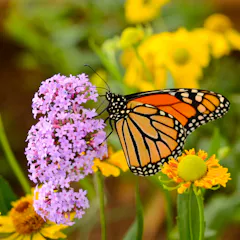
Wildflowers, bees and butterflies – your lawn is a vibrant ecosystem waiting to be unleashed.
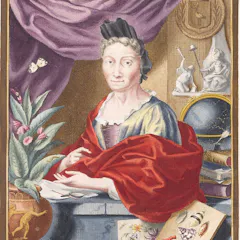
Maria Sibylla Merian’s meticulous observations laid the groundwork for the fields of entomology, animal behaviour and ecology. But the legacy of this scientific superhero has been sidelined by sexism.
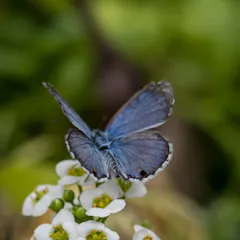
How do you pack butterflies for shipping, or frogs for an overland hike to a new habitat? Three scientists explain how they keep threatened species safe on the road and in the air.
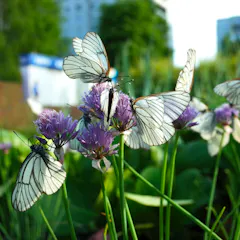
Evidence-based advice from experts on how to make your garden a friendly environment for pollinators.
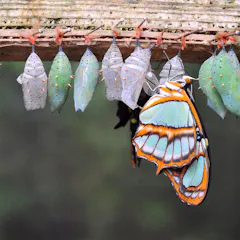
Scientists were not sure if an adult butterfly could remember things it learned as a caterpillar. Then a study by a team of US scientists found something very interesting.
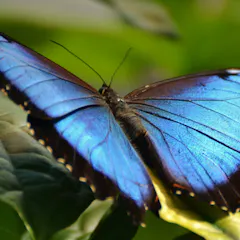
There are countless nanoscopic architectures in nature, creating iridescence, sticky feet, magnetic navigation – and more.
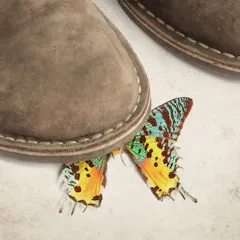
More and more evidence shows evolution isn’t as random as often thought.
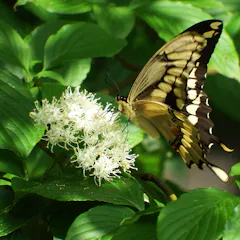
We’re in the middle of an Insectageddon. But a garden of native plants can help insects, as well as birds and other wildlife.
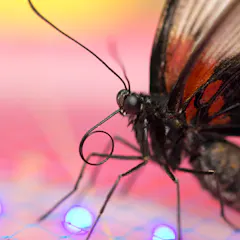
Lepidoptera insects are at least 70m years older than we previously knew.
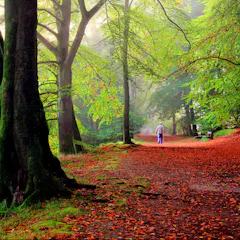
Beeches are ‘non-native’ to Scotland because they got there less than 7,000 years ago. No, really.
Top contributors
-

Former Postdoctoral Research Associate
-
PhD Candidate in Zoology, University of Otago
-
Associate Professor, Australian National University
-
Associate Professor in Botany, University of Otago
-
Lecturer in Ecology, University of New England
-
Associate Professor in Entomology, University of Sydney
-
Postgraduate Researcher in Conservation Ecology, The Open University
-
Associate Professor in Ecology, Northumbria University, Newcastle
-
Senior Collections Manager at McGuire Center for Lepidoptera & Biodiversity at Florida Museum of Natural History, University of Florida
-
PhD student, University of Oxford
-
Postdoctoral Fellow, University of California, Davis
-
Curator of Zoological Collections and Assistant Professor, Western University
-
Adjunct Assistant Professor of Ecology, Evolution and Organismal Biology, Iowa State University
-
Lecturer of Physical Chemistry (Nanocrystals and Nanoparticles), Bangor University
-
Senior Lecturer in Biological and Environmental Sciences, University of Stirling