
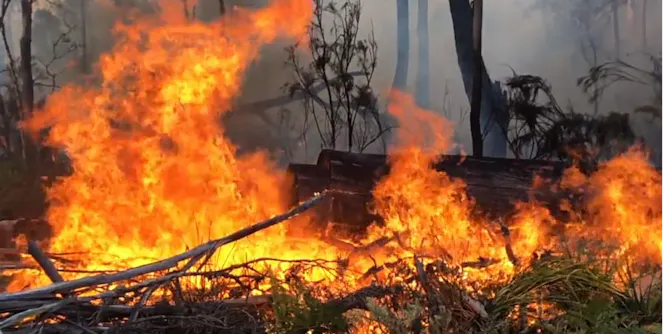
It was June last year when the first bushfires started in what became known as the Black Summer that claimed lives and destroyed homes.
Articles on bushfires 2020
Displaying 21 - 40 of 79 articles
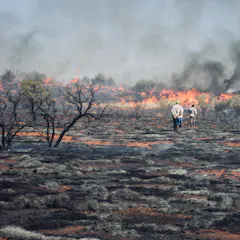
The bushfire royal commission will look at incorporating Aboriginal knowledge into mainstream fire management. But in practice, what does that mean?
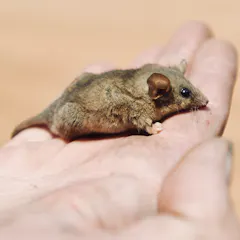
How fast can an animal run? How intense was the fire? Picking which species to help after a bushfire tragedy is no easy task.
The disasters have come one after another. While they may not be entirely preventable, we can take many practical steps tailored to local needs and conditions to reduce the impacts on our cities.
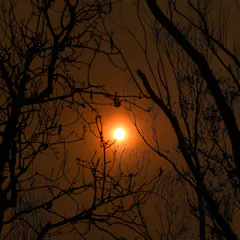
Other existential risks include the decline of natural resources (particularly water), human population growth beyond the Earth’s carrying capacity, and nuclear weapons.
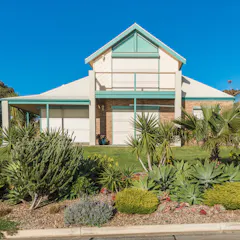
With a bit of sensible planning, you can retain plants close to your home without creating a huge bushfire risk.
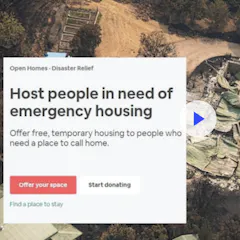
Long before a fire season that destroyed 3,500 homes, more than 100,000 Australians were homeless. If only we showed the same urgency and innovation in housing them as we did for bushfire victims.
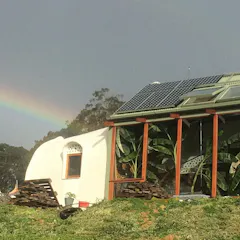
Earth-covered houses are not only highly fire-resistant, but sustainable features such as off-grid power and water supplies could also be life-saving in a bushfire.
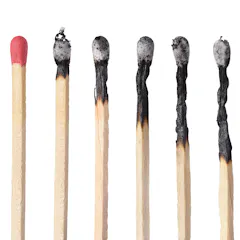
Low-income earners, small-business owners and part-time workers are most likely to lose income following a disaster.
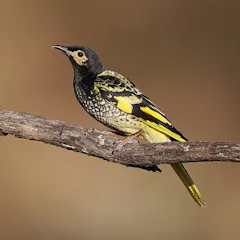
Some threatened species hit hard by the bushfires this summer have populations in and around urban areas, which are now crucial refuges. Here are some tips to help improve their odds of survival.
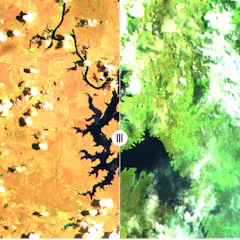
It’s important to remember that most of this greening is due to growth of grasses, which respond more rapidly after rain.
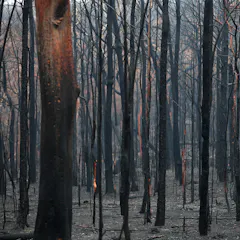
Australia’s tourism sector has been hit hard by bushfires and coronavirus. The are good reasons to think it may take a lot longer than in the past for the numbers to bounce back.
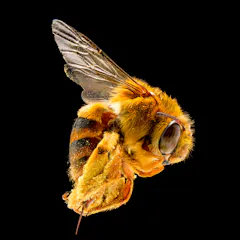
In NSW, honeybees are listed as a key threatening process to biodiversity.
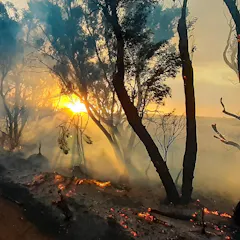
A scientist whose Kangaroo Island home was threatened by the summer’s bushfires says there is a ‘knowledge gap’ between satellite data and useful maps that can protect communities.
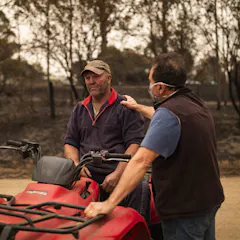
Most of us are familiar with the concept of psychological trauma. But what is collective trauma, and how can we tackle it in the wake of the bushfire crisis?
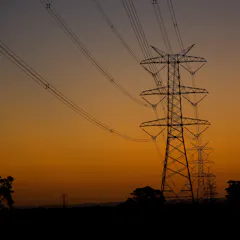
Both natural disasters and electric vehicles mean we need to move away from centralised electricity systems.
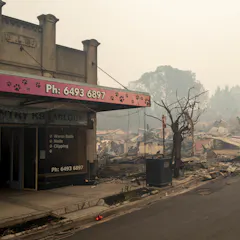
Small businesses are disproportionately affected by natural disasters. To improve community resilience, we need to help them ‘build back better’.

Plants can store mercury and keep it from contaminating waterways, air and soils. Unfortunately, that mercury is released when plants burn.
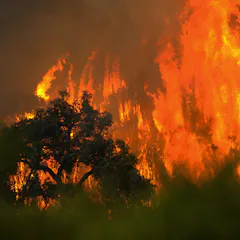
People die protecting homes. They are wrong to believe their homes will protect them.
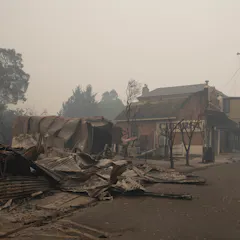
Australia can learn from how India used community hubs to bridge the gap between government and local communities in the challenging years of reconstruction.
Top contributors
-

Professor of Pyrogeography and Fire Science, University of Tasmania
-
Research Fellow in Environmental Science, University of Tasmania
-
Professor in Conservation Science, School of Ecosystem and Forest Science, The University of Melbourne
-
Professor in Conservation Science, School of the Environment, The University of Queensland
-
Professor, Bushfire Science, Fenner School of Environment & Society, Australian National University
-
Professor of Wildlife Conservation, Australian National University
-
Visiting Research Fellow, Adelaide University
-
Emeritus professor, University of Wollongong
-
Journalist, author, broadcaster, Queensland University of Technology
-
Deputy Head of School, School of Architecture and Built Environment, University of Newcastle
-
Senior Research Scientist, South Australian Museum; Flinders University
-
Professor of Conservation Biology, Charles Darwin University
-
Adjunct Senior Lecturer, School of Architecture and Built Environment, University of Newcastle
-
Associate Professor, School of Architecture and Built Environment, University of Newcastle
-
Lecturer, School of Environment and Science, Griffith University