
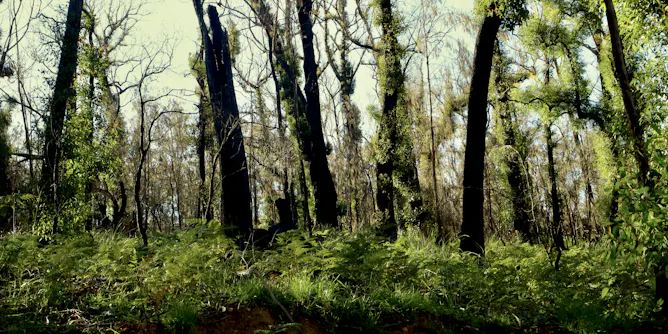
Researchers have collated measurements made by satellites, field sensors and people, to get a picture of the nature’s recovery while we’ve been in lockdown.
Articles on #bushfire recovery 2020
Displaying all articles
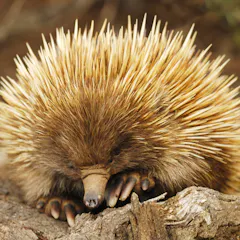
Six months ago fires ravaged Australia, exacerbating our already dire biodiversity crisis. These are the animals and plants still suffering 6 months on.
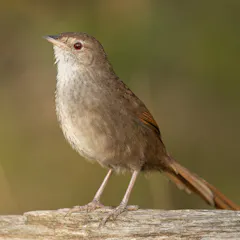
Scientists and bureaucrats moved logistical mountains to rescue the eastern bristlebird from bushfires this year. As climate change worsens, wildlife evacuations will become more common.

The story of the Kangaroo Island Micro-trapdoor spider offer insight into the challenges ahead for invertebrates – the tiny engines of Australia’s biodiversity – after this year’s cataclysmic fires.
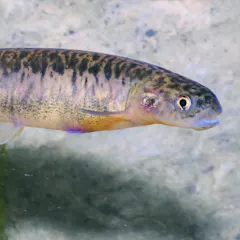
I’ve worked in threatened fish conservation and management for more than 35 years, but this species is special to me.

The Kaputar rock skink is thought to have have one of the smallest ranges of any reptile in New South Wales – at the summit of a single extinct volcano, Mount Kaputar.
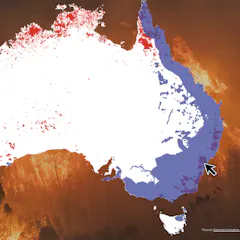
Last summer, Australia’s wildlife burned in one of our country’s worst bushfires. So what’s become of animal and plant survivors in the months since?
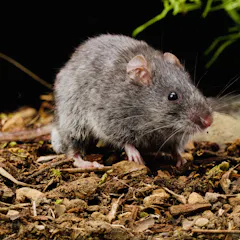
One vet suggested bushfire smoke had killed the smoky mouse – and asked, in a nod to the species’ name, if this was a case of “death by irony”.
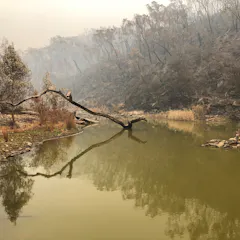
When the post-bushfire rains finally arrived, the situation for many fish species went from dangerous to catastrophic. A slurry of ash and mud washed into waterways, sending oxygen levels plummeting.

Scientists and the community are building nests to help save the stunning green carpenter bee from extinction.
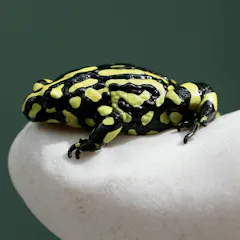
After the bushfires, we went looking for endangered corroboree frogs. Normally, they respond to our calls. But at some sites, the ponds were silent.
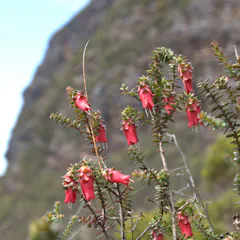
Three quarters of WA’s Stirling Ranges national park now experience fire cycles twice as frequent as species recovery rates.
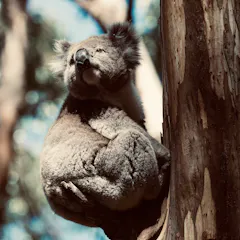
Koalas are notoriously difficult to detect. Traditional methods are costly and labour intensive. So we found a more efficient way to locate koalas in eastern NSW, using drones.
Top contributors
-

Curator, Amphibian & Reptile Conservation Biology, Australian Museum, UNSW
-
Visiting Research Fellow, Adelaide University
-
Fisheries Manager
-
John Curtin Distinguished Professor, Curtin University
-
Postdoctoral Research Fellow | Deakin University, Deakin University
-
Professor, Water and Landscape Dynamics, Fenner School of Environment & Society, Australian National University
-
Adjunct associate in freshwater fisheries ecology and management, University of Canberra
-
Freshwater Ecologist, Charles Sturt University
-
Associate Professor, School of Biological Sciences, Monash University
-
ARC Industry Fellow, Adelaide University
-
Freshwater Ecologist, Charles Sturt University
-
Senior Lecturer, School of Environment, Science & Engineering, Southern Cross University
-
Postdoctoral Researcher and Honorary Lecturer | School of Environmental and Life Sciences, University of Newcastle
-
PhD Candidate, University of Wollongong
-
Freshwater Fish Scientist, Charles Sturt University