

After spending more than 500 hours embroidering in an attempt to come to terms with the bushfires of 2019-2020, I discovered that while no news may be good news, ‘slow news’ is even better.
Articles on bushfires 2019
Displaying 1 - 20 of 54 articles

They overlook a vast body of evidence that crown fire – the most extreme type of fire behaviour in which tree canopies burn - is more likely in logged native forests.
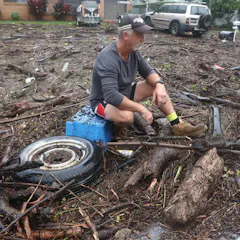
Evacuation and relief centres are often the first place disaster-affected people go, and should provide a minimum standard of living and care. But this standard is not always met.
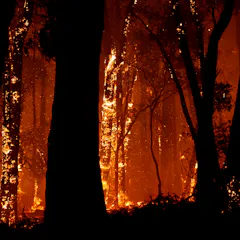
The method, using satellite data and other information, could reduce the work of fire forensics teams after bushfires.

The federal government has ordered a national koala audit, but the animals are notoriously difficult to detect. But accurately counting koalas is critical to saving them.
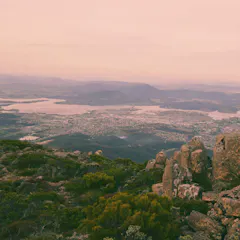
Set in the smoky shadow of Australia’s 2019 and 2020 bushfire season, Flanagan explores the loss of our world through the shattering of a family.
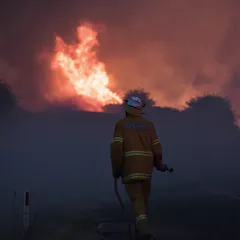
Even if the proper infrastructure is implemented, it’s hard to say what course of action could possibly extinguish a fast-moving rural bushfire within an hour.
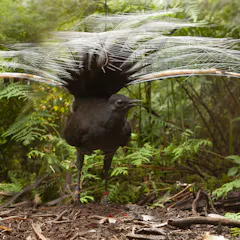
The Superb Lyrebird is famous for its song and dance, but what is less known is their extraordinary role as world-class ecosystem engineers.
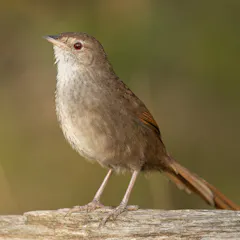
Scientists and bureaucrats moved logistical mountains to rescue the eastern bristlebird from bushfires this year. As climate change worsens, wildlife evacuations will become more common.

The Kaputar rock skink is thought to have have one of the smallest ranges of any reptile in New South Wales – at the summit of a single extinct volcano, Mount Kaputar.
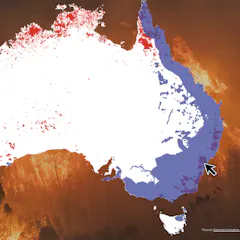
Last summer, Australia’s wildlife burned in one of our country’s worst bushfires. So what’s become of animal and plant survivors in the months since?

Scientists and the community are building nests to help save the stunning green carpenter bee from extinction.
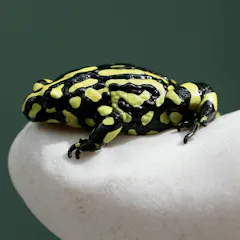
After the bushfires, we went looking for endangered corroboree frogs. Normally, they respond to our calls. But at some sites, the ponds were silent.
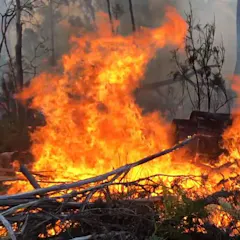
It was June last year when the first bushfires started in what became known as the Black Summer that claimed lives and destroyed homes.
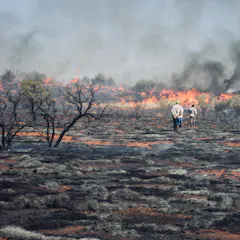
The bushfire royal commission will look at incorporating Aboriginal knowledge into mainstream fire management. But in practice, what does that mean?
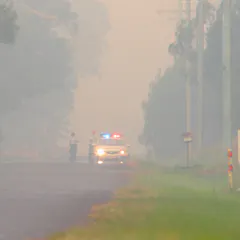
The disasters have come one after another. While they may not be entirely preventable, we can take many practical steps tailored to local needs and conditions to reduce the impacts on our cities.
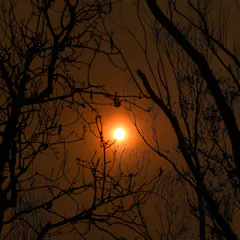
Other existential risks include the decline of natural resources (particularly water), human population growth beyond the Earth’s carrying capacity, and nuclear weapons.
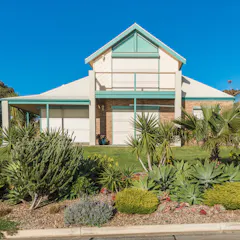
With a bit of sensible planning, you can retain plants close to your home without creating a huge bushfire risk.
Long before a fire season that destroyed 3,500 homes, more than 100,000 Australians were homeless. If only we showed the same urgency and innovation in housing them as we did for bushfire victims.
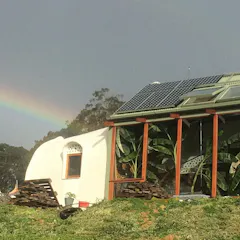
Earth-covered houses are not only highly fire-resistant, but sustainable features such as off-grid power and water supplies could also be life-saving in a bushfire.
Top contributors
-

Professor of Pyrogeography and Fire Science, University of Tasmania
-
Professorial Fellow, University of Canberra
-
Adjunct Senior Lecturer, School of Architecture and Built Environment, University of Newcastle
-
Professor in Conservation Science, School of Ecosystem and Forest Science, The University of Melbourne
-
Visiting Fellow, Crawford School of Public Policy, Australian National University
-
Deputy Head of School, School of Architecture and Built Environment, University of Newcastle
-
Associate Professor, School of Architecture and Built Environment, University of Newcastle
-
Curator, Amphibian & Reptile Conservation Biology, Australian Museum, UNSW
-
Researcher, Flinders University
-
Professor, Bushfire Science, Fenner School of Environment & Society, Australian National University
-
Associate Professor of Human Geography, University of Tasmania
-
Research Associate, University of New South Wales, and Adjunct Associate Professor, Curtin University
-
Lecturer and Research Fellow, School of Geography, Planning, and Spatial Sciences. Coordinator, Education for Sustainability Tasmania, University of Tasmania
-
Adjunct Professor of Architecture, University of Technology Sydney
-
Associate Professor of Accounting and Financial Planning, Western Sydney University