
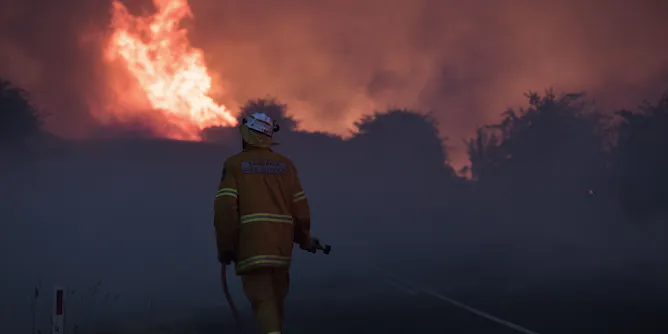
Even if the proper infrastructure is implemented, it’s hard to say what course of action could possibly extinguish a fast-moving rural bushfire within an hour.
Articles on Bushfire planning
Displaying all articles
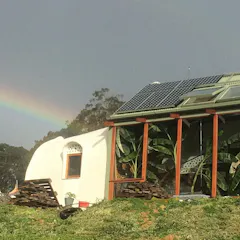
Earth-covered houses are not only highly fire-resistant, but sustainable features such as off-grid power and water supplies could also be life-saving in a bushfire.

Celeste Barber’s $45 million fundraiser is amazing, but battling Australia’s fires should be an ongoing effort. With the help of social media, it can be.
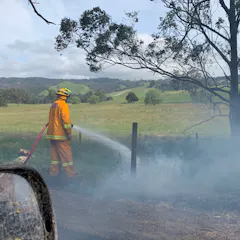
Local, self organised, community groups can be supported to do strategic hazard reduction through a range of techniques – including targeted grazing, and prescribed or fuel reduction burning.
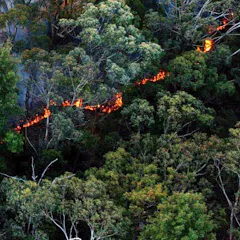
Relatively little has changed since the Black Saturday tragedy. It is as though Australia suffers amnesia when it comes to bushfire preparedness.
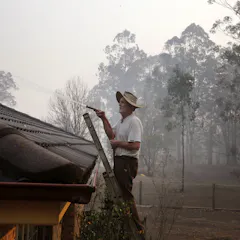
In catastrophic fire conditions, leaving early is the only safe option. But in other conditions, one thing that’s often overlooked in decisions to stay or go is how mentally tough you need to be.
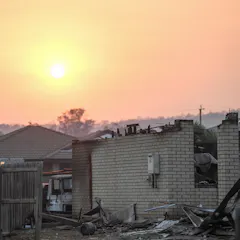
Land-use planning should give more weight to the increasing risks of natural hazards like bushfires as the first step in reducing the impacts.
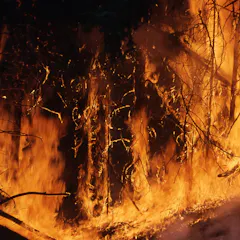
The convergence of technologies such as 5G, artificial intelligence and virtual reality may offer hope for the way we manage future bushfire disasters.
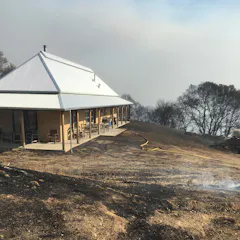
Houses built more than 20 years ago are likely to be more vulnerable to bushfires than newer builds. But there are some simple and inexpensive ways to reduce your risk.
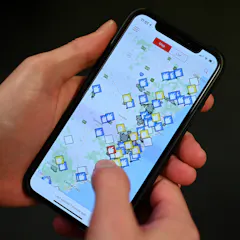
Service outages, network congestion and infrastructure at risk of being destroyed by fire are some of the issues worsening an already devastating situation.

The same day all of New South Wales was declared in drought, the state’s Rural Fire Service issued its earliest ever total fire bans.
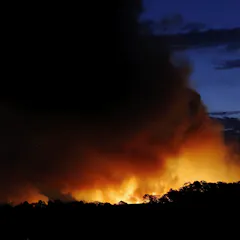
Australia’s national obsession with prescribed burning won’t be enough to manage the growing risk of devastating bushfires.
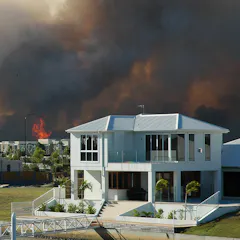
Leaving early is the best response to a bushfire, but it’s not always possible. Every house is different, but there are some general guidelines for finding the safest spots to shelter in your home.
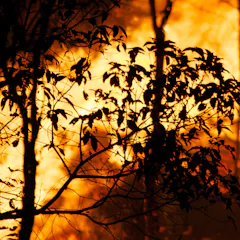
We can manage the risks from bushfires far more effectively if we look at the ways different plant species control the the way the fires burn.

You might think having trees around your home is the worst idea during a bushfire, but some plants can actually help repel fire.
Top contributors
-

Casual Academic, Western Sydney University
-
Professor of Pyrogeography and Fire Science, University of Tasmania
-
Early Career Research Fellow, The Royal Botanic Gardens, Kew and Research Fellow, School of Environment, University of Auckland, Waipapa Taumata Rau
-
Associate Professor of Ecology, Lincoln University, New Zealand
-
Professor, School of Environment, University of Auckland, Waipapa Taumata Rau
-
Honorary Professorial Fellow, The University of Melbourne
-
Postdoctoral researcher, University of Tasmania
-
Senior Research Fellow, Centre for Environmental Risk Management of Bushfires, University of Wollongong
-
Research Associate, University of New South Wales, and Adjunct Associate Professor, Curtin University
-
Senior Research Fellow in social vulnerability and disasters, CQUniversity Australia
-
Associate Professor and ARC DECRA Fellow, The University of Queensland
-
Adjunct Senior Lecturer, School of Architecture and Built Environment, University of Newcastle
-
Associate Professor, Macquarie University
-
Adjunct Senior Lecturer, Applied Ethics and CyberSecurity, Griffith University
-
Associate Professor, School of Architecture and Built Environment, University of Newcastle