
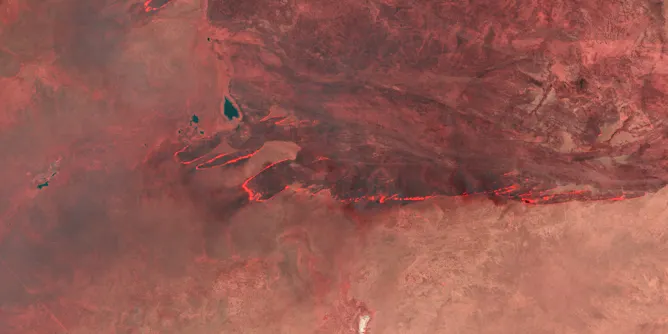
The 2023 megafires burnt more than 84 million hectares of desert and savannah in northern Australia. That’s larger than the whole of NSW, or more than three times size of the UK.
Articles on Bushfires
Displaying 81 - 100 of 586 articles
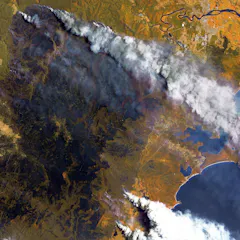
We compiled maps of bushfires and prescribed burns in southern Australia from 1980 to 2021 to see how fire activity is changing habitat for 129 threatened species such as mountain pygmy possums.

We think of laughing kookaburras as common in Australia and their call certainly lets us know when they’re about. But several factors are driving down their numbers.
If accessible crisis information is not accurate, complete, up to date and high quality, there can be life and death consequences for people with disability in a bushfire, flood or pandemic.
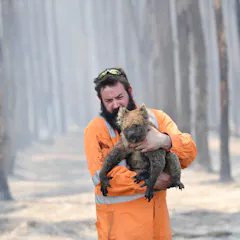
Marsupial rescue, rehabilitation and release statistics from New South Wales and Kangaroo Island during Black Summer fires reveal poor survival rates, despite the courageous efforts of volunteers.
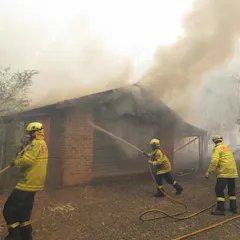
Buildings can be engineered to resist bushfires, but we can’t engineer the many aspects of human behaviour and decision-making that will still put lives at risk.

Australia’s approach to estimating bushfire emissions is credible and sophisticated. But it must be refined as technology improves and the climate changes.
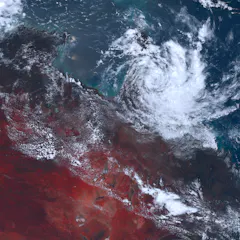
Last year was the hottest in recorded history. That heat led to a range of unusually intense weather events across Australia.
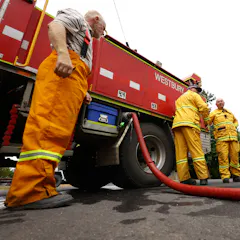
Many Australians probably thought the worst of the bushfire season was over. But climate change is bringing not just more frequent and severe fires, but longer fire seasons.
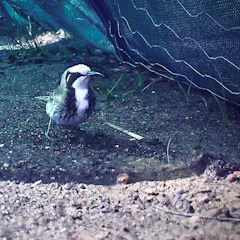
We need every tool at our disposal to stop feral cats and foxes from decimating Australia’s incredible wildlife after fires. Artificial refuges show promise.
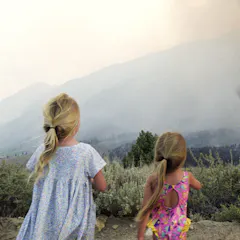
Children are uniquely vulnerable to bushfire smoke because of their physiology and their behaviour.
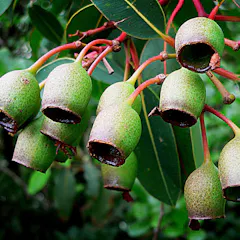
From sacrificial bark to fire-germinating gumnuts to stealthy buds the eucalyptus has evolved an arsenal of protective measures.
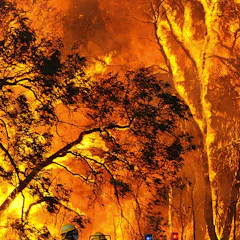
We’re all familiar with fire. But do you really know what it is and how it starts? Here’s the chemistry of fire – and why Australia is so prone to going up in flames.

Smoke from bushfires can travel significant distances and reduce air quality throughout a city or region.
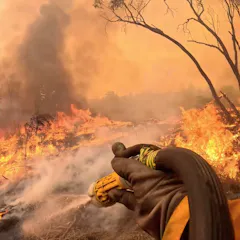
Survey respondents overwhelmingly prioritised saving a human life – even if that person had been repeatedly told to evacuate and even if, as a consequence, a snail or shrub species became extinct.
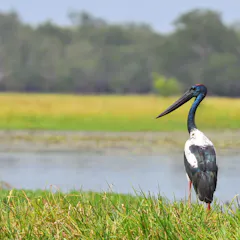
Researchers, managers and Traditional Owners are joining forces to understand and combat climate threats to Australia’s many unique World Heritage sites.
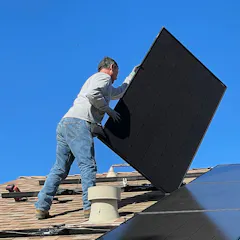
Australians want government to act on climate change, but not necessarily now, or in their neighbourhood. How can governments resolve this dilemma?
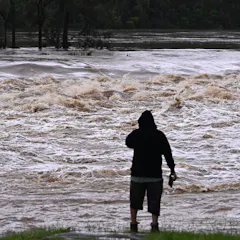
Whether it’s pamphlets aimed at prevention or text alerts, mass communication is often relied on during disasters. This flawed approach can be improved by engaging meaningfully with communities.
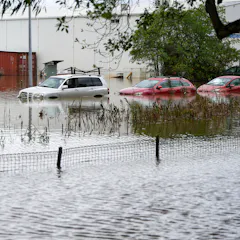
The impacts of record heat on the global water cycle were severe and wide-ranging – and the trend will continue in 2024.

The North Queensland floods remind us of the need to build community resilience to disasters – during the event, in the immediate aftermath and beyond.
Top contributors
-

Professor of Pyrogeography and Fire Science, University of Tasmania
-
Distinguished Professor of Ecology, Fenner School of Environment and Society, Australian National University
-
Professorial Fellow, University of Canberra
-
Professor in Ecology, Charles Sturt University
-
Associate Professor, Hawkesbury Institute for the Environment, Western Sydney University
-
Research Fellow in Environmental Science, University of Tasmania
-
Emeritus professor, University of Wollongong
-
Adjunct Professor (Practice) in the School of Earth, Atmosphere and Environment, Monash University
-
Deputy Director, Engagement and Impact, The ARC Centre of Excellence for the Weather of the 21st Century, Australian National University
-
Deputy Head of School, School of Architecture and Built Environment, University of Newcastle
-
Associate Professor, School of Architecture and Built Environment, University of Newcastle
-
Adjunct Senior Lecturer, School of Architecture and Built Environment, University of Newcastle
-
Professor, School of Life Sciences, University of Technology Sydney
-
Professor in Wildlife Ecology and Conservation, School of Life & Environmental Sciences, Deakin University
-
Professor, Water and Landscape Dynamics, Fenner School of Environment & Society, Australian National University