
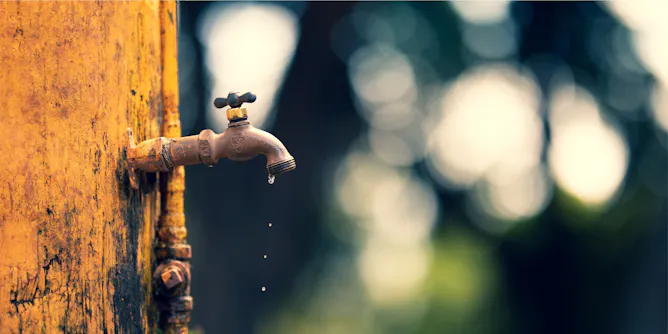
Of Australia’s capital cities, Perth has the saltiest tap water, while Melbourne, Hobart, Darwin and Canberra have the least salty. And while all are within guidelines, the variation is striking.
Articles on Bottled water
Displaying 21 - 40 of 45 articles
Academics from different disciplines come Head to Head in this series to tackle topical debates.
Drinking water in Australia can be contaminated by natural and manmade processes, especially in communities. Innovation is needed to ensure water is ‘fit for purpose, place and people’.

BPA, used widely in plastics and as a liner in food cans, was replaced by a related chemical called BPS. But it seems that this substitute may also harm eggs and sperm and disrupt hormones.
Research shows that campaigns that try to make consumers feel guilty about the amount they waste often make things worse, not better. A new study poins the way to more effective anti-waste campaigns.

Incineration of household waste has gotten a bad name, argues an economist, who sees today’s recycling crisis as an opportunity to reconsider how the U.S. handles its waste.
In 2015, over 320 million tons of polymers, excluding fibers, were manufactured across the globe.
New types of biodegradable or compostable plastic products seem to offer an alternative to conventional plastics. But they may be no better for the environment.
Tech fixes to environmental problems are guaranteed to grab attention, but real change for the planet requires community organising.

We can safely say goodbye to most single-use plastics. But they do have essential uses in some areas, such as for medical or scientific samples, or storing food for humanitarian aid.

Microplastics in seafood are well recorded but there are many other sources.
Nestle pays the state a pittance in exchange for its water at a time when public awareness of water issues is rising.
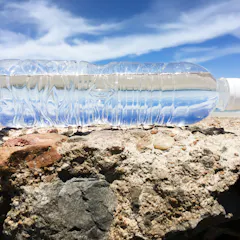
Residents of a small Victorian town realised that delicious water can be a curse as well as a blessing, when they lost a legal battle to stop a local farmer shipping groundwater to a nearby bottling plant.
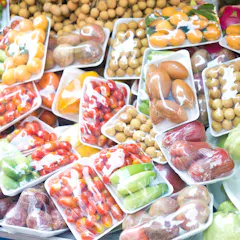
Yet plastic itself isn’t inherently evil as sometimes the environmental benefits outweigh the costs. So how to tell good plastic from bad?
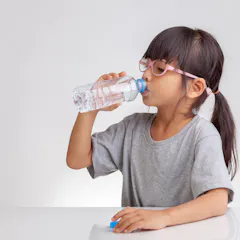
We all know that tap water is better than buying bottled water, from an environmental standpoint at least. But what should you drink it out of? A single-use bottle, used multiple times, might be best.
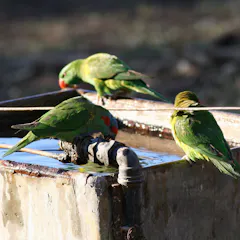
Every year councils around Australia compete to prove they have the best-tasting tap water in the country.

Some of the biggest names in the bottled water industry were originally spa towns that wealthy Europeans escaped to during the industrial revolution.
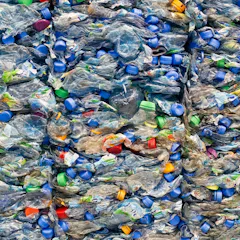
Plant-based, sustainable plastics may hold many of the answers to our plastic problems.
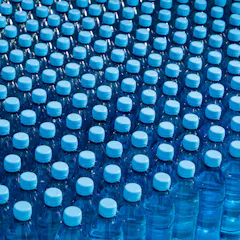
Unless the UK can strike a deal quickly, British water will no longer be recognised on the coveted European list of recognised mineral sources.
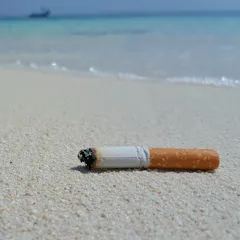
Microbeads from cosmetics are just a drop in the ocean. Other microplastics are more pervasive and just as dangerous.
Top contributors
-

Research Chair, Indigenous Approaches to Environmental Management, Keele University
-
Professor of Sociology, Portland State University
-
Professor in Forensic and Environmental Science, University of Staffordshire
-
Professor of Sustainable Development, Keele University
-
Lecturer in Human Geography and GIS, Keele University
-
Associate Professor in Environmental Science, Western Sydney University
-
Professor of Chem/Petroleum Engineering, University of Pittsburgh
-
Associate Professor in Law, The University of Melbourne
-
Director of Undergraduate Studies, School of Journalism, Media and Cultural Studies, Cardiff University
-
Senior Lecturer in Architecture, Queensland University of Technology
-
Professor of materials science and engineering, University of Waikato
-
Adjunct Research Fellow, Victoria University
-
Director, BehaviourWorks, Monash Sustainable Development Institute, Monash University
-
Adjunct Research Fellow, The University of Western Australia; Queensland University of Technology
-
Director of Health Programs, BehaviourWorks Australia; Lead, Monash-McMaster Social Systems Evidence Collaboration, Monash Sustainable Development Institute, Monash University