

EU digital ID wallets will make it easier for citizens and residents to prove their identity, and safely store, share and sign important digital documents within the EU. But digital applications aren’t totally risk-free.
Articles on Digital identity
Displaying 1 - 20 of 22 articles

Families, chiefs or document brokers remain crucial to help people get a legal identity.

What’s the secret to being the most followed person on the planet on TikTok?
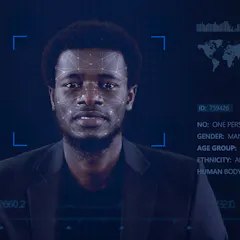
Digital identification is supposed to provide identity to all people. But sometimes it blocks access to essential services.

The other benefits of digital ID, beyond curbing illegal immigration, needed much more attention.

Where automation replaces local, human assistance, those least able to navigate the systems are most likely to lose out.

Estonia has more than 20 years experience of digital IDs.

The ghost of the illegal robodebt scheme presents a major challenge.
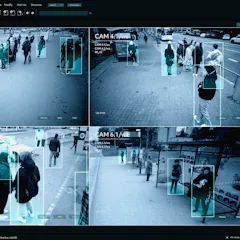
Automated facial recognition is becoming widespread in Australia. The technology has already been used by retail outlets, sport stadiums and casinos around the country. And in November, the Australian…

As the digital economy accelerates, New Zealand needs new rules to regulate how we develop new services– and who develops them.

2024 will see a massive expansion in Australia’s digital ID system. Good tech and strong guardrails will make Australia a world leader in this important area.

The draft bill has a number of issues, ranging from an insecure mechanism that leaves people’s data vulnerable to attacks, to a lack of mandatory disclosure of data breaches.

Digital tax filing can improve accuracy and timeliness but it doesn’t always translate into higher tax revenue.

Barcodes containing verifiable information could make our lives easier and provide safe access to buildings or online services. But a global effort will be necessary to make them completely secure.
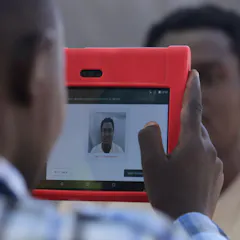
Huduma Namba data processing poses high risks, since very personal data, including biometrics, is collected.

Without careful planning and implementation, the government risks making many of the same mistakes ushered in by the hasty ‘datafication’ of society, which has been turbocharged by the pandemic.

When it comes to civil registrations, some states are using exclusionary mechanisms to block anyone it considers undesirable, as happened to Dominicans of Haitian descent.

A digital ID will only work if people are allowed to keep control of their data.
A new digital ID system will gather piles of personal information in one place – and you won’t have full control over who has access

Data protection policies focus on human rights. But the exercise of our free will is increasingly being hindered.
Top contributors
-

Professor of Cyber Security and Policy, Tufts University
-
Professor of Media, School of Media, Film, and Journalism, Monash University
-
Director, University of Technology Sydney
-
Responsible Technology Policy Specialist - Human Technology Institute, University of Technology Sydney
-
Head, Policy Lab, Human Technology Institute, University of Technology Sydney
-
Lecturer in Caribbean History & Politics, Institute of Historical Research, University of London, School of Advanced Study, University of London
-
Lecturer in Computer Science, University of the Sunshine Coast
-
Professor of Strategic Management, Coventry University
-
Professor of Informatics and Chair in Complexity Science, Te Herenga Waka — Victoria University of Wellington
-
Researcher, RMIT Blockchain Innovation Hub / Centre for Automated Decision Making & Society / Digital Ethnography Research Centre, RMIT University
-
Researcher, Institute of Development Studies
-
Doctoral Researcher, Digital Identity, University of Oxford
-
Associate professor, DICEN-IdF Lab, Université Gustave Eiffel
-
Senior Lecturer in Criminology and Policing, Bangor University
-
Postdoctoral Fellow, International Centre for Tax and Development, Institute of Development Studies