
Astounding leaps forward in diagnostics, recycling and food are just a few areas of chemistry that were once considered science fiction
Articles on Biochemistry
Displaying 21 - 40 of 55 articles
The chemical reaction that forms essential biomolecules like proteins and DNA normally doesn’t occur in the presence of water. Microdroplets provide a unique environment that make it possible.

Financial support for science and research in Nigeria remains pathetic. This has led to the deterioration in the quantity and quality of trained virologists at universities.
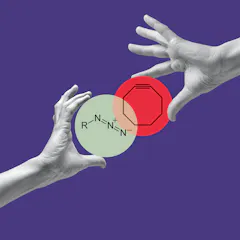
Click and bioorthogonal chemistry has enabled researchers to closely study how molecules work in their natural state in living organisms, with applications that span from cancer treatment to polymers.
The climate crisis makes it important to investigate and understand the mechanisms of plant growth if we are to keep agricultural crops sustainable.
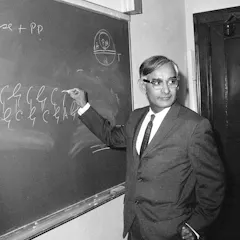
Khorana rose from humble beginnings in India to decipher the genetic code. But his enormous contribution to science has been largely overlooked.
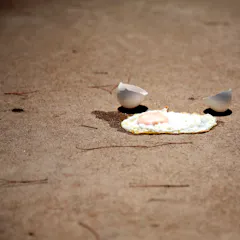
It’s too hot for bare feet, but that doesn’t mean you can cook a fry-up on the path outside your house. A frying pan is a much better tool for the job, because it conducts heat far more efficiently.
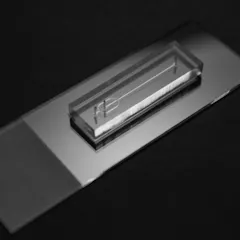
Artificial cells on tiny microfluidic chips can provide early insight into how new cancer drugs behave in cells, and why certain kinds of cancer are more resistant to chemotherapy treatment.
While the COVID-19 pandemic raged on, the opioid epidemic got worse as drug overdose deaths soared. New research proposes a way to chemically modify opioids to reduce the risk of addiction.

An optical sensor that can detect individual molecules promises early detection of diseases and environmental contamination.

You might think the more oxygen you breathe in the better. But too much oxygen can make you sick.

A fetus needs oxygen long before its lungs work and it’s exposed to the air. Some ingenious biochemistry explains how the mother’s blood delivers it.
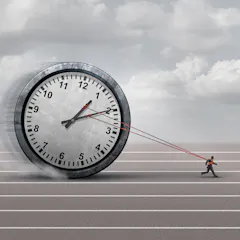
Emerging evidence suggests that prolonged stress exposure can accelerate the ticking rate of an internal cellular clock. By doing so, stress can contribute to faster ageing and body deterioration.
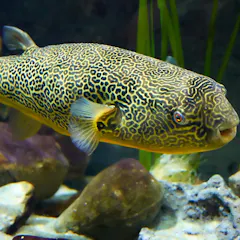
Alan Turing’s last published paper revealed the mathematics behind the beautiful patterns that adorn the natural world.
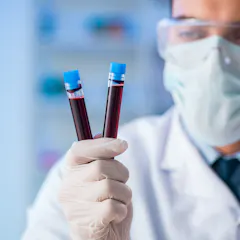
Your blood is red;
it’s never blue.
Because of hemoglobin;
and the view through tissue.
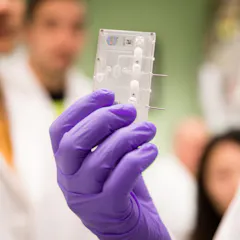
Researchers who’ve created a kidney-on-a-chip explain why these kinds of devices are an improvement over traditional ways to test new drugs.
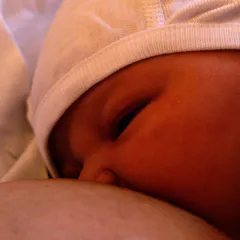
A chemist explains how some molecules in human breast milk help fight infection. Understanding their properties could lead to better infant formulas that share the health advantages of breastfeeding.
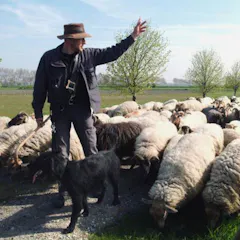
Humans have long been trying differentiate themselves from the rest of the biological world. Is it because we’re superior, or just insecure?

The four ingredients for holy incense are listed in the Old Testament, but there was much debate over the origin of one of them – onycha. Scientists think they’ve now confirmed the source.
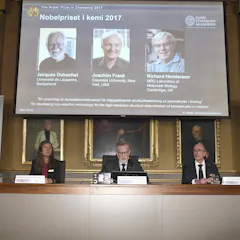
The technique is helping scientists to look for drugs against the Zika virus.
Top contributors
-

Associate Professor of Chemistry, University of Richmond
-
Professor of Science Communication and Chemistry, University of Hull
-
Professor of Pharmacology, University of Sydney
-
Professor of physical organic chemistry, University of Huddersfield
-
Associate professor, Australian National University
-
Professor, National Marine Science Centre, Southern Cross University
-
Honorary Associate Professor, University of Leicester
-
QIMR Berghofer
-
Professor of Horticultural Sciences and Plant Molecular and Cellular Biology, University of Florida
-
Research scientist, QIMR Berghofer
-
Professor, School of Biotechnology and Biomolecular Sciences, UNSW
-
Group Leader, Signal Transduction Laboratory, Queensland Institute of Medical Research
-
Professor of Psychology, The University of Melbourne
-
Director of the Kidney Research Institute and Professor of Medicine, University of Washington
-
Ph.D. Student in Chemistry, University at Albany, State University of New York