

Business managers often rely on predictive algorithms to make recruiting decisions that affect a company’s bottom line. But these kinds of algorithms aren’t really “predictive” at all.
Articles on Big data
Displaying 141 - 160 of 313 articles

Big data provides a rich picture of the physical city, but it won’t tell us much about the social city – that’s where agent-based modelling comes in.
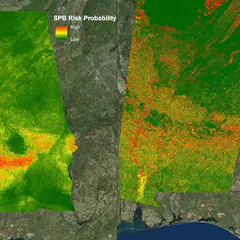
Big data open-access publishing and other advances offer ecologists the ability to forecast events like pest outbreaks over days and seasons rather than decades. But scholars need to seize this opportunity.
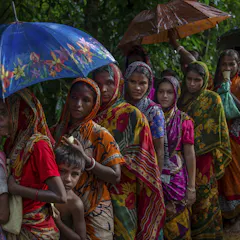
Today, there are more refugees and displaced people than ever before. Sophisticated analytics could be a game-changer for officials on the front lines of the crisis.
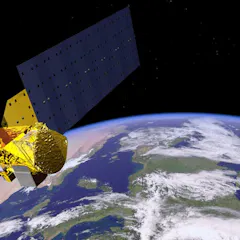
Several satellites have been launched in recent years with the objective of measuring data related to climate change. They must be complementary to measurements made on earth.

Millions of Chinese citizens have been blacklisted by Chinese authorities from booking flights or high-speed train tickets due to low social credit scores.

All earthly and celestial things emit signals. The science of signal processing, born in the 19th Century and now greatly advanced thanks to computers, allows us to better understand them.

Technologies for accessing information need to be somehow future-proofed.

The use of big data at work could promote well-being – but only in very specific conditions.

Does big data threaten how humans explore the natural world? We need to protect our impulses to observe, compare, play, discover and love, no matter what technological capabilities are available.
Predicting human behavior is big business. But science may never be able to do so with perfect certainty.
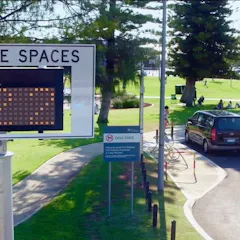
Public spaces have become more, not less, important to our experience of cities in the digital era. These technologies can be used to confound and enlarge our experiences of and connections to place.

Many cities lack the resources to analyze their own vast troves of administrative data.
The risks of big data are not getting enough attention.

The latest episode of The Conversation's In Depth, Out Loud podcast, in which we read out a selection of long form stories.

Twitter can be a useful tool in trying to predict what people think on an issue. So why did a study of almost half a million tweets on the same-sex marriage survey get it wrong?
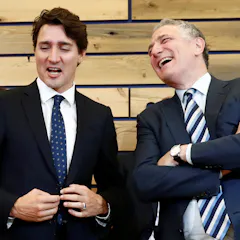
Toronto has entered a joint venture with a Google sister company to create a high-tech urban development area. The goal is to ‘re-imagine cities from the internet up’ – Google’s internet, of course.
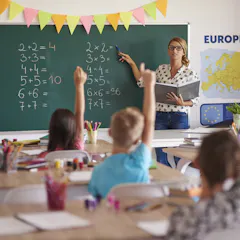
It’s not enough to base teaching and learning policy on big data analysis, evidence needs to be rich, persuasive and justifiable and provide practical support to develop teaching approaches.
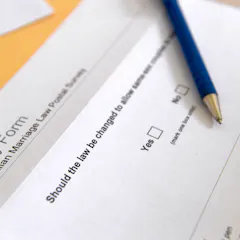
Plenty of debate on Twitter about the marriage reform survey, and data from that can be crunched to predict the result. So what is it?
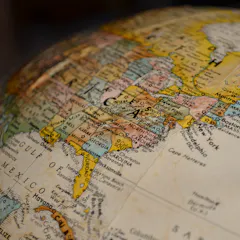
Gerrymandering is being hotly debated around the US. Can math help us figure out how to divide the country up fairly?
Top contributors
-

Professor, Director of Big data and smart analytics lab - IIIS, Griffith University
-
Vice Chancellor’s Senior Research Fellow, School of Global, Urban and Social Studies, RMIT University
-
Adjunct Senior Lecturer, Applied Ethics and CyberSecurity, Griffith University
-
Adjunct professor, UNSW ; University of Technology Sydney
-
Professor of Information Sciences and Technology at Altoona campus, Penn State
-
Lecturer and Teacher, Department of Politics and International Relations, Cardiff University
-
Assistant researcher, University of Sydney
-
Honorary Fellow, Space and Astronomy, CSIRO; Western Sydney University
-
Fellow of the Faculty of Engineering and Information Technology, University of Technology Sydney
-
Associate Professor, School of Law, University of Canberra
-
Professor of Cybersecurity, Head of School of Computer Science and Informatics, De Montfort University
-
Bernard A. Galler Collegiate Professor of Electrical Engineering and Computer Science, University of Michigan
-
Senior Lecturer, The University of Queensland
-
Assistant Professor of Philosophy, UMass Lowell
-
Senior lecturer, University of Twente