

Automated text messages if your phone detects you’re a long way from home, or discounted home internet, are just a few possible technology solutions to make New Zealanders “stay home to save lives”.
Articles on Big data
Displaying 61 - 80 of 313 articles

In our increasingly datafied world, there is a clear need to develop and disseminate responsible approaches for handling data for and about children.

The use of online health platforms is on the rise, allowing us to track and share our personal data. While such platforms have promise, significant scientific, ethical and privacy questions remains.

Traditional companies need to embrace high-quality data gathering to avoid being left behind by the next industrial revolution.

20 years ago, who could predict how much more researchers would know today about the human past – let alone what they could learn from a thimble of dirt, a scrape of dental plaque, or satellites in space.
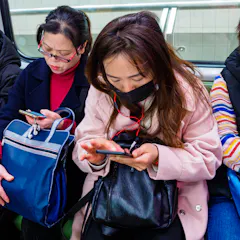
China’s social credit system has been described as a ‘dystopian nightmare straight out of Black Mirror’ but many citizens think it will help fight fraud and bring about a better society.
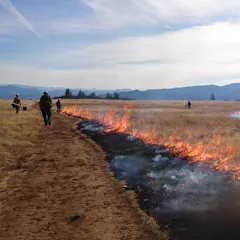
Along with climate change and drought, invasive grasses are promoting wildfires across the US, even in areas that don’t normally burn.

Data protection policies focus on human rights. But the exercise of our free will is increasingly being hindered.

Personal data is valued primarily because data can be turned into a private asset. That has significant implications for political and societal choices.

Artificial Intelligence can perpetuate existing social imbalances in a harmful manner. Can this undesirable scenario be avoided?

Health-care providers are increasingly relying on large data sets to deliver services. However, Small Data approaches provide nuance and context, and in some instances can be more beneficial.

The use of big data by companies, even when perfectly legal, can harm people.
From 2000 to 2013, less than a third of gendered pronouns within articles (for example, ‘he’ and ‘she’) referred to women.

City rankings have become big business – but this expert thinks it’s best to ignore them.

Data analytics have played a role in elections for years. But today’s massive voter relationship management platforms use digital campaigning practices to take it to another level.
A recent public deliberation in British Columbia identified that access to government data should be managed carefully and efficiently.

The government has breached the public’s trust and its own privacy policy by using Medicare data about Australians’ prescribing habits to recruit participants for a study.

People are more willing to participate in fitness tracker-based insurance policies when they are in control of their participation.

What should be done to ensure that the SDGs actually change countries’ development trajectories? Here are four practical steps.

Companies scrutinise our online likes, dislikes, searches and purchases to produce data that can be used commercially. And it’s often done without us understanding the full extent of the surveillance.
Top contributors
-

Professor, Director of Big data and smart analytics lab - IIIS, Griffith University
-
Vice Chancellor’s Senior Research Fellow, School of Global, Urban and Social Studies, RMIT University
-
Adjunct Senior Lecturer, Applied Ethics and CyberSecurity, Griffith University
-
Adjunct professor, UNSW ; University of Technology Sydney
-
Professor of Information Sciences and Technology at Altoona campus, Penn State
-
Lecturer and Teacher, Department of Politics and International Relations, Cardiff University
-
Assistant researcher, University of Sydney
-
Honorary Fellow, Space and Astronomy, CSIRO; Western Sydney University
-
Fellow of the Faculty of Engineering and Information Technology, University of Technology Sydney
-
Associate Professor, School of Law, University of Canberra
-
Professor of Cybersecurity, Head of School of Computer Science and Informatics, De Montfort University
-
Bernard A. Galler Collegiate Professor of Electrical Engineering and Computer Science, University of Michigan
-
Senior Lecturer, The University of Queensland
-
Assistant Professor of Philosophy, UMass Lowell
-
Senior lecturer, University of Twente