

Artificial intelligence and data analytics are transforming the practice of law.
Articles on Big data
Displaying 101 - 120 of 313 articles
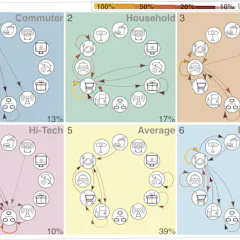
Big data from smart phone and credit cards can uncover the daily rhythms of city life, for all its residents.
Google search histories can be used to reveal how much the public knows about climate change in countries all over the world - and how ready they are to take action to guard against its effects.
The Achilles’ heel of law technologies: training. Only 10% of such initiatives are aimed at law students, so how should this issue be managed to win the AI race?

Technology is already changing how we live our lives and go about our days. Are we ready with collaborative planning processes so we are not taken by surprise by more profound change?
Big data can be used to properly advise smallholder farmers in Africa and help guide pest monitoring efforts.
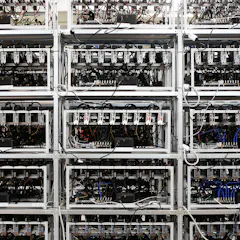
Bitcoin is often criticized for using up tons of energy. But its carbon footprint may not be that bad.
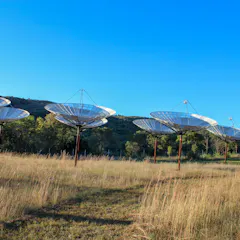
By sharing a location with the SKA, HIRAX will be able to conduct science in “radio-clear” skies across its wide frequency range.
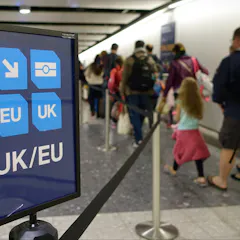
It’s not as simple as just hiring more immigration officers.

Reducing companies’ future strategic successes to the simple idea of an ever-faster reaction time overlooks human intelligence, the organic capital involved in shaping their future.
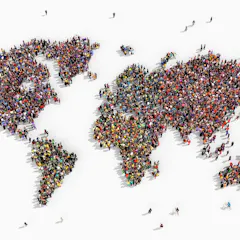
Increasing usage of big data by statistical agencies and other organisations may reduce the ability of populations to have a say in how they are governed.

Robotic milkers, video cameras and even sensors hidden inside the body will help this dairy farm figure out how to get the most milk from their cows.
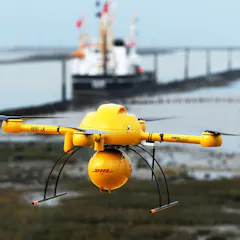
Supply-chain experts see reliable data, STEM education and smarter regulation as essential for Australia to succeed in an increasingly automated world under pressure to be environmentally sustainable.

Paradoxically, it is only when I disappear into the digital crowd that my personal data becomes interesting for digital merchants.

As CCTV cameras become more widespread, it’s becoming more difficult for people to protect their locational privacy in public.
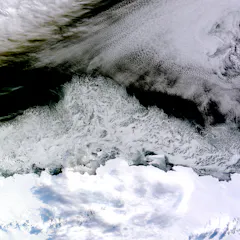
Geospatial data offers a powerful new way to see the world. But these high-tech images can be misleading or incomplete.
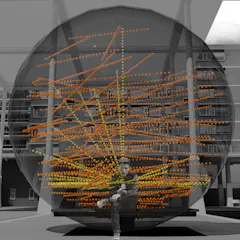
How data is changing the shape of our personal ‘bubble’ – in pictures.

The data you create when using the internet can actually be used to discriminate against you.

You should be aware of the amount of genetic information you might disclose in a research study – and what the benefits and risks will be.
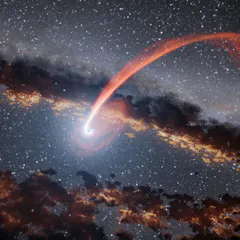
Astronomers are gathering an exponentially greater amount of data every day – so much that it will take years to uncover all the hidden signals buried in the archives.
Top contributors
-

Professor, Director of Big data and smart analytics lab - IIIS, Griffith University
-
Vice Chancellor’s Senior Research Fellow, School of Global, Urban and Social Studies, RMIT University
-
Adjunct Senior Lecturer, Applied Ethics and CyberSecurity, Griffith University
-
Adjunct professor, UNSW ; University of Technology Sydney
-
Professor of Information Sciences and Technology at Altoona campus, Penn State
-
Lecturer and Teacher, Department of Politics and International Relations, Cardiff University
-
Assistant researcher, University of Sydney
-
Honorary Fellow, Space and Astronomy, CSIRO; Western Sydney University
-
Fellow of the Faculty of Engineering and Information Technology, University of Technology Sydney
-
Associate Professor, School of Law, University of Canberra
-
Professor of Cybersecurity, Head of School of Computer Science and Informatics, De Montfort University
-
Bernard A. Galler Collegiate Professor of Electrical Engineering and Computer Science, University of Michigan
-
Senior Lecturer, The University of Queensland
-
Assistant Professor of Philosophy, UMass Lowell
-
Senior lecturer, University of Twente