

Finding a place to eat in a new city can be daunting. Economics and big data have a few tips to find the right place.
Articles on Big data
Displaying 81 - 100 of 313 articles

We have learnt to be wary of big data, but it can also be your friend: one platform combines and analyses data about housing, jobs and transport to reveal very useful information about living in Perth.
Big tech companies compete over who can gather the most intelligence on their users. Countries like Russia and China turn this information against their citizens.

US schools now collect detailed data on their students. But teachers and parents need to think carefully about how that data is used – and what it shows, or doesn’t show, about a student.

Why are three-pointer shots from the corner more efficient than the ones above the break? The answer: More than 90 percent of corner three-point shots are assisted.
Techniques from topology can help us understand DNA and improve drug development.

The General Data Protection Regulations have been in force since May 2018. Analysis of its four key measures: labels, liability obligation, portability and pseudonymisation.

Smart city planning raises concerns with citizens regarding privacy and the use of their data.

For decades, advertisers and marketers struggled to predict the consumption of leisure products such as movies and books. Now, big data reveals how people really spend their leisure time.
Regulation of the internet is inevitable and governments, rather than businesses, should seek to regulate it.
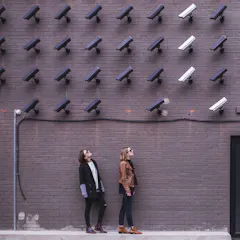
If left unchecked, invasions of privacy enabled by technology could put every human right at risk, and on a scale that would be truly terrifying.

Science is in a reproducibility crisis. This is driven in part by invalid statistical analyses that happen long after the data are collected – the opposite of how things are traditionally done.
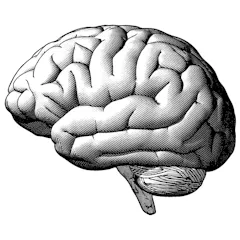
Two theories on autism and sex differences are confirmed in half a million people.

Digital technologies put an abundance of data at our fingertips, but we must ensure questions of what should, and should not, be measured are answered before we use them in official statistics.

Data science can map where street harassment is most prevalent, ensure public bins don’t overflow and identify neighbourhoods with poor fire safety standards in the home.

If you carry your smartphone with you everywhere, then the data it tracks could provide a comprehensive picture of your health – and alert you if it begins to deteriorate.

How should the US spend limited funds for conserving endangered species? A new data tool lets managers compare different strategies so they can allocate money to protect the most species.

Only a small fraction of the data from archaeological fieldwork is made accessible to the public or preserved for future research.
Big data is all the rage in management circles and beyond, yet little is said about the understanding needed with such voluminous data. An important lesson can be learned from ethnographic research.
Undergraduate statistics degrees have tripled in the past decade. Is ‘statistician’ really the sexy new job?
Top contributors
-

Professor, Director of Big data and smart analytics lab - IIIS, Griffith University
-
Vice Chancellor’s Senior Research Fellow, School of Global, Urban and Social Studies, RMIT University
-
Adjunct Senior Lecturer, Applied Ethics and CyberSecurity, Griffith University
-
Adjunct professor, UNSW ; University of Technology Sydney
-
Professor of Information Sciences and Technology at Altoona campus, Penn State
-
Lecturer and Teacher, Department of Politics and International Relations, Cardiff University
-
Assistant researcher, University of Sydney
-
Honorary Fellow, Space and Astronomy, CSIRO; Western Sydney University
-
Fellow of the Faculty of Engineering and Information Technology, University of Technology Sydney
-
Associate Professor, School of Law, University of Canberra
-
Professor of Cybersecurity, Head of School of Computer Science and Informatics, De Montfort University
-
Bernard A. Galler Collegiate Professor of Electrical Engineering and Computer Science, University of Michigan
-
Senior Lecturer, The University of Queensland
-
Assistant Professor of Philosophy, UMass Lowell
-
Senior lecturer, University of Twente