

The emotions associated with trends in popular music and lyrics can predict economic sentiment.
Articles on Big data
Displaying 121 - 140 of 313 articles

The routine gathering and monetisation of vast amounts of personal data has been normalised.

Social media platforms and data analytics companies need the world to believe in the election-swaying power of big data.

Despite the claims of online dating services, there is little scientific evidence that using self-reported data for matchmaking can lead to long-term compatibility.

Cities are adapting to the needs of driverless cars. Here’s how.
AI seems able to answer questions at the heart of humanitarianism – questions such as who we should save, and how to be effective at scale.

Parents should inform themselves, and review their and their children’s privacy settings.

The spread of infectious diseases such as chikungunya is closely linked to urban mobility, yet small Indian cities could play a crucial role in the resilience process.

As cities get smarter, we need to examine carefully who gets our data and what it is used for.

A new survey reveals that firms are only slowly adapting to advances in financial technology, even as CFO optimism rises.

There are more satellites than ever before, orbiting Earth and collecting data that’s crucial for scientists. Why do some nations choose not to share that data openly?

Human rights abuses might be embedded in the business model that has evolved for social media companies in their second decade.
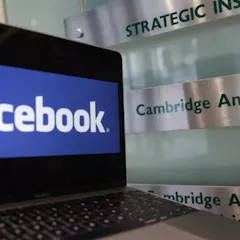
The ongoing Facebook and Cambridge Analytica scandal has generated big headlines, but consumer and marketing research have long questioned the actual effectiveness of psychographic segmentation.

Prime numbers are the biggest and oldest data set in mathematics. Why have they captivated mathematicians for millennia?

Slacktivism won’t cut it in the wake of the Cambridge Analytica scandal.

Harvesting data from Facebook’s users is within the rules, I should know, I’ve done this kind of research myself. But the latest scandal may make it harder for us to get any useful data.

The Cambridge Analytica scandal wasn’t a data breach – it was a violation of academic ethics. Maybe it’s universities, not social networks, that need to update their privacy settings.
How should privacy be protected in a world where data is gathered and shared with increasing speed and ingenuity? Differential privacy, a new model of cyber security, provides a potential solution.

Brands need to build trust by being transparent about how they collect data.

The use of big data in policing has clear benefits for struggling police forces. But society needs to maintain a critical perspective on moral and ethical grounds.
Top contributors
-

Professor, Director of Big data and smart analytics lab - IIIS, Griffith University
-
Vice Chancellor’s Senior Research Fellow, School of Global, Urban and Social Studies, RMIT University
-
Adjunct Senior Lecturer, Applied Ethics and CyberSecurity, Griffith University
-
Adjunct professor, UNSW ; University of Technology Sydney
-
Professor of Information Sciences and Technology at Altoona campus, Penn State
-
Lecturer and Teacher, Department of Politics and International Relations, Cardiff University
-
Assistant researcher, University of Sydney
-
Honorary Fellow, Space and Astronomy, CSIRO; Western Sydney University
-
Fellow of the Faculty of Engineering and Information Technology, University of Technology Sydney
-
Associate Professor, School of Law, University of Canberra
-
Professor of Cybersecurity, Head of School of Computer Science and Informatics, De Montfort University
-
Bernard A. Galler Collegiate Professor of Electrical Engineering and Computer Science, University of Michigan
-
Senior Lecturer, The University of Queensland
-
Assistant Professor of Philosophy, UMass Lowell
-
Senior lecturer, University of Twente