

A move by the US to open up more competition in pay-TV has sparked a debate about TV viewing data.
Articles on Big data
Displaying 221 - 240 of 313 articles

Our knowledge of diseases is growing exponentially, but turning knowledge into cures is proving to be a tricky business.

In an age of data-driven urban science, we need to remember how Jane Jacobs gave voice to the multiple languages, meanings, experiences and knowledge systems of a vibrant city.

Analyzing electronic data from many doctors’ experiences with many patients, we can move ever closer to answering the age-old question: what is truly best for each patient?

Big data studies often use easily available user-generated data from the Internet. Researchers assume that this data offers a window into reality. It doesn’t necessarily.

Big data is all well and good, but if we want medical breakthroughs, we’ll need big theory too.

The Productivity Commission’s inquiry into access and use of public and private data risks failing to achieve anything meaningful.

Social media is notoriously unsuitable for population studies, but these researchers have found a way to make the bias work in their favour.

Improving data quality and accessibility will provide an important platform for business, policy innovation and academic research.

If smart cities run on big data and algorithms that channel only ‘relevant’ information and opinions to us, how do we maintain the diversity of ideas and possibilities that drives truly smart cities?

By linking censuses through time or by combining other information with the census, many more important policy questions can be answered than if we used one dataset alone.

Some of the key questions faced by news organisations before publishing their scoop.

How should we address growing concerns about information security without denying society the benefits big data can bring?

Big data can reinforce human prejudices but it could also help us break away from discrimination.

The disruption happening thanks to algorithms is happening all around us.

Computers are getting better and better at the jobs that previously made sense for researchers to outsource to citizen scientists. But don’t worry: there’s still a role for people in these projects.

Big Data produces mountains of information, but it’s useless for science unless we’re asking the right questions.
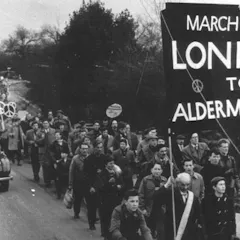
Political campaigns today are presented as products of bottom-up participation, not top-down direction. But even if a campaign appears grassroots-driven, it’s likely to be run from the centre.
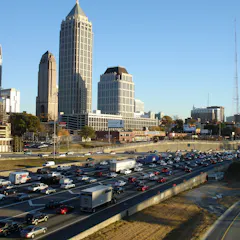
The route to economic growth starts by making our cities more productive – the bigger, the denser, the better.
We need the skills to put big data to use before others leave us behind.
Top contributors
-

Professor, Director of Big data and smart analytics lab - IIIS, Griffith University
-
Vice Chancellor’s Senior Research Fellow, School of Global, Urban and Social Studies, RMIT University
-
Adjunct Senior Lecturer, Applied Ethics and CyberSecurity, Griffith University
-
Adjunct professor, UNSW ; University of Technology Sydney
-
Professor of Information Sciences and Technology at Altoona campus, Penn State
-
Lecturer and Teacher, Department of Politics and International Relations, Cardiff University
-
Assistant researcher, University of Sydney
-
Honorary Fellow, Space and Astronomy, CSIRO; Western Sydney University
-
Fellow of the Faculty of Engineering and Information Technology, University of Technology Sydney
-
Associate Professor, School of Law, University of Canberra
-
Professor of Cybersecurity, Head of School of Computer Science and Informatics, De Montfort University
-
Bernard A. Galler Collegiate Professor of Electrical Engineering and Computer Science, University of Michigan
-
Senior Lecturer, The University of Queensland
-
Assistant Professor of Philosophy, UMass Lowell
-
Senior lecturer, University of Twente