

Many other public bodies have flawed and outdated computer systems. How long before something else goes wrong?
Articles on Big data
Displaying 41 - 60 of 313 articles

The first full human genome was sequenced 20 years ago. Now, a project is underway to sequence 1 million genomes to better understand the complex relationship between genetics, diversity and disease.
Analysis of almost 100,000 tweets reveals how news reports can change the way people feel about vaccination.
While AI is intended to help us, it tempts us to abandon judgment and moral responsibility. And without a proper understanding of how it works, we cannot circumvent its negative effects.
Companies today collect vast amounts of our personal data. What measures can governments and regulators take to reduce the inherent risks and keep our data?

How you can gauge investors’ sleepiness by using Google search data.
‘Science 4.0’ is real. It is about a revolution in which science is an integral part of society.

Australians are highly engaged on the topic, yet don’t have strong opinions either way. Among potential migrants, only Indians showed a high degree of interest in Australia as a destination.
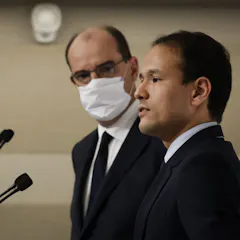
In the current pandemic, finding the right balance between the protection of public health and respecting civil liberties has proven to be supremely difficult.

Many businesses struggle with data security, but the new Privacy Act means they will have to make protecting customers’ personal information a priority.

An algorithm driven world is dehumanising – but by understanding this we can call for a more equitable and human use of data.
The use of artificial intelligence in health care is on the rise, and the concerns of the public need to be considered in developing policy that regulates its application.
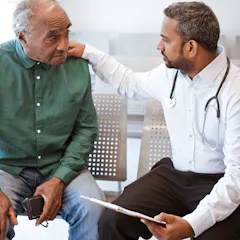
Getting the real answers on health gaps requires a deep dive into the demographics.
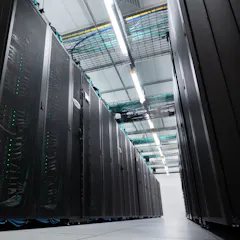
Supercomputers in Canberra and Perth power the analysis and modelling that decision-makers rely on in national crises.
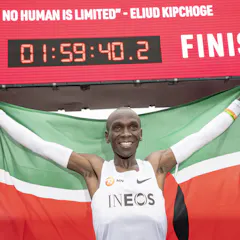
Training data collected by fitness trackers may be useful to predict marathon performance
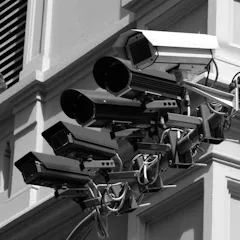
Police forces across the country now have access to surveillance technologies that were recently available only to national intelligence services. The digitization of bias and abuse of power followed.
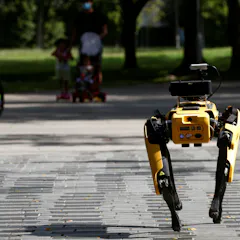
Smart city solutions have proved handy for curbing the contagion, but recent experience has also shown how much they rely on public trust. And that in turn depends on transparency and robust safeguards
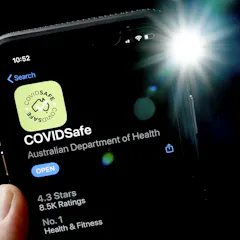
The COVIDSafe app hasn’t come out of nowhere. The promises of ‘smart city’ data collection may be seductive, but we must always weigh up what we’re being asked to give up in return.

America’s news reports and social media chatter open a window into the nation’s psyche. An AI-based text analysis of these words shows that the coronavirus is driving up familiar social ills.

Deep learning algorithms can help us understand if and how social distancing is taking place.
Top contributors
-

Professor, Director of Big data and smart analytics lab - IIIS, Griffith University
-
Vice Chancellor’s Senior Research Fellow, School of Global, Urban and Social Studies, RMIT University
-
Adjunct Senior Lecturer, Applied Ethics and CyberSecurity, Griffith University
-
Adjunct professor, UNSW ; University of Technology Sydney
-
Professor of Information Sciences and Technology at Altoona campus, Penn State
-
Lecturer and Teacher, Department of Politics and International Relations, Cardiff University
-
Assistant researcher, University of Sydney
-
Honorary Fellow, Space and Astronomy, CSIRO; Western Sydney University
-
Fellow of the Faculty of Engineering and Information Technology, University of Technology Sydney
-
Associate Professor, School of Law, University of Canberra
-
Professor of Cybersecurity, Head of School of Computer Science and Informatics, De Montfort University
-
Bernard A. Galler Collegiate Professor of Electrical Engineering and Computer Science, University of Michigan
-
Senior Lecturer, The University of Queensland
-
Assistant Professor of Philosophy, UMass Lowell
-
Senior lecturer, University of Twente