
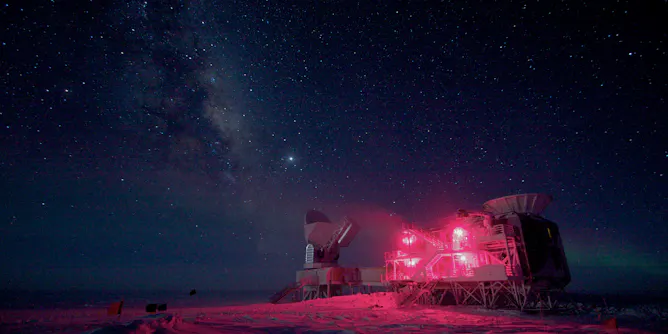
Long ago in the distant past, our entire Universe was microscopic – just like an atom – and obeyed completely different rules of cause and effect.
Articles on Big Bang
Displaying 41 - 60 of 80 articles

Helium lifts balloons and makes our voices squeak. But its supply on Earth is finite and is critical for modern industrial processes and medical imaging in hospitals. How worried should we be?
From a mysterious energy of empty space to parallel universes, cosmology’s view of ‘nothing’ is anything but boring.
At a time when nationalism and religious ideologies are dividing humanity, it is important to find unifying perspectives on our ‘origin story.’
Pretty much as soon as we understood what galaxies were, we realised they are all moving away from each other. And the ones that are further away are moving faster. In short, the universe is expanding.
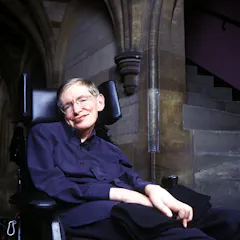
UK’s Astronomer Royal Martin Rees shares his memories of the physicist Stephen Hawking, who has died at the age of 76.
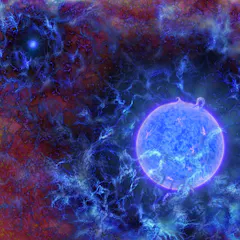
Signals from the first stars to form in the universe have been picked up by a table-sized detector in a west Australian desert. The find also hints at an early interaction with dark matter.
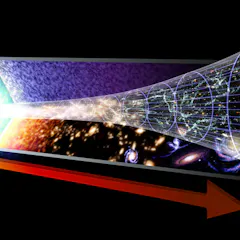
From blindingly bright and burning hot to pleasantly ‘candle-lit’, the first years of the universe would have been spectacular to see.
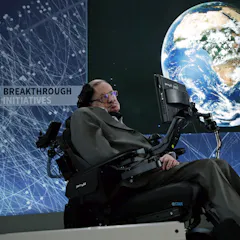
Hawking proved that the Big Bang was physically possible.
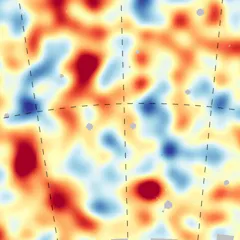
We still can’t see the dark matter thought to make up about a quarter of the universe, but at least now we have a map of its structure.

It’s like one great big distillery up there.

What caused the Big Bang is still a mystery. And that’s just one of the many unanswered questions, in spite of everything we do know about the birth of the Universe.
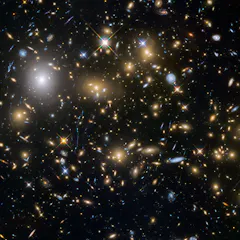
Atoms blown up in the right way could signal when a gravitational wave is passing through.
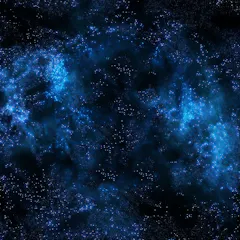
People used to think that when they looked up at the night sky, they were seeing all of space. Then American astronomer Edwin Hubble found out something so amazing, NASA named a telescope after him.
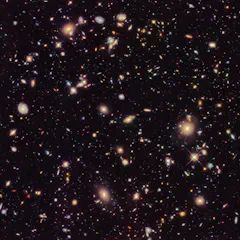
A new telescope aims to figure out what became of the universe’s original atoms once the first stars began to shine.

CC BY-ND31.5 MB (download)
In part two of our podcast on rebooting, we explore what would happen if humanity was wiped out, take a look at a political comeback in France, and get a taste of a revamped US institution.
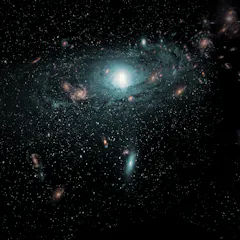
Something mysterious is pulling our Milky Way through space at a much faster rate than expected. So what could it be?
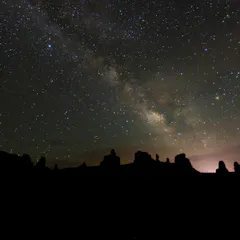
It’s all relative – why scientists understand time in a completely different way.
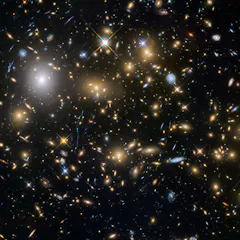
Why gravitational waves from the birth of the universe are a whole different story than the waves LIGO detected.
If there are infinite stars – where is all the light?
Top contributors
-

Professor of Astrophysics, University of Sydney
-
Pro Vice-Chancellor Flagship Initiatives, Swinburne University of Technology
-
Professor of Astrophysics and Royal Society University Research Fellow, University of Hertfordshire
-
Associate Professor in Astronomy, Monash University
-
Cosmologist, University of Tasmania
-
Research Scientist, SETI Institute
-
University Distinguished Professor of Astronomy, University of Arizona
-
Reader in Astrophysics, UCL
-
Emeritus Professor of Cosmology and Astrophysics, Institute of Astronomy, University of Cambridge
-
John Curtin Distinguished Professor (Radio Astronomy), Curtin University
-
Professor, The University of Queensland
-
PhD Candidate, University of Southern Queensland
-
Research Professor and Director of the International Institute for Accelerator Applications, University of Huddersfield
-
Senior Lecturer in Particle Physics Informatics, Brunel University of London
-
ARC Laureate Fellow & Distinguished Professor, Centre for Astrophysics & Supercomputing, Swinburne University of Technology