
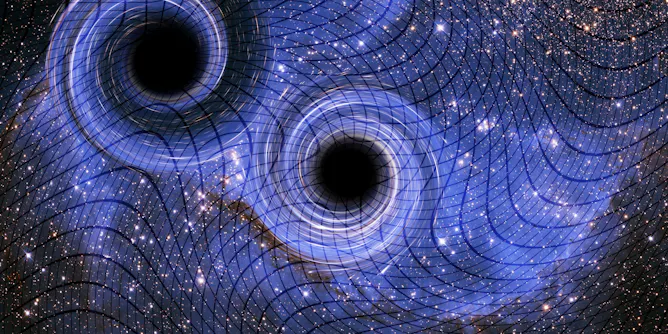
Astronomers have for the first time detected the background hum of gravitational waves likely caused by merging black holes.
Articles on Big Bang
Displaying 21 - 40 of 80 articles
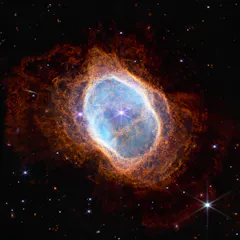
Evolutionary geneticist Jenny Graves loves classical choral music, but grew tired of its biblical themes. So she set out to write an alternative based in science.
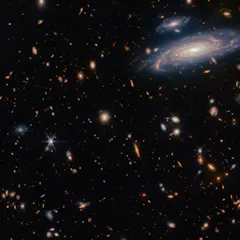
The darkness of the night sky seems so obvious as to need no explanation – yet it has intrigued and baffled scientists for centuries.
Some physicists think we live in a multiverse, surrounded by universes not quite like our own. What does that mean for life?
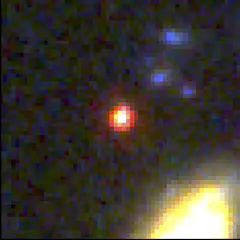
The discovery of massive, early galaxies could force scientists to rethink how the first galaxies formed after the Big Bang.
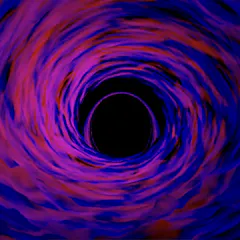
Astronomers have found that mysterious dark energy may originate in black holes.

It has been one year since the launch of the James Webb Space Telescope and six months since the first pictures were released. Astronomers are already learning unexpected things about the early universe.
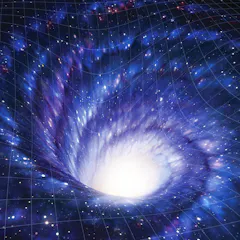
An astrophysicist explains what wormholes are and how these theoretical space-time tunnels have popped up in the solutions to a set of decadesold equations.
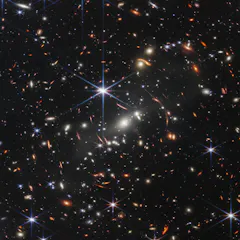
James Webb has spotted extremely distant galaxies formed soon after the Big Bang, but are they old or young? Or is this the wrong question to ask?
It’s the oldest light in the universe.
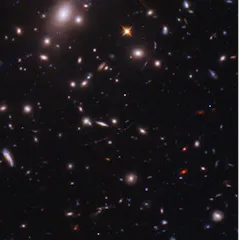
The Hubble Space Telescope could gaze back 13.4 billion years, and with the JWST we expect to improve on this possibly to 13.55 billion years.

Time ends when the universe does.
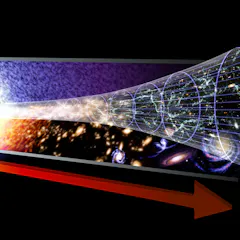
Some argue the Big Bang was a rebirth rather than a birth.
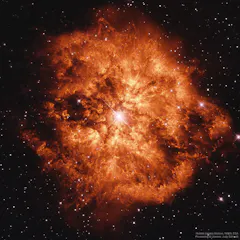
Tracing the cosmic origin of toothpaste, scientists got a glimpse into the surprising chemistry of early galaxies.
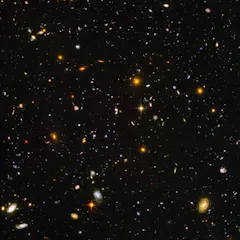
The James Webb Space Telescope is set to launch into orbit in December 2021. Its mission is to search for the first light to ever shine in the universe.
How scientists are planning to listen to the sound of the big bang with a gravitational wave detector that would fit in a kitchen.

A small add-on to existing gravitational wave detectors could reveal what happens to matter as it becomes a black hole, a process like the big bang in reverse.
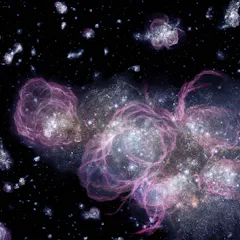
The term ‘Big Bang’ might make you think of a massive explosion. Put the thought out of your head. Rather than an explosion, it was the start of everything in the universe.
Scientists who discovered planets in far off stellar systems and the fundamentals of the Big Bang Theory have earned the 2019 Nobel Prize in Physics.
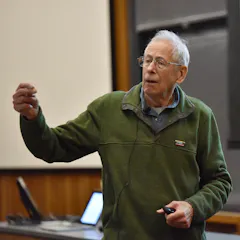
The Princeton cosmologist helped pioneer our current model of the universe and began a whole new branch of physics.
Top contributors
-

Professor of Astrophysics, University of Sydney
-
Pro Vice-Chancellor Flagship Initiatives, Swinburne University of Technology
-
Professor of Astrophysics and Royal Society University Research Fellow, University of Hertfordshire
-
Associate Professor in Astronomy, Monash University
-
Cosmologist, University of Tasmania
-
Research Scientist, SETI Institute
-
University Distinguished Professor of Astronomy, University of Arizona
-
Reader in Astrophysics, UCL
-
Emeritus Professor of Cosmology and Astrophysics, Institute of Astronomy, University of Cambridge
-
John Curtin Distinguished Professor (Radio Astronomy), Curtin University
-
Professor, The University of Queensland
-
PhD Candidate, University of Southern Queensland
-
Research Professor and Director of the International Institute for Accelerator Applications, University of Huddersfield
-
Senior Lecturer in Particle Physics Informatics, Brunel University of London
-
ARC Laureate Fellow & Distinguished Professor, Centre for Astrophysics & Supercomputing, Swinburne University of Technology