
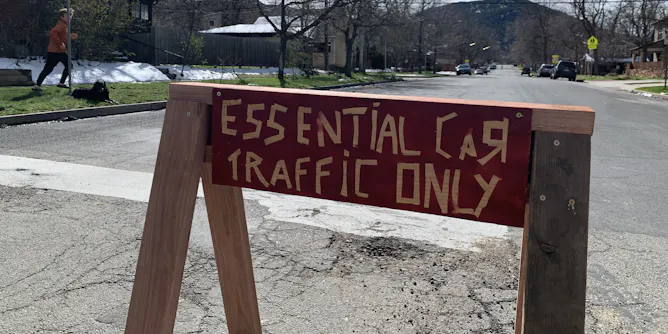
City streets were built to accommodate cars, but the COVID-19 pandemic has scrambled our transport needs. Many cities are moving to make streets more people-friendly and less car-centric.
Articles on Bicycle-sharing systems
Displaying 21 - 40 of 73 articles
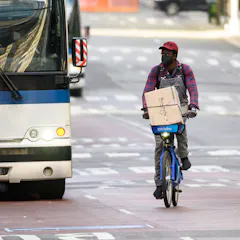
Low-income and minority groups are often reliant on cheaper modes of transport, but many find cycling to work problematic.

Rapid motorisation has made the Indonesian city of Solo prioritise policies to support motorised vehicles, paying little attention to cycling and marginalising poor women.
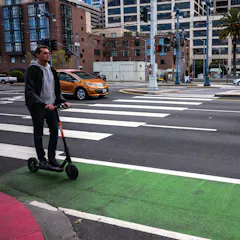
Over US$33 billion was invested in mobility tech last year in response to claims it will transform our lives. Based on what we have seen so far, which of these promised solutions will be delivered?
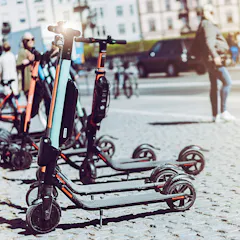
A national consultation may (legally) bring e-scooters to UK cities.
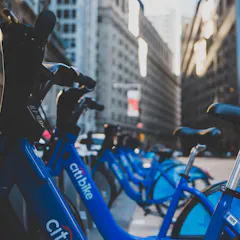
Bike sharing was once proposed as a solution to narrow the cycling gender gap — but it may be further widening this gap.
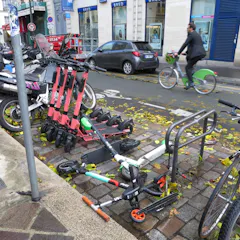
In major cities around the world, dockless scooters and bikes are everywhere, yet the companies themselves are often breathtakingly short-lived. Basic economic concepts give us clues why.
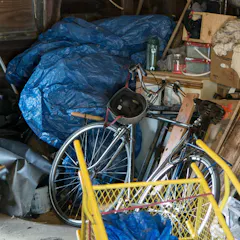
Where bikes are kept is a strong pointer to the place of cycling in the owner’s life. Effective active transport policy starts with understanding what stops people using their bikes instead of cars.

According to a new smart cities index, the real test for smart cities is whether citizens feel the benefits.

Combining big data sources about bike-share trips with anonymized data from traditional survey research can best capture who is using bike-share programs.
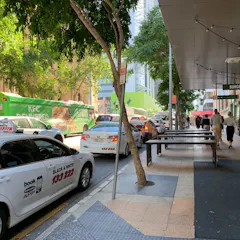
Cities must manage all the competing uses for limited roadside space to avoid congestion and maximise efficiency. And that begins with reliable data.
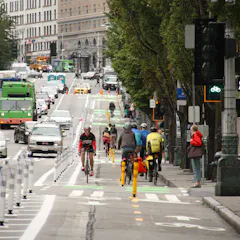
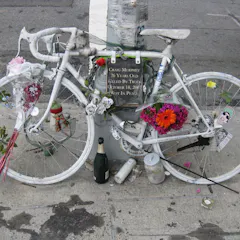
This collective fundraising technique helps defuse anti-cyclist sentiment before it dooms protected bike lanes and other new infrastructure.
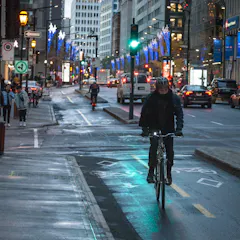
Volunteers can contribute data to maps that help cyclists choose their routes and let planners know how city cycling can be improved.
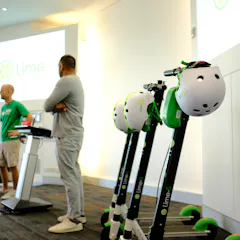
Every day, e-scooters and helmets are put out together, but some people ride without helmets and at the end of each day helmets are missing. So what can be done to ensure safe riding behaviour?
US cities were designed and engineered around cars. Now some are working to increase walking and biking, but the shift isn’t easy.
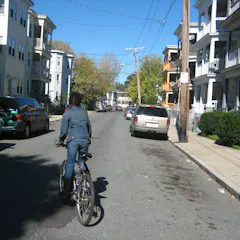
Minorities are driving the bicycling boom, but bike infrastructure investments often neglect their needs. A new study explores what riders in low-income and minority neighborhoods want.
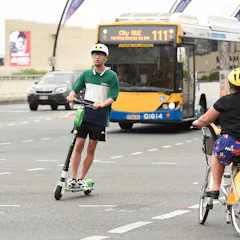
Researchers looking at Australia’s first trial of e-scooter sharing find the Brisbane public has embraced this mode of transport. They make five recommendations to deal with issues that have emerged.

Under 10 percent of new Citi Bike and Divvy bike docks are sited where residents suggested using interactive online maps, a new study shows. But that doesn’t mean city officials weren’t listening.
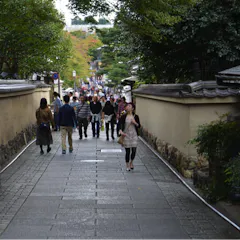
The city where the Kyoto Protocol was signed resolved some years ago to move away from cars and towards low-emission alternatives for getting around. And it’s making real progress towards that goal.
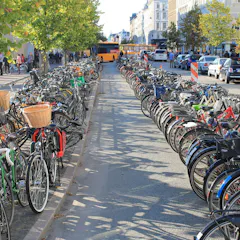
If cities had backed their active transport goals with investment in adequate cycling infrastructure we might not be having the arguments about dockless bikes ‘littering’ public space.
Top contributors
-

Associate Professor in Urban Planning, The University of Queensland
-
Professor of Human Geography, The University of Queensland
-
Chris Rissel is a Friend of The Conversation.
Senior Research Fellow, College of Medicine and Public Health, Flinders University
-
Professor, Faculty of Health Sciences, Simon Fraser University
-
Visiting Fellow, Australian National University
-
Honorary Professor of Planning, The University of Queensland
-
Professor of Cultural Studies, University of Wollongong
-
Professor of Urban and Environmental Policy and Planning, Tufts University
-
Adjunct Professor, School of Engineering and Built Environment, Griffith University
-
Honorary Professor of Transport Studies
-
Principal Research Associate, University of Cambridge
-
PhD Candidate, Cities Research Institute, Griffith University
-
Adjunct Professor, Civil and Environmental Engineering, and Co-Director, Transportation Sustainability Research Center, University of California, Berkeley
-
PhD Candidate, Faculty of Health Sciences, Simon Fraser University
-
Survey Researcher, University of California, Berkeley