
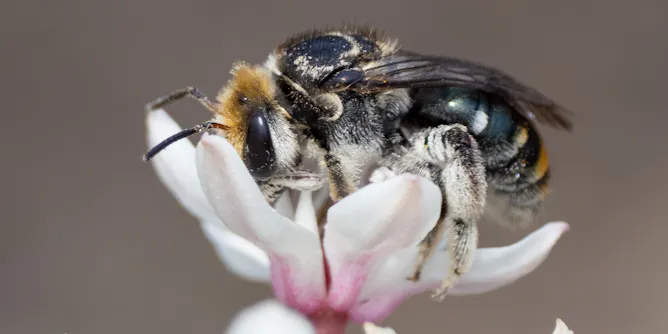
Scientists don’t know enough about the food habits of less social bees. Here’s why that urgently needs to change.
Articles on Australian fauna
Displaying 1 - 20 of 31 articles
The ballista spider only feeds on extremely fierce green tree ants – so it has evolved sophisticated tools to safely catch its prey.

Photographs have provided the first-ever evidence of a brooding red pipefish, resolving a 40-year mystery.
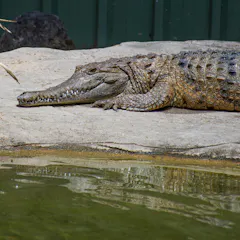
A host of unique crocodylian species ruled the roost in Australia and surrounds for millions of years – until humans came along.
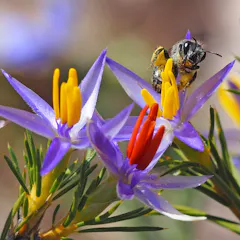
If the governments of Australia can invest millions into the honeybee industry, they surely have the resources to support native pollinators.

Today, rock wallabies rarely stray far from the safety of their rocky shelters. But the fossil record tells a very different story.
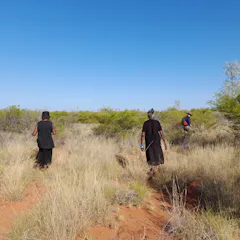
As Australia confronts biodiversity loss, this research underscores the importance of listening to those who know Country best.

Musky rat-kangaroos look a bit like a potoroo – but they have a unique trait not shared with any other roos.
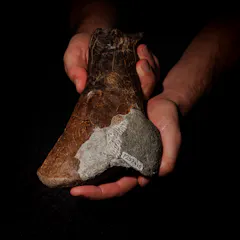
Some of the new finds are the first evidence of these types of dinosaurs from Australia.

A new study estimates there have been more than 9,000 Australian invertebrate extinctions since 1788. Only one has been officially listed.

Many in the wider community still see sugar gums as risky trees that drop dangerous branches. But there is much to appreciate and admire about Eucalyptus cladocalyx.
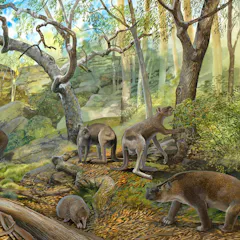
Some extinct kangaroos may barely have hopped at all.

There’s no single reason many Asian animals spread to Australia but few went the other way – but climate, geography and the slow drift of tectonic plates all played a role.

To give native species their best chance of survival, we have to embrace ecosystem-based conservation – rather than trying to rescue individual species in isolation.
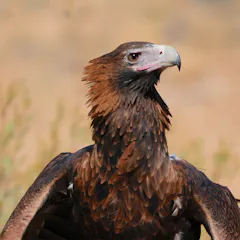
At twice the size of a wedge-tailed eagle, the newly discovered Dynatoaetus gaffae would have competed with thylacines and Tasmanian devils for prey.
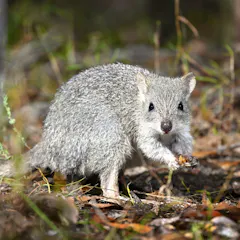
A new list of 404 Australian mammal species is a crucial conservation step in the face of the ongoing extinction crisis.
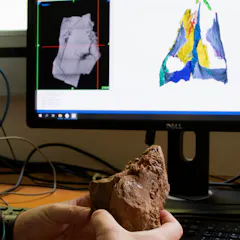
An analysis of the skull suggests the ankylosaur may have had a poorer sense of smell than its counterparts in the northern hemisphere.
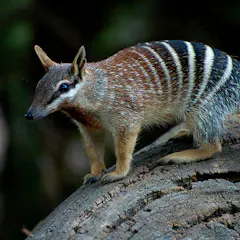
The numbat is one of the Tasmanian tiger’s closest surviving relatives. And its newly sequenced genome raises the possibility of piecing together the genetic code of its extinct fellow marsupial.
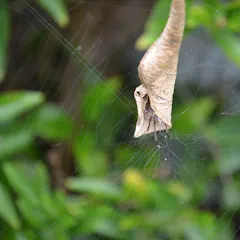
These fascinating spiders only live for about a year and have particularly interesting family arrangements.
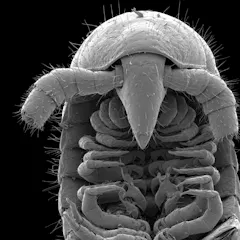
Millipede means ‘1,000 feet’, but until now the name was a bit of an exaggeration.
Top contributors
-

ARC Industry Fellow, Adelaide University
-
Senior Research Associate, School of Agriculture, Food and Ecosystem Sciences, The University of Melbourne
-
PhD Candidate in Palaeontology, University of New England
-
Lecturer in Palaeontology, Flinders University
-
Senior lecturer, University of New England
-
Research associate, Western Australian Museum
-
Professor in Wildlife Ecology and Conservation, School of Life & Environmental Sciences, Deakin University
-
Deputy Director and ARC Future Fellow, Australian Centre for Ancient DNA, Adelaide University
-
Associate Professor of Applied Entomology, The University of Western Australia
-
Adjunct Senior Research Fellow, The University of Western Australia
-
Professor, Southern Cross University
-
Senior Research Scientist, South Australian Museum; Flinders University
-
Honorary Research Associate in BioSciences, The University of Melbourne
-
Associate Professor of Behavioural Ecology, Curtin University
-
Professor in Ecology, Charles Sturt University