

Despite claims of being humane and painless, the use of nitrogen gas for executions and assisted suicide causes air hunger, panic and violent physiological distress.
Articles on Assisted suicide
Displaying 1 - 20 of 49 articles

Recent reports from the Chief Coroner for Ontario reveal that Canada’s MAiD law, policy and practice focuses on promoting access to death, rather than protection.

Choosing to hasten one’s death is an intensely personal, carefully considered decision. But it is rarely made in isolation.

There is plenty in the bill to cause concern, says expert in medical law and ethics.
Assessing a patient’s autonomy can be more difficult when mental illness is the main source of their suffering.

Finding a supportive doctor willing and qualified to assess your eligibility for voluntary assisted dying sometimes depends on luck.

People make decisions throughout their lives about their health. But when they are terminally ill they are not allowed to decide when they want to die.

Nine states and the District of Columbia currently have laws that permit assisted dying, but the laws are so restrictive that they are often more hurdle than help.
A marathon round of amendments and parliamentary debate will likely see voluntary assisted dying implemented in WA in around 18 months. It’s time to start preparing.

The arguments in favour or against euthanasia have a long history, going back to the Hippocratic oath that doctors still swear today.

Many people might want to choose how, when, and under what circumstances they die – but diseases like dementia can complicate advance euthanasia directives.

Nurses who surround the process of medically assisted dying are an important source of insight into the real conversations our society needs to have about what it’s really like.

A 69-year-old man is in jail for encouraging his wife to suicide but some have wondered why he wasn’t charged with a more serious offence.

The Massachusetts Medical Society recently reversed its long-held opposition to physician-assisted suicide. A psychiatrist notes many physicians are painfully conflicted about participating.
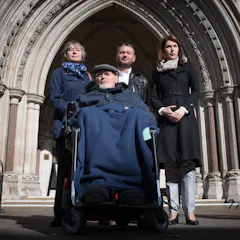
At the moment there is too much left unsaid.

Whether politicians refer to ‘assisted dying’, ‘assisted suicide’ or ‘euthanasia’ tells us a lot about how they feel about the issue, and the emotional response they aim to convey.

The drug we know induces the best death for suffering patients is still illegal in Australia.
More than 2,000 Canadians have chosen medical assistance in dying (MAID) since legalization in 2016. But palliative care doctors aren’t embracing assisted suicide as part of their job.
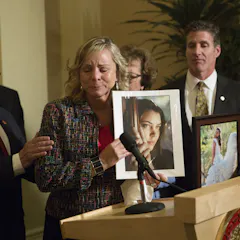
People who seek aid in dying tend to be white men older than 65, a new analysis shows. While this could be due to religious views, here’s why it could also be because of lack of access.

Imagine this situation: a person has no medical illness but wishes to end his or her life purely because he or she no longer wishes to live. Should they be eligible for euthanasia or assisted suicide?
Top contributors
-

Professor of Law, Australian Centre for Health Law Research, Queensland University of Technology
-
Distinguished Professor, Professor of End-of-Life Law and Regulation, Australian Centre for Health Law Research, Queensland University of Technology
-
Professor of Healthcare and Medical Law, Glasgow Caledonian University
-
Associate professor, Queensland University of Technology
-
Fellow of Exeter College, Oxford, University of Oxford
-
Professor of Law, University of Essex
-
Research Fellow, University of Oxford
-
Assistant Professor, Palliative Physician, Queen's University, Ontario
-
Teaching Fellow, University of Surrey
-
Senior Lecturer in Journalism, University of the West of England
-
Lecturer in Health and Social Care Ethics, University of Oxford
-
PhD Candidate, University of Liverpool
-
Senior Lecturer in Clinical Ethics and Health Law, University of Newcastle
-
Professor of Philosophy, La Trobe University
-
Emeritus Professor of Psychiatry, Lecturer on Bioethics & Humanities at SUNY Upstate Medical University; and Clinical Professor of Psychiatry, Tufts University School of Medicine; Editor-in-Chief Emeritus, Psychiatric Times., Tufts University