

Most people don’t intend to be hurtful or insensitive in their conversations with people experiencing infertility — they often just don’t know what to say.
Articles on Assisted reproduction technology
Displaying 21 - 40 of 56 articles

Women aged over 35 are sometimes offered genetic testing of their IVF embryos to rule out abnormalities. But it’s expensive and doesn’t increase their chance of a baby. In fact, it could reduce it.

Yes, there are pros and cons of this new reproductive technology. But there are many other issues about maternal and child health we need to tackle first.

New research suggests that while babies conceived via IVF experience changes to their genes, these differences disappear by adulthood.

Before the advent of genetic testing, definitions of paternity were primarily social and legal. Science has destabilized these older definitions, but it has not replaced them.

Children with cancer not only endure chemotherapy or radiation treatment but they may also face infertility in adulthood. Now a new procedure, just proven in monkeys, may be close to use in humans.
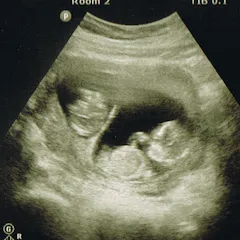
We don’t know anything about the health of the baby girls who are reported to have been born. But it’s clear scientists around the world are shocked.
Sperm donation websites are the Ubers and Airbnbs of the fertility world. But why are they so popular? New research explains the reasons why some men donate.

For women and men not ready to have children, there are new ways to preserve fertility. And experimental techniques offer hope for sick children whose treatments jeopardize future childbearing.

Conversations about reproduction should be a routine part of medical care for transgender people – but assumptions and non-inclusive language can act as barriers to informed consent.

A new study has countered old reports acupuncture can improve your chances of having a baby when going through IVF.

There are sound ethical reasons behind Canada’s decision to ban payment to surrogate mothers and sperm and egg donors in 2004. A new push to remove the restrictions ignores the risks.

The news that Victorian sperm donor records from the 1970s and 1980s were preserved and are now accessible creates both challenges and opportunities for both donors and their offspring.

It is time for the states and territories to develop a uniform legal framework that enables donor-conceived people to connect with their genetic kin.

Health Canada is drafting important regulations for assisted reproductive technologies. Initial documents treat egg donors and surrogates as little more than spare parts and walking wombs.

Americans have moved on from worrying about ‘test-tube babies’ – but there are still ethical challenges to resolve as reproductive technologies continue to advance.

As the Canadian Fertility and Andrology Society urges the government to consider “compensation” for surrogacy, we need to talk about the implications of this rhetoric for women.

Women will now be better informed when it comes to deciding whether it’s worth undergoing another round of IVF.

In 1997, scientists announced they’d created a healthy sheep cloned from another ewe’s mammary gland cell. Two decades on, the technique is being refined and applied to new challenges.

Our recent audit of success rates provided on the websites of IVF clinics’ in Australia and New Zealand identified some common traps in the way these figures are presented.
Top contributors
-

Adjunct Senior Research Fellow, Global and Women's Health, School of Public Health & Preventive Medicine, Monash University
-
Assistant Professor and Canada Research Chair in the Politics of Reproduction, University of Waterloo
-
Associate Professor of Law (Health Law), Deakin University
-
Professor of Law, University of Virginia
-
Professor and Group Leader, Reproductive Epidemiology, Murdoch Children's Research Institute
-
Professor of Law, George Washington University
-
Distinguished Research Professor, Emerita, Dalhousie University
-
Associate Professor in Sociology, Swinburne University of Technology
-
Dean and Professor, Law School, La Trobe University
-
Monash University
-
Professor of Law & Adjunct Professor, Faculty of Medicine Dentistry and Health Sciences, The University of Melbourne
-
Associate Professor of Law, L’Université d’Ottawa/University of Ottawa
-
Professor of Biomedical Sciences, Colorado State University
-
Professor, Director of the National Perinatal Epidemiology and Statistics Unit, UNSW
-
Associate Professor of Law, L’Université d’Ottawa/University of Ottawa