

A case in the Gold Coast is the first in Australia and only the third reported worldwide.
Articles on Surrogacy
Displaying 1 - 20 of 39 articles

Surrogates aren’t currently able to be paid, except for reasonable expenses associated with pregnancy and birth. But other options are currently under review.

The policy amendment has been applauded for moving towards workplace equality. But it still raises some concerns in relation to people with disabilities.

Many Ukrainian women have become surrogates to support their families. But many in Georgia struggle with a loosely regulated industry.

More women are carrying embryos that aren’t genetically theirs – but few are warned about the risks.

If it comes into force, President Donald Trump’s executive order ending birthright citizenship could have consequences for people and processes in the US and abroad.

It was already illegal to ask others to carry a child for you in Italy. It is now also illegal to travel abroad to do so.

This link might be explained by a woman’s immune response when carrying a baby that’s not genetically hers.

Donor conception, surrogacy, artificial womb technologies … a new book delves into how families are changing.

Surrogacy can exploit women, but others may choose to be involved for altruistic reasons. A scholar points out that surrogacy’s ethical value is dependent upon the people and systems who use it.

Children born through international surrogacy aren’t protected by Australian laws.

UK surrogacy law reform: what you need to know about the proposed changes and how they could affect you.

Australia’s surrogacy laws encourage parents to look overseas. But Russia’s invasion of Ukraine - a popular surrogacy destination - shows the flaws of this approach.
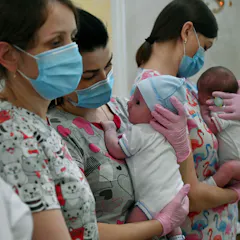
Surrogacy can be exploitative, but a theologian writes how it can also remind individuals that family is not just biological but also social and relational.

Judges have described New Zealand’s surrogacy parentage laws as ‘creaky’ and ‘inadequate’. The Law Commission has finally proposed significant reform.

New research explores the little-understood problem facing many LGBTIQ+ people — the loss of citizenship due to discriminatory laws and difficulties claiming asylum.

As more choices become theoretically available to prospective parents, it’s important to understand their rights.

Stanford professor’s research has led to an increase in the number of kidney transplants in the United States.

Who is a child’s legal parent? The question is at the heart of a case due before the High Court this year. It may have implications for children born via IVF or surrogacy, and the people who raise them.

The law needs to be more realistic about surrogacy services and payment, and reflect what is actually happening between couples and surrogates.
Top contributors
-

Assistant Professor and Canada Research Chair in the Politics of Reproduction, University of Waterloo
-
Distinguished Research Professor, Emerita, Dalhousie University
-
Professor of Law & Adjunct Professor, Faculty of Medicine Dentistry and Health Sciences, The University of Melbourne
-
Assistant Professor of Practical Theology & Spiritual Care, Emory University
-
Academic; Consultant (Health Law), University of Sydney
-
Professor of Human Rights Law, Monash University
-
Professor of Sociology, The University of Texas at Austin
-
Senior Lecturer in Philosophy, University of Waikato
-
Programme Director, Centre for Labour Law; Lecturer in Mercantile Law, University of the Free State
-
Lecturer in Midwifery and Healthcare Ethics, University of Salford
-
Lecturer in Global Ethics, Department of Philosophy, University of Birmingham
-
Professor of Sexual Politics, The University of Melbourne
-
Senior Lecturer in Labour Law, North-West University
-
Director Bachelor Social Work Program, School of Human Services and Social Work, Griffith University
-
Lecturer in Public Health and Human Rights, Monash University