

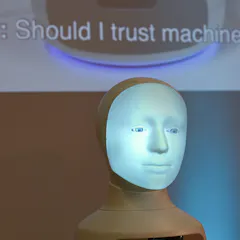
ChatGPT and other AI chatbots seem remarkably good at conversations. But you can’t believe anything they say. Sometimes, though, reality isn’t the point.
Articles on Artificial Intelligence ethics
Displaying 101 - 120 of 126 articles

Artificial Intelligence comes with a litany of ethical risks and dilemmas. Some are universal, but some are unique to particular countries, like South Africa.

AI models are increasingly being used to make important decision about people’s lives – just take Robodebt. Yet the complexity of these systems means we hardly understand them.

Some think ChatGPT threatens education, but it might benefit educators and students alike.

The technology’s focus on the framing of the artistic task amounts to the fetishization of the creative moment – and devalues the journey that waters the seed of an idea to its fruition.

Would an advanced AI try to take over the world? If it uses a common approach called ‘reinforcement learning’, the answer is almost certainly yes.

In the age of AI image generation, believing your own eyes may not hold the same weight it once used to.

As states and nations struggle to regulate growing AI use, municipal authorities are often leading the way. An emerging paradigm known as AI Localism can help us better define the way forward.

Facial recognition technology has set us on a path to mass surveillance – but it’s not too late to change course.

The Tim Hortons consumer app was found to have collected detailed user information, including location data. As a privacy violation, this challenges perception of Tim Hortons as a trusted brand.

The recent case of a man making a simulation of his deceased fiancée raises important questions: while AI makes it possible to create “deadbots”, is it ethically desirable or reprehensible to do so?

A cornerstone of the First Step Act, passed with bipartisan support, is the PATTERN risk-assessment tool.
Inclusivity and diversity also need to be at the level of identifying values and defining frameworks of what counts as ethical AI in the first place.

Elon Musk’s brain-machine interface technology could bring humans and computers closer together than ever before, and herald a new frontier in healthcare

The new Alphabet Workers Union is making clear that changes must be put in place, both in education and on the job, to allow engineers to start taking responsibility for the social impact of their work.
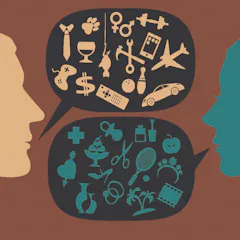
Even the Oxford English Dictionary contains traces of sexism – it’s little wonder that our translation tools do too.

Using a simulation, we found scenarios where AI regulations could be most effective.

In a series of experiments, Australian researchers showed how machines can find vulnerabilities in human decision-making and exploit them to influence our behaviour.

If the historical data used to train an AI system disadvantages certain minority groups, the system can be swayed to follow these patterns in its own decision-making process.
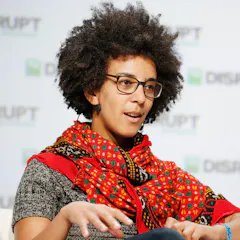
The departure of AI ethics researcher Timnit Gebru from Google highlights attempts to make algorithmic decision-making accountable.
Top contributors
-

Associate Professor of Visual Communication & Digital Media, RMIT University
-
Adjunct professor, Carleton University
-
Associate Professor, School of Media and Communication, RMIT University
-
Lecturer in Philosophy, University of East Anglia
-
Senior Lecturer, School of Engineering, Australian National University
-
Senior Lecturer in Philosophy, University of the Witwatersrand
-
Lecturer, Business School & Centre for Policy Futures, The University of Queensland
-
Postdoctoral Research Fellow, Melbourne Business School
-
Chair in Trust, Professor of Management, The University of Melbourne; Melbourne Business School
-
Professor of English Language and Literature; University Research Chair & Founding Director, Critical Media Lab, University of Waterloo
-
Professor in Information and Communication Technology Policy, Concordia University
-
Industry Professor of Emerging Technology and Co-Director, Human Technology Institute, University of Technology Sydney
-
Co-Founder of The Data Tank and Co-Founder and Chief Research and Development Officer of the Governance Laboratory (GovLab), New York University
-
Senior Research Fellow in AI Accountability, Queensland University of Technology
-
Senior Lecturer in Psychology and Sex and Relationship Therapist, University of Westminster