

A big bet on open-source technology has enabled China to rapidly scale its AI innovation while Silicon Valley remains limited by corporate structures.
Articles on Artificial Intelligence ethics
Displaying 41 - 60 of 126 articles

Granting tech leaders direct control over government functions fundamentally alters the relationship between private power and public governance.

Our collective success with AI will depend not on so much on the virtues of the technology itself, but on the human systems we build around it.
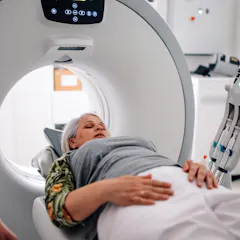
The company’s privacy policy does mention sharing data with research bodies, as authorised by Australian law. But few Australians read and understand privacy policies.

Individualised notions of consent for data use do little to help societies seeking to address collective health crises and other community needs.

The exhibition gives an insight into the complex interactions of humans and machines through history.

Clear guidelines for communicators’ use of generative AI, will help avoid an explosion of misleading information, the erosion of public trust and the misuse of personal data on an unprecedented scale.

Research on artificial intelligence in marketing overwhelmingly neglects its potential negative consequences, a new study finds.

By producing AI simulations of deceased people, private companies can leverage grief for profit.

Apple Intelligence could do for generative AI what the Mac or graphic user interface did for the personal computer: help tame it, make it seem ordinary and acceptable.

Artificial intelligence is energy hungry and has an ever-expanding carbon footprint. Embracing the technology will make it harder for New Zealand to meet its climate targets.

Critics have scoffed at the AI-written review, but haven’t acknowledged the threat implicit in the reduction of the human to the machine.

A new model looked at more than 3.6 million sentences posted on X, with an 86% success rate in identifying the emotion being expressed.

A new report from Statistics Canada about which professions are likely to be affected by artificial intelligence overlooks some key things.

People are beginning to blur the lines when it comes to their understanding – and usage – of AI technology. New research shows just how much social robots are changing how we interact with them.

Media outlets like The Australian and The Daily Telegraph will now share their content with the makers of ChatGPT. It raises many questions about the future of journalism and how people access news.

Ethics is often neglected in engineering education, two researchers write, despite mounting questions about how to responsibly design artificial intelligence programs.
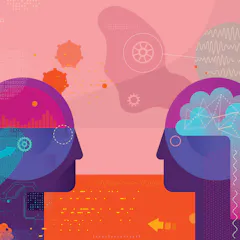
Many existing explainable artificial intelligence systems produce explanations that are tailored to individualist, typically western, populations.

Artificial Intelligence’s capacity to mimic and identify emotions is worlds away from the human one to feel.

Responses to our qualitative survey suggested artificial intelligence was at play. The results were woeful, and researchers will need to work harder to prevent contaminated outcomes.
Top contributors
-

Associate Professor of Visual Communication & Digital Media, RMIT University
-
Adjunct professor, Carleton University
-
Associate Professor, School of Media and Communication, RMIT University
-
Lecturer in Philosophy, University of East Anglia
-
Senior Lecturer, School of Engineering, Australian National University
-
Senior Lecturer in Philosophy, University of the Witwatersrand
-
Lecturer, Business School & Centre for Policy Futures, The University of Queensland
-
Postdoctoral Research Fellow, Melbourne Business School
-
Chair in Trust, Professor of Management, The University of Melbourne; Melbourne Business School
-
Professor of English Language and Literature; University Research Chair & Founding Director, Critical Media Lab, University of Waterloo
-
Professor in Information and Communication Technology Policy, Concordia University
-
Industry Professor of Emerging Technology and Co-Director, Human Technology Institute, University of Technology Sydney
-
Co-Founder of The Data Tank and Co-Founder and Chief Research and Development Officer of the Governance Laboratory (GovLab), New York University
-
Senior Research Fellow in AI Accountability, Queensland University of Technology
-
Senior Lecturer in Psychology and Sex and Relationship Therapist, University of Westminster