

Creating bias-free AI systems is easier said than done. A computer scientist explains how controlling bias could lead to fairer AI.
Articles on Artificial Intelligence ethics
Displaying 81 - 100 of 126 articles

In a preprint study, researchers estimate training the model behind ChatGPT would have required somewhere between 210,000 and 700,000 litres of water.
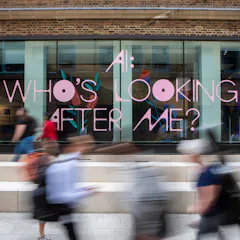
New AI exhibit asks visitors whether they would trust an AI robot to look after their pets.

Is it possible to ‘align’ AI systems to human interest? A new plan to build an AI system to solve this problem highlights the limits of the idea.

Regardless of the input, AI image generators will have a tendency to return certain kinds of results. This is where the potential for bias arises.

Strengthening democratic values in the face of AI will require coordinated international efforts between industry, government and non-governmental organizations.

Companies that want to avoid the harms of AI, such as bias or privacy violations, lack clear-cut guidelines on how to act responsibly. That makes internal management and decision-making critical.

As a society, everyone is motivated to regulate AI development. For individual companies, though, the opposite is true.

Transparency and accountability must be a priority to prevent discrimination.

Computer scientists are overwhelmingly present in AI news coverage in Canada, while critical voices who could speak to the current and potential adverse effects of AI are lacking.

Generative AI is designed to produce the unforeseen, but that doesn’t mean developers can’t predict the types of social consequences it may cause.

Pausing AI development will give our governments and culture time to catch up with and steer the rush of new technology.

Powerful new AI systems could amplify fraud and misinformation, leading to widespread calls for government regulation. But doing so is easier said than done and could have unintended consequences.

When OpenAI claims to be “developing technologies that empower everyone,” who is included in the term “everyone?” And in what context will this “power” be wielded?

Experts largely agree that AI with human-level capabilities is not that far off. How will this change out relationship with machines?

AI chatbots can’t take responsibility for what they say, so we shouldn’t trust them.
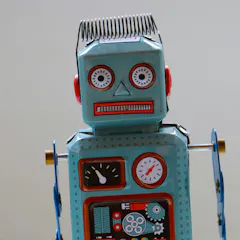
The rise of AI raises the complicated question of how we might guide it towards ethical and political ends.

Rather than seeing artificial intelligence as the cause of new problems, we might better understand AI ethics as bringing attention to old ones.

AI is inevitably entering the workplace – some people are more OK with it than others. But do we trust this technology?

Will it give Microsoft a chance to overtake Google in the search space?
Top contributors
-

Associate Professor of Visual Communication & Digital Media, RMIT University
-
Adjunct professor, Carleton University
-
Associate Professor, School of Media and Communication, RMIT University
-
Lecturer in Philosophy, University of East Anglia
-
Senior Lecturer, School of Engineering, Australian National University
-
Senior Lecturer in Philosophy, University of the Witwatersrand
-
Lecturer, Business School & Centre for Policy Futures, The University of Queensland
-
Postdoctoral Research Fellow, Melbourne Business School
-
Chair in Trust, Professor of Management, The University of Melbourne; Melbourne Business School
-
Professor of English Language and Literature; University Research Chair & Founding Director, Critical Media Lab, University of Waterloo
-
Professor in Information and Communication Technology Policy, Concordia University
-
Industry Professor of Emerging Technology and Co-Director, Human Technology Institute, University of Technology Sydney
-
Co-Founder of The Data Tank and Co-Founder and Chief Research and Development Officer of the Governance Laboratory (GovLab), New York University
-
Senior Research Fellow in AI Accountability, Queensland University of Technology
-
Senior Lecturer in Psychology and Sex and Relationship Therapist, University of Westminster