

If this new development – designed to show if a text is AI-generated – sounds too good to be true, that’s because it is.
Articles on Artificial intelligence (AI)
Displaying 121 - 140 of 2835 articles

Beyond technical fluency, Canadian students need judgment to decide how to use AI and when it should not be used at all.

A survey and workshop project is designed to help educators reflect on their comfort with genAI, assessment and educational practices and their fears and challenges.

Automated systems need to be watched carefully to ensure they are in fact operating in the public interest.
The convergence of AI and biotechnology blurs boundaries and challenges existing regulations designed to consider technologies separately.

An oral exam can show how students have meaningfully engaged with a topic. But it shouldn’t be used as a litmus test for AI use.

The assistant minister argues Australia needs to leverage its data centre advantage and translate that into benefits and growth for the broader economy.

As AI agents become more autonomous, keeping them aligned with what humans want will require layered oversight and effective control.

Labels alone won’t be enough to tackle the rise of deepfakes.

What happens to democracy when the independent people capable of resisting abuses of power are replaced by systems designed to make those abuses easier?

AI is a powerful tool for financial fact-finding and brainstorming. But for now it can’t replace the human element.

For older employees already experiencing burnout, poorly designed or poorly timed training can become an additional job demand rather than a solution.

AI agents cross company boundaries, but proof of their authority often does not. When they overstep, no single record shows what the user allowed.

South Australian Premier Peter Malinauskas flourishes where Albanese flounders.
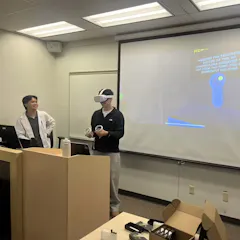
The advantage of virtual reality training is scalability. The same experience can be delivered in many countries simultaneously, without need for travel.
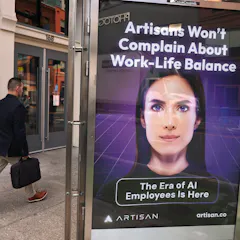
For too many companies, the adoption of artificial intelligence has become an AI hunger game that spreads fear rather than engagement.

Nations that lead the development of open-source technology will have a strategic edge for decades to come.

From AI models to synthetic DNA screening and outbreak surveillance, there are several points where emerging biological risks could be reduced.

AI helped design a working virus that kills bacteria. Researchers explain what it could mean for the fight against antibiotic resistance.
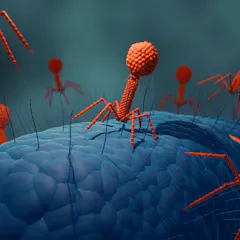
Researchers used AI to design working bacteriophages for the first time, raising questions about antibiotic resistance and biosecurity.
Top contributors
-

Professor of AI, Research Group Leader, UNSW
-
Professorial Fellow, University of Canberra
-
Associate Professor of Visual Communication & Digital Media, RMIT University
-
Adjunct Senior Lecturer, Applied Ethics and CyberSecurity, Griffith University
-
Professor of Information Systems, Michigan State University
-
Adjunct Lecturer in Public Policy, Harvard Kennedy School; University of Toronto
-
Professor in Robotics, Queensland University of Technology
-
Professor of Philosophy and Director of Applied Ethics Center, UMass Boston
-
Senior Research Fellow in AI Accountability, Queensland University of Technology
-
Professor in Business Information Systems, University of Sydney
-
Director of Sydney Executive Plus, Business School, University of Sydney
-
PhD in machine ethics, University of Canterbury
-
Senior Lecturer, School of Engineering, Australian National University
-
Professor in Computational Intelligence, Australian Catholic University
-
Professor of Information Technology and Organisation, University of Sydney