
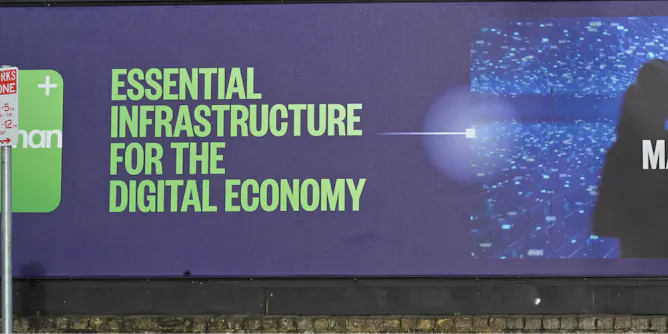
The government believes it can’t allow “the tech bros to let it rip”, as one source puts it. But it can’t allow the country to fall behind the pack either.
Articles on Artificial intelligence (AI)
Displaying 221 - 240 of 2836 articles

‘Silicon sampling’ promises easy answers to tough questions about human behaviour – but the reality is more complicated.

As more people turn to chatbots for support, new research is exploring a potential role for AI in spotting early signs of depression.

As Canada advances its national AI strategy, we must ask what digital migration data reveal, and what they leave unseen.

The higher the stakes and the more specific the questions, the more likely AI will stumble on personal finance advice.

Until now, there has been little evidence of how young people in middle- and low-income countries use and feel about AI.

AI’s dynamic of distant, unseen control recalls Shakespeare’s The Tempest.

Some people rely on AI romantic companions for emotional support or private sexual exploration. Some partners experience this as betrayal.

Deep oceans contain microbes with yet-to-be-discovered properties that could drive future innovations in biotechnology.

The decision tracks with a long history of editors and journalists being early adopters of tech innovations.

As data centres have grown in size and number in Australia, they have also become the subject of fierce public debate. So what’s the best way forward?

Scientists are using AI and physics-based simulations together to design new peptides that will kill previously drug-resistant bacteria.

The costs of building advanced, cutting-edge AI are prohibitive and Australia has few natural advantages.

Many of Australia’s favourite artists – from AC/DC to Kylie – have been found in massive AI datasets.

It’s easy to see why many use AI for their exercise programs: it’s fast, cheap and readily available. But there can be downsides.

The World Cup is bringing visitors and AI-driven surveillance systems, but only one of those is certain to leave when the games are done.

The language used in response to gender-based violence erases who’s doing the harm and who’s experiencing it, making it harder to report on and easier to excuse.

If AI is not designed properly, inequalities can reappear in new, digital forms.

We are living in a world backed by technology that seems to have a spiritual project of its own. Are the fears of the Pope’s AI-critical encyclical founded?
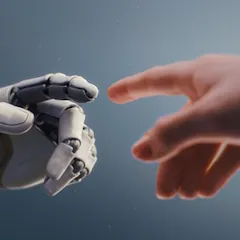
Involving families, educators, engineers, designers and policymakers in AI development can help ensure the technology does more good than harm.
Top contributors
-

Professor of AI, Research Group Leader, UNSW
-
Professorial Fellow, University of Canberra
-
Associate Professor of Visual Communication & Digital Media, RMIT University
-
Adjunct Senior Lecturer, Applied Ethics and CyberSecurity, Griffith University
-
Professor of Information Systems, Michigan State University
-
Adjunct Lecturer in Public Policy, Harvard Kennedy School; University of Toronto
-
Professor in Robotics, Queensland University of Technology
-
Professor of Philosophy and Director of Applied Ethics Center, UMass Boston
-
Senior Research Fellow in AI Accountability, Queensland University of Technology
-
Professor in Business Information Systems, University of Sydney
-
Director of Sydney Executive Plus, Business School, University of Sydney
-
PhD in machine ethics, University of Canterbury
-
Senior Lecturer, School of Engineering, Australian National University
-
Professor in Computational Intelligence, Australian Catholic University
-
Professor of Information Technology and Organisation, University of Sydney