
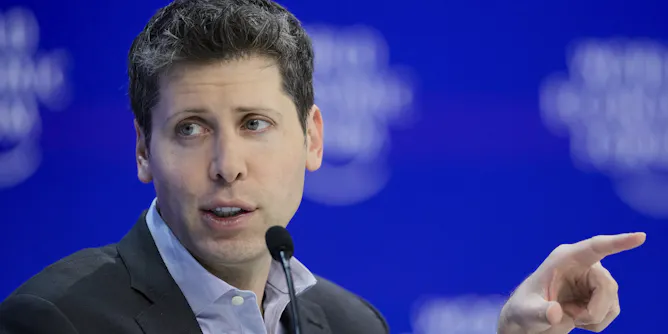
The case is one of the most significant actions brought against an artificial intelligence company to date.
Articles on Artificial intelligence (AI)
Displaying 301 - 320 of 2835 articles
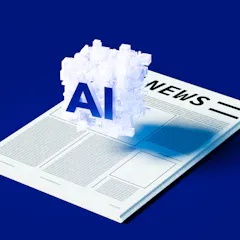
AI may assist in the newsroom, but journalism must remain under human editorial control.
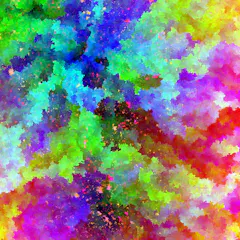
A photographer describes how your phone camera flattens and dulls the colors in photos – and how to regain an appreciation for the wide spectrum of colors.

Uncertainty is common in medicine, and AI isn’t very good at navigating it.

I knew this text would not be welcomed by all. And that’s OK.
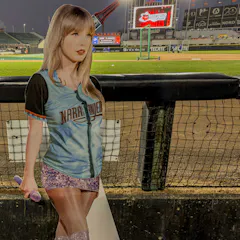
When AI is used to manufacture fake endorsements, copyright law doesn’t do enough to protect celebrities, influencers and other public figures.

For legal reasons, organisations require a human reviewer of generative AI outputs. But this human oversight must be valued and budgeted for in the transition to AI.
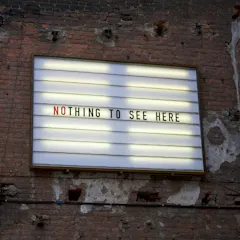
The industry is rife with AI non-events that were wildly promoted and highly anticipated, but failed to deliver.

AI poses serious risks to Holocaust memory through denial, distortion and clickbait. AI-literate younger generations may be our best tool for combating the misinformation it enables.
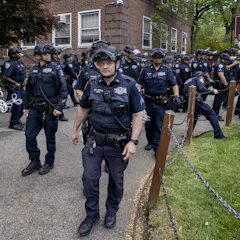
A persistent government strategy to sow fear through punitive measures has corroded freedom and democracy.

AI models can simulate the answers thousands of people would provide to a survey, but the results aren’t a reliable measure of what real people would actually say.
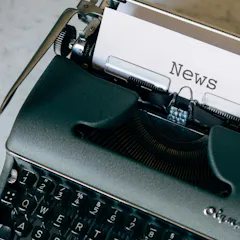
The press is an important platform for creating and spreading new linguistic forms.
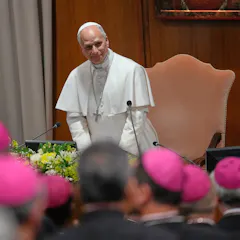
Leo XIV released his first encyclical on the 135th anniversary of Rerum Novarum, the 1891 papal document on the upheavals of the Industrial Revolution.

AI is now the machine deciding whether your payment goes through. And when it makes a mistake, the system isn’t designed to tell you why.

Swift appears to be the first musician to take this step.

Hungarian mathematician Paul Erdős’ ‘planar unit distance conjecture’ has stood since 1946 – but an AI disproof has made mathematicians pay attention.
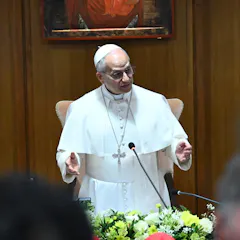
The pope has warned that AI is never truly neutral: it reflects the society that made it. He has called for ethical oversight – and protecting workers.
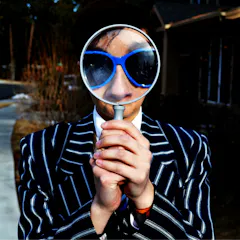
Fact-checking can take hours or days while fakes can be created in seconds. So, what do we do?
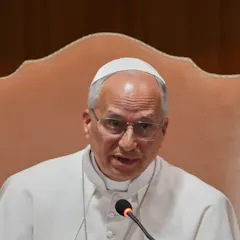
In his first encyclical, Pope Leo XIV has called for much closer regulation of AI technology, particularly in military settings.

Advances in AI platforms have been oddly benchmarked through their engagements with the short story form. What does the latest literary AI scandal tell us?
Top contributors
-

Professor of AI, Research Group Leader, UNSW
-
Professorial Fellow, University of Canberra
-
Associate Professor of Visual Communication & Digital Media, RMIT University
-
Adjunct Senior Lecturer, Applied Ethics and CyberSecurity, Griffith University
-
Professor of Information Systems, Michigan State University
-
Adjunct Lecturer in Public Policy, Harvard Kennedy School; University of Toronto
-
Professor in Robotics, Queensland University of Technology
-
Professor of Philosophy and Director of Applied Ethics Center, UMass Boston
-
Senior Research Fellow in AI Accountability, Queensland University of Technology
-
Professor in Business Information Systems, University of Sydney
-
Director of Sydney Executive Plus, Business School, University of Sydney
-
PhD in machine ethics, University of Canterbury
-
Senior Lecturer, School of Engineering, Australian National University
-
Professor in Computational Intelligence, Australian Catholic University
-
Professor of Information Technology and Organisation, University of Sydney