
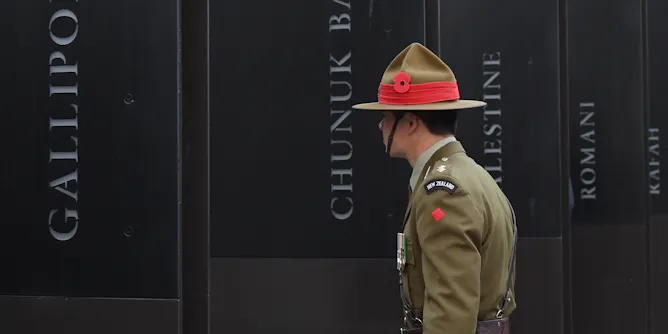
The roots of today’s Israel-Palestine crisis can be traced back to colonial power dealings during World War I – of which the Gallipoli campaign and Anzac legend are an integral part.
Articles on Anzac Day
Displaying 21 - 40 of 87 articles
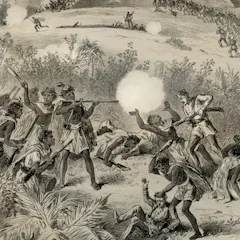
A national day for commemoration of the New Zealand Wars has struggled for attention and public engagement. So did Anzac Day once, and its survival can provide useful lessons.
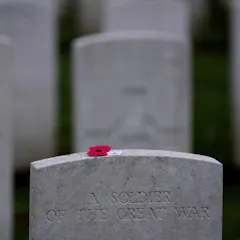
Beyond the familiar ideas of mateship and sacrifice, Anzac Day offers an opportunity to teach young people a more complicated but meaningful version of history.

Evidence shows New Zealand’s first world war soldiers killed both surrendering and wounded German soldiers. Their actions, condoned at the highest level, cast a long shadow.
In 26 of his 38 plays, Shakespeare includes a war. Reading them, one is tempted to ask ‘when will we ever learn?’ rather than pronounce, ‘lest we forget’.
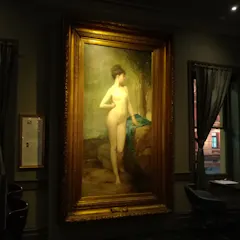
It has been tradition for soldiers to have a drink with Chloé at the Young and Jackson Hotel since the first world war.
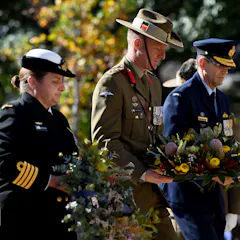
In finding new ways to commemorate Anzac Day, we should learn a lesson from the rise of the Gallipoli pilgrimage.

Two-up used to be illegal - playing it now helps us remember the spirit of larrikinism and anti-authoritarianism central to the Anzac myth.
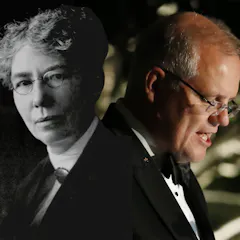
A close friend of John Curtin, Dame Mary Gilmore wrote poems on topics such as colonial violence and the plight of the koala. How has her great, great nephew, Scott Morrison, chosen to remember her?

By pushing the timing of approval back to April, likely just before the election, the government has put itself in a position to use the curriculum to score political points.
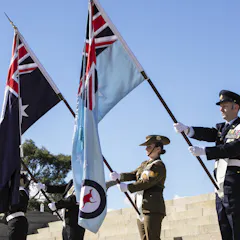
Public debates about the Australian Curriculum are arguably a sign of democracy at work. Suggesting that some things, such as Anzac Day, are sacred and beyond critical inquiry is not.
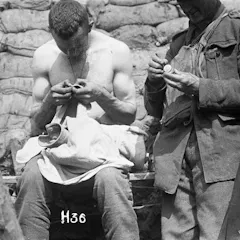
Anzac soldiers wrote poetry about body lice, shared treatment tips and experimented with new ways of bathing.
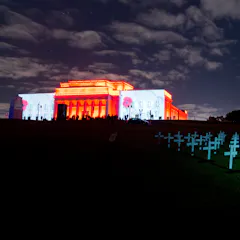
As trans-Tasman borders re-open and in the wake of the Christchurch attacks, Anzac Day gains new meaning and presents new challenges – just as it has always done.
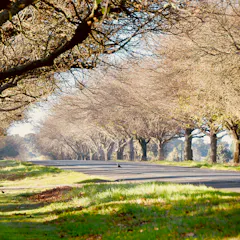
Avenues of Honour were planted to remind us of the sacrifice and suffering of our servicemen and women. But as the years wore on, many declined or disappeared.

Amid the trauma and boredom of war, soldiers turned to reading — often magazines they wrote themselves.
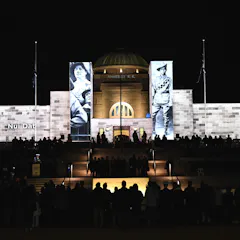
The prime minister calls it “our most sacred day”, but numbers at Anzac Day dawn services fell by 70% from 2015-2019.
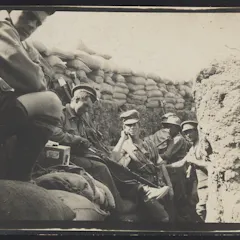
When the honour of Australia’s revered soldiers is questioned, so, too, is the national self-image. But war is an ugly business, and we pay a price for tethering it so tightly to our identity.
As Spanish flu ravaged the world in 1919, Australians found novel ways to commemorate Anzac Day, and they will do so again this year.

Reflecting on the wartime treatment of two Japanese Australians (or Nikkei) raises the spectre of our racist past - and can prompt us to consider the vulnerabilities of Asian Australians today.
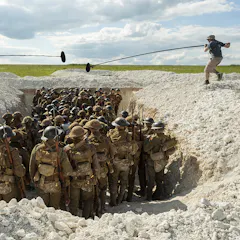
War movies are an enduring genre, making hundreds of millions at the box office. With Anzac Day approaching, we ask: does Hollywood go too far in obscuring the true horrors of battle?
Top contributors
-

Professorial Fellow, University of Canberra
-
Lecturer in History, University of Auckland, Waipapa Taumata Rau
-
Senior Lecturer in Sociology, Adelaide University
-
Associate Professor of Strategic & Defence Studies, Australian National University
-
Professor of Law, University of Waikato
-
Professor in German Studies, The University of Melbourne
-
Senior Lecturer, Art & Design, Australian National University
-
Associate Professor in History, Deakin University
-
PhD candidate in History, The University of Western Australia
-
Chair Professor, Istanbul Bilgi University
-
Director, Australian National Dictionary Centre, Australian National University
-
Associate Professor, School of History, ANU / Chercheur Associé at the Centre d’Histoire de Sciences Po, Australian National University
-
Professor in Robotics, Queensland University of Technology
-
Emeritus Professor, School of Politics and International Relations, Australian National University
-
Senior Lecturer in School of Biological Sciences, Microbiology, Monash University